Sports
CONMEBOL: What It Is, How It Works, and Why It Matters in World Football

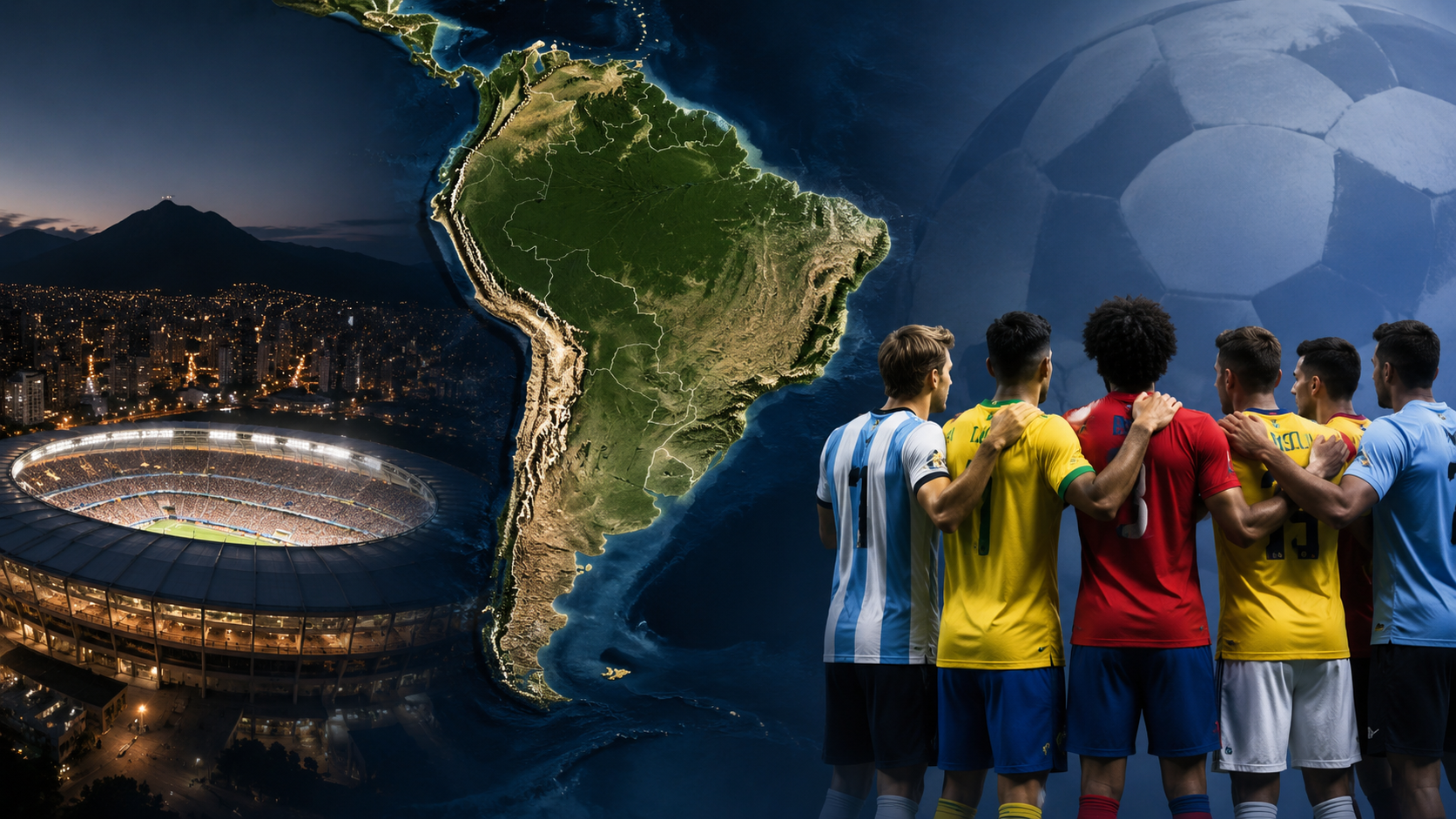
South American football has a heartbeat unlike anywhere else on the planet. The passion, the rivalries, the history — and behind all of it sits one organization quietly running the show. Whether you’ve heard the name during a Copa América broadcast or spotted it on a Copa Libertadores trophy, CONMEBOL is a name that carries serious weight in the football world.
But what exactly is CONMEBOL, and why does it matter? This guide covers everything you need to know.
What Is CONMEBOL?
CONMEBOL short for Confederación Sudamericana de Fútbol in Spanish, or Confederação Sul-Americana de Futebol in Portuguese — is the governing body of football in South America. It is responsible for organizing the continent’s major international tournaments and is the oldest of the six continental confederations of FIFA.
In simple terms, CONMEBOL does for South American football what UEFA does for European football. It makes the rules, runs the tournaments, and represents its member nations at FIFA level.
Direct Answer:
CONMEBOL is the South American Football Confederation, founded in 1916 and headquartered in Luque, Paraguay. It oversees football across ten South American nations and organizes major competitions including the Copa América, Copa Libertadores, and Copa Sudamericana. With ten member associations, it is the smallest of FIFA’s six confederations — but arguably the most storied in terms of World Cup success.
A Brief History of CONMEBOL
The story of CONMEBOL starts over a century ago, when football was spreading rapidly across South America.
Argentina and Uruguay played the first international football match between South American nations in 1901, and this sparked a desire among football associations across the region to organize future international events.
That desire finally became reality in 1916. CONMEBOL was founded on July 9, 1916 — Argentine Independence Day — under the initiative of Uruguayan Héctor Rivadavia, with approval from the football associations of Argentina, Brazil, Chile, and Uruguay. The occasion was the first Copa América, held to celebrate the centenary of Argentine independence.
CONMEBOL remained the sole FIFA confederation until the Asian Football Confederation (AFC) and UEFA were founded in 1954. In other words, for nearly four decades, it was the only continental football authority in the world.
Over the following decades, the other South American associations joined. The last to join was Venezuela in 1952. Today, there are ten member nations — and that number has stayed the same ever since.
CONMEBOL Member Nations
The confederation features ten member countries: Argentina, Bolivia, Brazil, Chile, Colombia, Ecuador, Paraguay, Peru, Uruguay, and Venezuela.
Three South American nations — Guyana, Suriname, and French Guiana — are not CONMEBOL members. Due to historical, cultural, and sporting reasons, they are part of CONCACAF, the Confederation of North, Central American and Caribbean Association Football.
CONMEBOL’s Headquarters
CONMEBOL has its headquarters in Luque, Paraguay. This relatively small city near Asunción hosts the organization’s administrative hub, including its Convention Centre where major draws — such as the Copa Libertadores group stage draw — take place.
CONMEBOL Competitions: The Full Picture
This is where CONMEBOL really earns its reputation. The confederation runs some of the most-watched football tournaments in the world.
Copa América
The Copa América is the top men’s quadrennial football tournament contested among national teams from South America. It is the oldest still-running continental football competition.
The Copa América was first held in 1916 in honor of the 100th anniversary of Argentina’s independence. Uruguay won the inaugural title. It was initially called the South American Football Championship and was renamed the Copa América in 1975.
One thing that makes the Copa América unique is that it regularly invites teams from outside South America. Since the 1990s, teams from North America and Asia have also been invited to compete. Mexico and the United States were the first non-CONMEBOL teams to play in the tournament, with Mexico finishing as runner-up in 1993.
Argentina leads the all-time Copa América standings with 16 championships, followed by Uruguay with 15 and Brazil with 9. Eight of the ten CONMEBOL national teams have won the tournament at least once, with Ecuador and Venezuela the only teams yet to win.
Copa Libertadores
The Copa Libertadores is an annual continental club football competition organized by CONMEBOL since 1960. It is the highest level of competition in South American club football. Think of it as South America’s answer to the UEFA Champions League.
The current format of the Copa Libertadores consists of eight stages, featuring 47 clubs competing over an eight-to-nine month period. Teams qualify primarily by performing well in their domestic leagues. The competition builds from qualifying rounds into a group stage, then knockout rounds, and finishes with a single-match final at a neutral venue.
The winner of the Copa Libertadores becomes eligible to play in the FIFA Club World Cup, the FIFA Intercontinental Cup, and the Recopa Sudamericana. Independiente of Argentina is the most successful club in the cup’s history, having won the tournament seven times. Argentine and Brazilian clubs have accumulated the most victories with 25 wins each.
Copa Sudamericana
The Copa Sudamericana is a yearly club football tournament run by CONMEBOL since 2002. It is South America’s second-tier competition, below the Copa Libertadores, giving more teams a shot at football glory.
The Copa Sudamericana was introduced in 2002, replacing the separate competitions Copa Mercosur and Copa Merconorte. The winner becomes eligible to play in the Recopa Sudamericana, earns entry to the next Copa Libertadores, and contests the UEFA–CONMEBOL Club Challenge against the winners of the UEFA Europa League.
For clubs that don’t regularly qualify for the Copa Libertadores, the Sudamericana is a major opportunity — both for silverware and financial reward.
Recopa Sudamericana
The Recopa Sudamericana is an annual international club football competition organized by CONMEBOL since 1988. It is a match-up between the champions of the previous year’s Copa Libertadores and the Copa Sudamericana. It’s essentially a super cup that crowns the best club on the continent from the previous season.
FIFA World Cup Qualifiers
The South American section of the FIFA World Cup qualification acts as qualifiers for the World Cup for national teams who are members of CONMEBOL. All ten nations enter a single round-robin league — every team plays every other team twice, home and away. A total of six direct slots and one inter-confederation play-off slot are available for CONMEBOL teams.
This format is widely regarded as one of the toughest qualification routes in world football. The World Cup qualifiers of CONMEBOL have been described as the “toughest qualifiers in the world” due to their simple round-robin system, extreme climatic variety across the continent, and the sheer quality of teams involved.
Women’s Football
CONMEBOL also governs women’s football across the continent. The Copa América Femenina is South America’s premier women’s football tournament. First held in 1991, it not only crowns the continental champion but also serves as a qualifier for the FIFA Women’s World Cup, Olympic Games, and Pan American Sports Games. As of 2024, the Brazilian national team has dominated the tournament, winning all editions except in 2006, when Argentina was crowned champion.
CONMEBOL’s World Cup Legacy
This is where the numbers really speak for themselves.
CONMEBOL national teams have won ten FIFA World Cups — Brazil five, Argentina three, and Uruguay two. CONMEBOL clubs have also won 22 Intercontinental Cups and four FIFA Club World Cups.
Despite having just ten member nations compared to UEFA’s 55, CONMEBOL has produced more World Cup champions than any other confederation on a per-member basis. Brazil remains the only nation to have played in every single FIFA World Cup.
Key Facts About CONMEBOL
- Founded: July 9, 1916, in Buenos Aires, Argentina
- Headquarters: Luque, Paraguay
- Member associations: 10
- Status: Oldest of FIFA’s six continental confederations; smallest by number of members
- World Cups won by members: 10 (Brazil 5, Argentina 3, Uruguay 2)
- Main national team competition: Copa América (since 1916)
- Main club competition: Copa Libertadores (since 1960)
- Current president: Alejandro Domínguez
- 2024 total income: USD 869 million Conmebol
Common Misconceptions About CONMEBOL
CONMEBOL includes all South American countries
Not quite. Three territories in South America — Guyana, Suriname, and French Guiana — are actually CONCACAF members, not CONMEBOL, due to historical and cultural ties.
The Copa Libertadores is just a regional competition
Its winners go on to compete in the FIFA Club World Cup and the Intercontinental Cup, putting them head-to-head with champions from Europe and other continents. It carries serious global prestige.
All CONMEBOL nations have qualified for the World Cup
Among the 10 member countries, only Venezuela has never advanced to the FIFA World Cup. NamuWiki
CONMEBOL is smaller than UEFA, so it’s less important
Fewer members doesn’t mean less influence. South American football shapes the game globally, from player development pipelines to World Cup dominance.
CONMEBOL and Corruption: The 2015 Scandal
No honest account of CONMEBOL would skip this chapter. On May 27, 2015, several CONMEBOL leaders were arrested in Zürich, Switzerland by Swiss police and indicted by the U.S. Department of Justice on charges of corruption, money laundering, and racketeering. Those swept up in the operation included former CONMEBOL presidents Eugenio Figueredo and Nicolás Léoz, as well as football administrators Carlos Chávez and Sergio Jadue. On December 3, 2015, CONMEBOL President Juan Ángel Napout was also arrested.
The scandal was a major blow to the confederation’s credibility. Since then, CONMEBOL has worked to rebuild its governance structures and improve transparency — with new commercial deals, financial reporting, and leadership under president Alejandro Domínguez signaling a shift toward greater accountability.
Real-World Example: The 2024 Copa América in the USA
The 2024 Copa América offered a window into both CONMEBOL’s ambitions and its challenges. CONMEBOL and CONCACAF signed a collaborative partnership agreement in January 2023 that included the United States being selected as host for the 2024 Copa América, which would feature six CONCACAF teams. The tournament would share some venues with the 2026 FIFA World Cup.
The tournament drew enormous global attention and commercial revenue. However, the 2024 Copa América in the United States also faced criticism, including crowd control failures at the final at Miami’s Hard Rock Stadium on July 14, 2024, which delayed kickoff by over an hour due to unauthorized entries and security lapses.
It was a reminder that commercial growth and operational excellence don’t always move at the same speed.
FAQ: CONMEBOL Explained
Q1: What does CONMEBOL stand for?
Ans: CONMEBOL stands for Confederación Sudamericana de Fútbol in Spanish, which translates to South American Football Confederation in English.
Q2: When was CONMEBOL founded?
Ans: CONMEBOL was founded on July 9, 1916, making it the oldest football confederation in the world.
Q3: Where is CONMEBOL headquartered?
Ans: Its headquarters are in Luque, Paraguay.
Q4: How many countries are in CONMEBOL?
Ans: Ten: Argentina, Bolivia, Brazil, Chile, Colombia, Ecuador, Paraguay, Peru, Uruguay, and Venezuela.
Q5: What is the most prestigious CONMEBOL competition?
Ans: For national teams, it’s the Copa América. For clubs, it’s the Copa Libertadores.
Q6: How does CONMEBOL differ from FIFA?
Ans: FIFA is the global governing body of football. CONMEBOL is one of six regional confederations that operate under FIFA, specifically overseeing South America.
Q7: Is CONMEBOL’s World Cup qualification hard?
Ans: Yes — widely considered among the most difficult in the world, given the round-robin format where all ten nations compete against each other home and away.
Q8: What happened with CONMEBOL’s corruption scandal?
Ans: In 2015, multiple CONMEBOL officials were arrested on charges including corruption and money laundering. The confederation has since pursued governance reforms.
Key Takeaways
- CONMEBOL is the South American Football Confederation, founded in 1916 and the oldest continental football body in the world
- It governs football across ten South American nations, with headquarters in Luque, Paraguay
- Its member nations have won ten FIFA World Cups — more per member than any other confederation
- Major competitions include the Copa América, Copa Libertadores, Copa Sudamericana, and Recopa Sudamericana
- The World Cup qualification process in South America is a round-robin between all ten nations, widely seen as one of the toughest in football
- CONMEBOL went through a major corruption crisis in 2015 and has been working to rebuild since
- Despite being the smallest confederation by membership, it is one of the most influential in global football
Conclusion
CONMEBOL may only have ten member nations, but its footprint on the sport is enormous. From hosting the world’s oldest international football tournament to producing five-time World Cup winners, the South American Football Confederation has shaped modern football in ways that reach every corner of the globe.
Whether you follow it through a Copa América summer or a Copa Libertadores final, understanding CONMEBOL helps you understand football itself — where it came from, and why South America remains one of its most powerful homes.
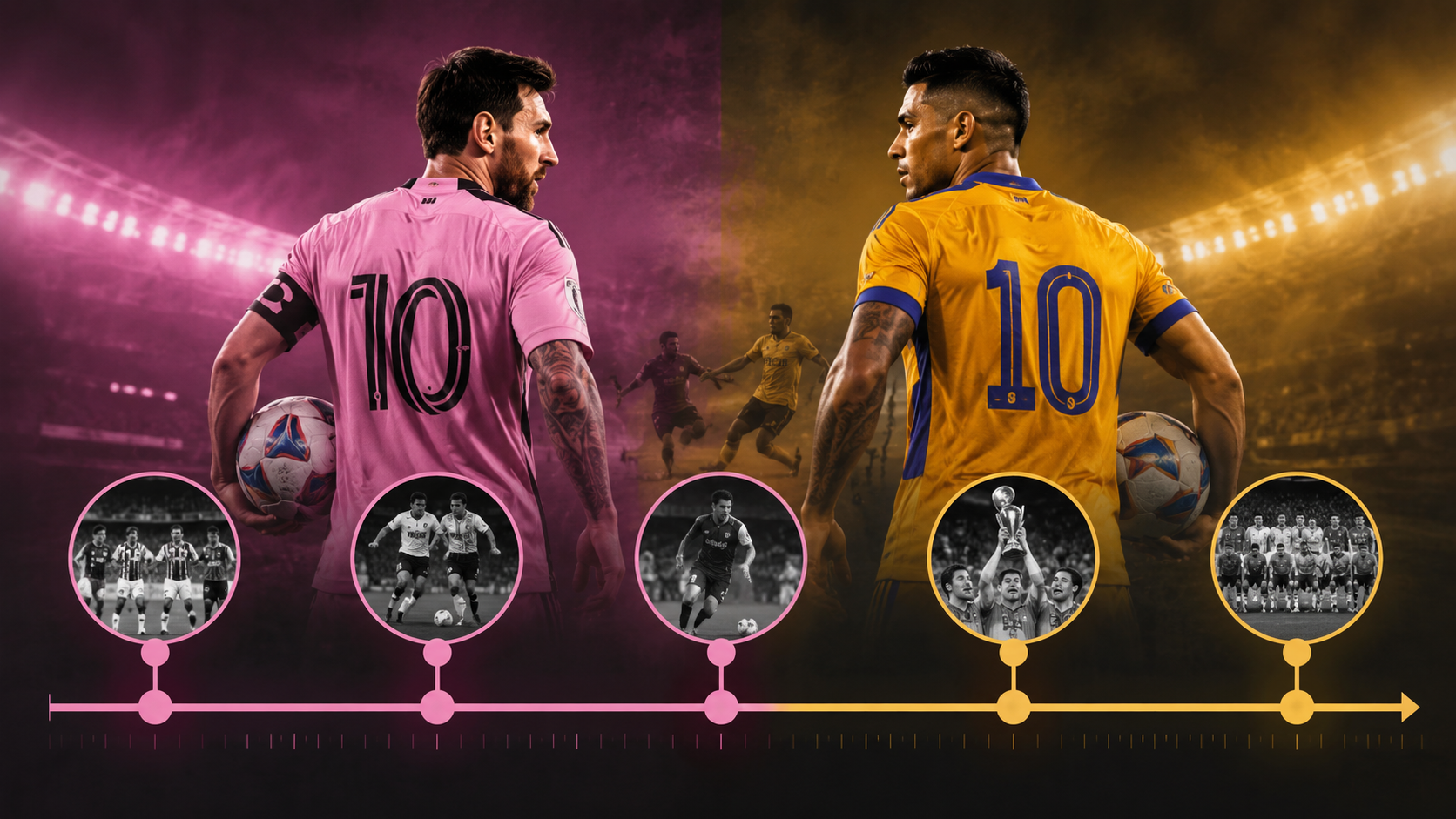
Two clubs, two different footballing worlds, and two matches that have already produced enough drama to make this one of the more closely watched fixtures in North American soccer. Inter Miami and Tigres UANL have only met twice, but both games ended 2-1, both were decided late, and both carried real stakes in the Leagues Cup. Here’s the full timeline of what’s happened so far.
Direct Answer: What Is the Inter Miami vs Tigres UANL Timeline?
The Inter Miami vs Tigres UANL timeline covers two competitive matches, both played in the Leagues Cup, the annual tournament pitting MLS clubs against Liga MX clubs. Tigres won the first meeting 2-1 in the 2024 group stage, while Inter Miami won the rematch 2-1 in the 2025 quarterfinal. The overall head-to-head record stands at one win apiece, with no draws, making it one of the most evenly balanced young rivalries in the sport.
Background: Why This Matchup Draws Attention
Inter Miami and Tigres UANL come from very different footballing traditions, and that contrast is part of what makes their meetings compelling. Inter Miami, an MLS club owned by an ownership group led by David Beckham, had limited international profile before Lionel Messi’s arrival in July 2023 fundamentally changed the club’s visibility overnight.
Tigres UANL, based in the Monterrey metropolitan area and playing home matches at Estadio Universitario in San Nicolás de los Garza, carries a very different kind of weight. With eight Liga MX championships and a 2020 CONCACAF Champions League title, Tigres entered this rivalry as an established continental heavyweight, not a club still building its reputation.
The Leagues Cup, which brings every MLS and Liga MX club into a shared mid-season tournament, has become the primary stage for this dynamic to play out, turning a fixture between two clubs with no traditional rivalry into a genuine measuring stick for MLS ambition against Liga MX’s tactical depth.
Match One: 2024 Leagues Cup Group Stage
The first official meeting between the two clubs took place on August 3, 2024, at NRG Stadium in Houston, during the Leagues Cup group stage.
Tigres controlled much of the early tempo, and that patience paid off in the 18th minute, when Juan Brunetta opened the scoring with a composed finish. Inter Miami responded in the 74th minute, with Leonardo Campana converting from the penalty spot to level the match at 1-1. The equalizer didn’t hold. In the 84th minute, Juan Pablo Vigón restored Tigres’ lead, and the match finished 2-1 in Tigres’ favor.
Notably, Lionel Messi did not feature in this match due to an ankle injury, and Luis Suárez remained on the bench throughout. The absence of Inter Miami’s biggest attacking names shaped how the match unfolded, with Tigres able to control large stretches of the game against a Miami side missing key attacking options.
Match Two: 2025 Leagues Cup Quarterfinal
The rematch came roughly a year later, in the 2025 Leagues Cup quarterfinal, played at Chase Stadium in Fort Lauderdale, Inter Miami’s home ground.
This match swung several times. Inter Miami took an early lead in the 23rd minute, when Luis Suárez converted a penalty to make it 1-0. Tigres answered in the 67th minute, with Ángel Correa beating goalkeeper Óscar Ustari to level the score at 1-1, continuing a strong individual tournament for Correa, who had scored four goals across the earlier phase of the 2025 Leagues Cup.
The decisive moment came in the 89th minute. Tigres pushed for a late equalizer, and a header from Edgar López in stoppage time struck both posts without going in, allowing Miami to hold on for the win.
As in the first meeting, Lionel Messi didn’t play, this time due to a muscle injury rather than the ankle issue from 2024. The victory sent Inter Miami through to the Leagues Cup 2025 semifinals and ended Tigres’ run in that year’s tournament.
Head-to-Head Summary
Based on both official meetings to date, the record between the two clubs is closely balanced:
- Total meetings: 2
- Inter Miami wins: 1 (2025 Leagues Cup quarterfinal, 2-1)
- Tigres UANL wins: 1 (2024 Leagues Cup group stage, 2-1)
- Draws: 0
- Competition: Both matches played in the Leagues Cup
Key Players in the Rivalry So Far
A few individual performances have defined both matches played to date.
Luis Suárez (Inter Miami)
Suárez has been the decisive figure in the head-to-head so far, scoring both of Inter Miami’s goals in the 2025 quarterfinal, both converted from the penalty spot under pressure in a knockout-stage match.
Ángel Correa (Tigres UANL)
Correa has established himself as one of Tigres’ most dangerous attacking threats in these meetings, scoring the equalizer in the 2025 match as part of a broader strong run of form in that tournament.
Juan Pablo Vigón and Juan Brunetta (Tigres UANL)
Both players were directly involved in Tigres’ 2024 win, with Brunetta opening the scoring and Vigón netting the eventual match-winner.
Leonardo Campana (Inter Miami)
Campana scored Miami’s lone goal in the 2024 meeting, converting from the penalty spot to briefly level the match before Tigres retook the lead.
One recurring storyline worth noting: Lionel Messi has missed both matches between these two clubs, first due to an ankle injury in 2024, then due to a muscle issue in 2025, meaning a Messi appearance against Tigres remains something fans of both clubs haven’t yet seen.
What’s Next for This Matchup
As of the most recent Leagues Cup cycle, no future match between Inter Miami and Tigres UANL has been formally scheduled. Because the Leagues Cup runs annually and both clubs have consistently qualified for the tournament, another meeting between the two is a realistic possibility in a future edition, though the specific timing depends on tournament seeding and results in earlier rounds.
Good to Know
Both matches have been decided by narrow, late margins. Neither game has been a comfortable result for either side, both finished 2-1, and both featured a decisive goal in the final 15 minutes or stoppage time.
Penalties have played an outsized role. Three of the four total goals scored across both matches have come from the penalty spot, a detail that’s shaped how each match’s turning points unfolded.
The rivalry predates a long shared history. Unlike longstanding regional rivalries, this matchup has only existed since 2024, meaning the “timeline” is still in its early chapters, with plenty of room for the head-to-head record to develop further.
Key Facts
- Inter Miami and Tigres UANL have met twice, both times in the Leagues Cup.
- The 2024 group stage match, played August 3, 2024, in Houston, ended 2-1 to Tigres.
- The 2025 quarterfinal, played at Chase Stadium in Fort Lauderdale, ended 2-1 to Inter Miami.
- The head-to-head record stands at one win each, with no draws.
- Lionel Messi has missed both matches due to injury.
- Luis Suárez has scored both of Inter Miami’s goals in the head-to-head so far, both penalties.
Frequently Asked Questions
Q1: Who has won more matches between Inter Miami and Tigres UANL?
Ans: The record is even, with one win for each club across two total meetings, both decided by a 2-1 scoreline.
Q2: Has Lionel Messi ever played against Tigres UANL?
Ans: No. Messi missed both meetings due to injury, an ankle issue in 2024 and a muscle injury in 2025.
Q3: What competition have Inter Miami and Tigres UANL played each other in?
Ans: Both matches have taken place in the Leagues Cup, the annual tournament featuring clubs from MLS and Liga MX.
Q4: Who scored the winning goal in each match?
Ans: Juan Pablo Vigón scored the decisive goal for Tigres in the 2024 meeting, while Luis Suárez scored the winning penalty for Inter Miami in the 2025 quarterfinal.
Q5: Is there a traditional rivalry between these two clubs?
Ans: No long-standing rivalry existed before 2024. The current dynamic has developed specifically through their Leagues Cup meetings since then.
Q6: Will Inter Miami and Tigres UANL play again?
Ans: No future match is currently scheduled, but since both clubs regularly qualify for the Leagues Cup, another meeting is considered likely in a future edition of the tournament.
Key Takeaways
- Inter Miami and Tigres UANL have played twice, both in the Leagues Cup, with each side winning once by a 2-1 scoreline.
- Tigres won the first meeting in 2024; Inter Miami won the rematch in the 2025 quarterfinal.
- Luis Suárez has been the decisive figure for Inter Miami, scoring both of the club’s goals in the head-to-head via penalties.
- Lionel Messi has missed both matches to date due to injury.
In Short
Two matches, two 2-1 results, and one win apiece, the Inter Miami vs Tigres UANL series has managed to pack plenty of drama into a short history. With Messi yet to feature in either match and both clubs likely to keep crossing paths in future Leagues Cup editions, this remains a rivalry very much in its opening chapters.
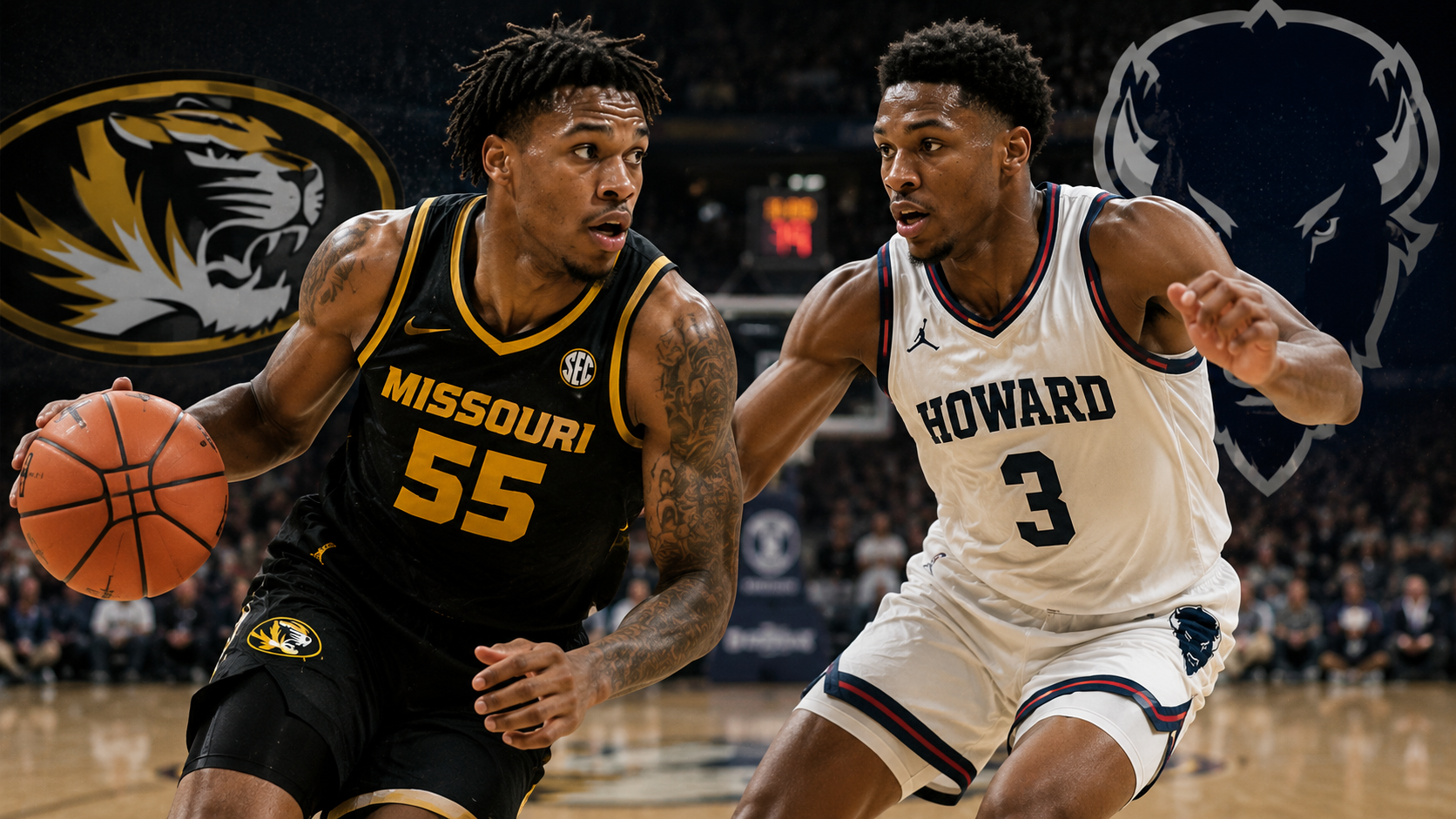
When people search “Missouri vs Howard,” they’re usually looking for the men’s college basketball matchup between the Missouri Tigers and the Howard Bison, played on November 3, 2025, at Burr Gymnasium in Washington, D.C. It was the season opener for both programs, and it turned into a historically strong road win for Missouri.
This article walks through what happened in the game, why the result mattered, and how each team performed individually.
Direct Answer
Missouri defeated Howard 88-67 on November 3, 2025, at Burr Gymnasium in Washington, D.C., to open the 2025-26 men’s college basketball season for both teams. Shawn Phillips Jr. led Missouri with a double-double of 16 points and 11 rebounds, while Howard’s Bryce Harris scored a game-high 27 points. The win marked Missouri’s largest road victory in a season opener in 84 years.
Background: A Notable Road Trip for Missouri
Missouri came into the game fresh off a 22-12 season under head coach Dennis Gates, a campaign that included a No. 6 seed in the NCAA Tournament, the program’s best seeding since 2012. Rather than opening at home, as most programs do, Missouri chose to open on the road at Howard, marking the second straight year the Tigers started their season away from Columbia.
The trip carried some extra weight. Missouri had not won a season-opening road game since 2003, and the program hadn’t posted this large of a road win to open a season in 84 years, dating back to a 52-29 victory over Saint Louis in the 1941-42 season. It also marked the first time in the two programs’ history that Missouri played a true road game against Howard; 20 of the previous 21 meetings between the schools had been played in Columbia, with one additional neutral-site game at an NCAA Tournament.
Missouri also had to manage some early-season injury concerns. Forwards Trent Pierce, Annor Boateng, and Trent Burns were all ruled out with lower-body injuries, meaning the Tigers opened the year without three players who had been expected to contribute.
How the Game Unfolded
Missouri Takes Control Early
Missouri won the opening tip and got on the board quickly, with Sebastian Mack finding Shawn Phillips Jr. inside for an early basket. Howard answered on its first possession, but Missouri responded with a burst of scoring, including a dunk from Mark Mitchell and a three-pointer from Jevon Porter, to push the lead to 11-5 early in the first half.
From there, Missouri kept building. A 16-5 scoring run stretched the Tigers’ lead further, and by the halfway point of the first half, Missouri had extended its advantage into double digits and kept adding to it through good ball movement and efficient shooting.
Howard Mounts a Second-Half Push
Missouri carried its lead into the break and came out of halftime looking to extend it, stretching the margin to 20 points early in the second half at 46-26. Howard wasn’t finished, though. The Bison put together a 20-9 run, shooting an efficient 7 of 9 from the field, including all six of their three-point attempts during that stretch, to cut Missouri’s lead down to nine points at 55-46.
That was as close as Howard would get. Missouri answered immediately with a 14-3 run of its own, shooting 6 of 9 from the field and 2 of 3 from three-point range, to push the lead back out to 21 points at 72-51. From that point forward, Missouri controlled the pace and cruised to the finish, closing out an 88-67 win.
Key Individual Performances
Shawn Phillips Jr., playing his first game in a Missouri uniform after transferring in, led the Tigers with a double-double: 16 points and 11 rebounds. He was remarkably efficient, making 8 of 9 field-goal attempts.
Jayden Stone added 13 points for Missouri, connecting on 3 of 4 attempts from three-point range, while Jacob Crews chipped in 10 points off the bench. T.O. Barrett paced the Tigers with four assists, and Anthony Robinson II led the team defensively with three steals.
As a team, Missouri shot an efficient 55.7 percent from the field, including 52.6 percent (10 of 19) from three-point range. The Tigers also dominated the boards, out-rebounding Howard 47-28, and controlled the interior with a 46-16 advantage in points in the paint.
For Howard, Bryce Harris put together the best individual performance of the night, scoring a game-high 27 points on 4-of-9 shooting from three-point range, while adding four rebounds and four assists. Alex Cotton also had a strong offensive night, scoring 20 points on 6-of-12 three-point shooting. Despite those individual performances, Howard shot just 35.5 percent from the field as a team, which made it difficult to sustain any long stretch of offensive success against Missouri’s defense and rebounding advantage.
Why the Game Turned Out the Way It Did
A few factors explain the final margin:
Missouri’s three-point shooting was extremely efficient. Making 10 of 19 attempts from beyond the arc gave Howard’s defense little room to key in on any single area of the floor.
Rebounding and interior scoring created a wide gap. Missouri’s 47-28 rebounding advantage, paired with a 46-16 edge in points in the paint, meant Howard had to work far harder for each possession while Missouri generated easier looks close to the basket.
Missouri answered every Howard run. When Howard cut the deficit to nine points in the second half, Missouri immediately responded with its own scoring run rather than letting the game stay close, which shut down any real chance of a comeback.
Depth mattered for Missouri. With four different players in double figures and contributions spread across the roster, Howard couldn’t focus its defensive game plan on stopping just one or two scorers.
Common Misconceptions About This Matchup
Misconception: This was a typical, low-stakes season opener. While season openers are often unremarkable, this particular result set records. It was Missouri’s largest road win in a season opener in 84 years and the program’s first road win in a season opener since 2003.
Misconception: Howard didn’t compete in the game. Howard actually mounted a real second-half push, cutting a 20-point deficit down to nine points with an efficient shooting run. The game only pulled away again after Missouri answered that run directly.
Misconception: This was a “normal” road game for Missouri against Howard. Historically, the two programs had met almost exclusively in Columbia. This was the first true road game between the schools, making the size of Missouri’s win even more notable given the unfamiliar environment.
Key Facts
- Final score: Missouri 88, Howard 67
- Date: November 3, 2025
- Location: Burr Gymnasium, Washington, D.C.
- Occasion: Season opener for both teams
- Missouri’s record after the game: 1-0
- Howard’s record after the game: 0-1
- Leading scorer: Bryce Harris, Howard, 27 points
- Missouri’s double-double: Shawn Phillips Jr., 16 points and 11 rebounds
- Missouri shooting: 55.7% from the field, 52.6% from three-point range
- Rebounding margin: Missouri 47, Howard 28
- Points in the paint: Missouri 46, Howard 16
- Historical note: Missouri’s largest road win in a season opener in 84 years
Frequently Asked Questions
Q1: What was the final score of Missouri vs Howard?
Ans: Missouri won 88-67 in their November 3, 2025 season opener at Burr Gymnasium in Washington, D.C.
Q2: Who led all scorers in the game?
Ans: Howard’s Bryce Harris led all scorers with 27 points, while Missouri’s Shawn Phillips Jr. recorded a team-high double-double with 16 points and 11 rebounds.
Q3: Where was the game played?
Ans: The game was played at Burr Gymnasium in Washington, D.C., Howard’s home arena, marking Missouri’s first true road game in the series.
Q4: Why was this considered a historic win for Missouri?
Ans: It was Missouri’s largest road win in a season opener in 84 years, dating back to a 1941-42 victory over Saint Louis, and the program’s first road win in a season opener since 2003.
Q5: Did Howard have any chance in the game?
Ans: Yes. Howard cut a 20-point deficit down to nine points in the second half with an efficient shooting run before Missouri answered with a run of its own to close out the win.
Q6: Was Missouri at full strength for this game?
Ans: No. Forwards Trent Pierce, Annor Boateng, and Trent Burns were all ruled out with lower-body injuries heading into the season opener.
Q7: What came next for each team?
Ans: Missouri returned home to Columbia for its home opener, while Howard continued its home slate at Burr Gymnasium against UDC.
Key Takeaways
- Missouri defeated Howard 88-67 on November 3, 2025, in the season opener for both teams.
- The game was played at Burr Gymnasium in Washington, D.C., marking Missouri’s first true road game in the series history.
- Shawn Phillips Jr. recorded a double-double for Missouri with 16 points and 11 rebounds in his Tigers debut.
- Howard’s Bryce Harris led all scorers with 27 points, but the Bison shot just 35.5% from the field as a team.
- Missouri shot 55.7% from the field and out-rebounded Howard 47-28.
- The win marked Missouri’s largest road victory in a season opener in 84 years.
Conclusion
The 2025-26 season opener between Missouri vs Howard delivered a historically strong result for the Tigers, who overcame a late Howard push to secure an 88-67 road win. Efficient shooting, rebounding dominance, and a balanced scoring effort defined Missouri’s performance, while Howard’s Bryce Harris and Alex Cotton provided bright spots in an otherwise difficult night for the Bison. For Missouri, the result set an early tone for a season that began on the road with one of the program’s most impressive opening-night performances in decades.
Introduction
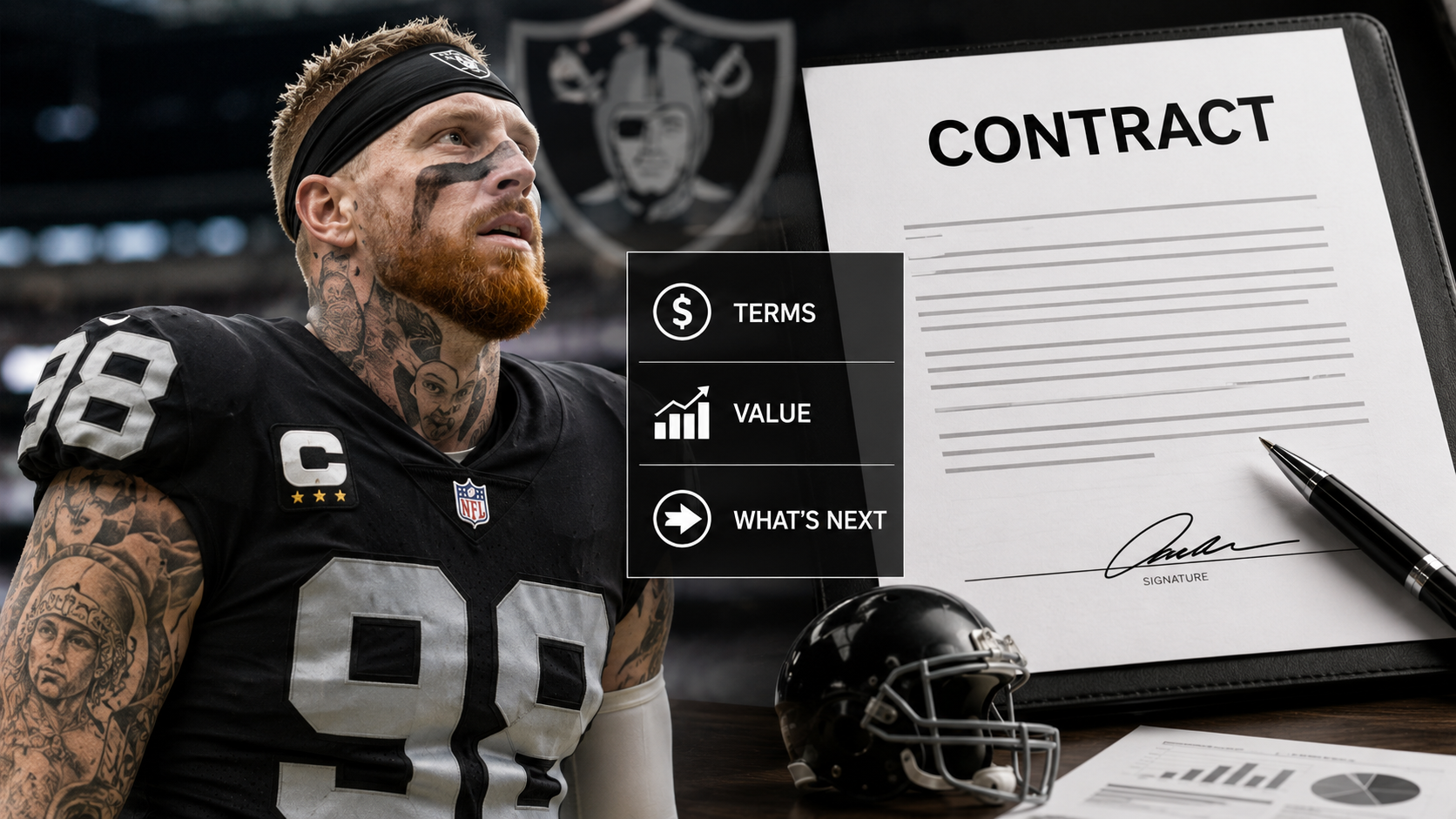
Maxx Crosby has spent his entire career with the Las Vegas Raiders, and his contract has become one of the more closely watched deals in the NFL, partly because of its size and partly because of how much drama has surrounded it since it was signed. Readers searching for details on the Maxx Crosby contract usually want to know the numbers, how it compares to other pass rushers, and whether recent injury and trade rumors put his future with the Raiders in question.
This article breaks down the terms of his current deal, the history behind it, and where things stand heading into the 2026 season.
Direct Answer: What Is Maxx Crosby Contract?
Maxx Crosby signed a three-year, $106.5 million extension with the Las Vegas Raiders in March 2025, including $91.5 million guaranteed and an average annual salary of $35.5 million. The deal made him the highest-paid non-quarterback in the league at signing. His base salaries for 2025 and 2026 were fully guaranteed at $32.5 million and $30 million, while his 2027 salary becomes guaranteed only if he’s on the roster early in the 2026 league year.
Background: How Crosby Got Here
The Raiders drafted Crosby in the fourth round of the 2019 NFL Draft out of Eastern Michigan, a relatively low-profile pick who developed into one of the league’s most productive edge rushers. His first extension came in March 2022, a four-year deal worth just under $99 million. That contract still had two years remaining when the Raiders decided to renegotiate again in 2025, largely because Crosby’s production had outpaced his existing salary.
Before the 2025 extension, Crosby had two years left on his 2022 deal, with base salaries of $22.2 million in 2025 and $18.8 million in 2026, but none of that remaining money was guaranteed. The new deal changed that significantly.
Contract Terms Explained
Total Value and Guarantees
The March 2025 extension is a three-year deal worth $106.5 million, with $91.5 million fully guaranteed. That guarantee level was notable at the time because it gave Crosby long-term security rather than year-to-year risk, which is unusual for a player already several years into his career.
Average Annual Salary
Crosby’s contract carries an average annual value of $35.5 million, which briefly made him the highest-paid non-quarterback in NFL history. That distinction didn’t last long, since other top pass rushers around the league, including Myles Garrett, signed even larger deals within days of Crosby’s extension.
Year-by-Year Breakdown
In 2026, Crosby is set to earn a base salary of $30 million, fully guaranteed, with a salary cap hit of roughly $35.8 million. That cap number represents close to 12 percent of the Raiders’ total salary cap for the season. His 2027 salary of $29 million is currently guaranteed only for injury, but it becomes fully guaranteed if he remains on the Raiders’ roster on the third day of the 2026 league year.
Why This Contract Matters
Crosby’s deal matters for a few reasons beyond the raw dollar figures. First, it reflects how the market for elite pass rushers has shifted, with teams increasingly willing to offer near-full guarantees to keep top defensive talent rather than let them approach free agency. Second, it ties directly into the Raiders’ broader roster planning, since a cap hit this large limits flexibility elsewhere on the roster.
There’s also a performance angle. Some analysts have pointed out that Crosby’s sack totals dipped in the two seasons before signing the extension compared to his 2022 and 2023 peak, which has led to debate over whether the deal will age well. Others argue that sacks alone don’t capture his value, noting his consistently high tackles-for-loss numbers as a better measure of his overall impact.
Recent Developments: Injury and Trade Speculation
Crosby’s contract situation became more complicated during the 2025 season. He played through a left knee injury starting in October, and the Raiders placed him on injured reserve in late December to end his season early, a decision Crosby reportedly disagreed with at the time. He underwent surgery for a torn meniscus in early January 2026.
In March 2026, the Raiders and Baltimore Ravens reportedly agreed to a trade sending Crosby to Baltimore, but the Ravens pulled out of the deal after Crosby did not pass their physical, with reports citing durability concerns tied to his knee. Following the collapsed trade, Crosby returned to the Raiders organization, and both sides have since described the situation as resolved, with Crosby stating he wants to remain in Las Vegas. By mid-2026, Crosby reported that his recovery was ahead of schedule, with an expected return to full participation in time for training camp.
Common Mistakes and Misconceptions
Assuming the entire contract is guaranteed. Only $91.5 million of the $106.5 million total is guaranteed. The 2027 salary is currently guaranteed for injury only, and full guarantee depends on roster status early in the 2026 league year.
Confusing his 2022 extension with his 2025 extension. Crosby has signed two separate extensions with the Raiders. The 2022 deal was worth roughly $99 million over four years; the 2025 deal replaced the remaining years of that contract with new, larger terms.
Assuming the failed Ravens trade voided his contract. The trade falling through didn’t change the terms of Crosby’s existing deal with the Raiders. He remains under contract with Las Vegas under the same 2025 extension terms.
Believing cap hit and salary are the same number. Crosby’s 2026 base salary is $30 million, but his cap hit is higher, around $35.8 million, because cap accounting spreads signing bonus money and other contract elements across multiple seasons.
Real-World Example: How the Deal Affects Roster Building
When the Raiders signed offensive lineman Tyler Linderbaum and other free agents during the 2026 offseason, Crosby’s $35.8 million cap hit was already factored into how much room the team had left to spend. Because his number represents such a large share of the total cap, decisions about extending or trading other players often get discussed in relation to Crosby’s contract, since it’s the single largest commitment on the roster.
Key Facts About the Maxx Crosby Contract
- Three-year extension signed March 5, 2025, worth $106.5 million total.
- $91.5 million of the deal is fully guaranteed.
- Average annual salary of $35.5 million, briefly the highest among non-quarterbacks in NFL history.
- 2025 and 2026 base salaries were fully guaranteed at $32.5 million and $30 million.
- 2027 salary of $29 million is currently guaranteed for injury only.
- Crosby’s 2026 cap hit is approximately $35.8 million, close to 12 percent of the Raiders’ total cap space.
- A March 2026 trade to the Baltimore Ravens fell through after Crosby did not pass a physical related to his knee.
Frequently Asked Questions
Q1: How much is Maxx Crosby contract worth?
Ans: His current deal with the Raiders is a three-year extension worth $106.5 million, including $91.5 million guaranteed.
Q2: Is Maxx Crosby the highest-paid defensive player in the league?
Ans: He was briefly the highest-paid non-quarterback by average annual value when he signed in March 2025, but several other pass rushers have since signed larger deals, moving Crosby down the rankings.
Q3: Why did the Ravens trade for Maxx Crosby fall through?
Ans: Reports indicate the Ravens backed out after Crosby did not pass their physical, with concerns tied to durability issues connected to his knee injury and subsequent surgery.
Q4: Is Maxx Crosby still with the Raiders?
Ans: Yes. Following the collapsed trade, Crosby returned to the Raiders organization and has stated he intends to remain with the team.
Q5: What happens to his contract if he gets traded in the future?
Ans: If traded, Crosby’s existing contract terms would generally transfer to the new team, though trade agreements can sometimes include restructured terms depending on what both teams negotiate.
Q6: Is his 2027 salary guaranteed?
Ans: Only for injury at this time. It becomes fully guaranteed if Crosby is on the Raiders’ roster on the third day of the 2026 league year.
Key Takeaways
- Crosby’s current deal is a three-year, $106.5 million extension signed in March 2025, with $91.5 million guaranteed.
- The contract made him briefly the highest-paid non-quarterback in NFL history.
- His 2026 cap hit of about $35.8 million represents a significant share of the Raiders’ total cap space.
- A trade to the Ravens in March 2026 fell through due to physical concerns related to his knee.
- Crosby has since returned to the Raiders and expects to be ready for the 2026 season.
Conclusion
Maxx Crosby’s contract reflects both his standing as one of the league’s top pass rushers and the financial risk teams take on when committing significant guaranteed money to a player in his late twenties. Between the size of the deal, the injury history, and the trade speculation that followed, his situation offers a clear look at how modern NFL contracts are structured and how quickly circumstances around them can shift.
-

 Technology2 months ago
Best Wireless Earbuds Under 200 Dollars 2024: What to Know Before You Buy
-

 News4 months ago
Best Places to See Penguins in the Wild: A Complete Guide
-

 Technology4 months ago
What Is VIPstand? How It Works, Legal Risks, and What You Should Know
-

 News4 months ago
Lake Mead Water Levels: Status, History & Western Impact
-

 Technology4 months ago
Laaster: Meaning, Origins, and What It Says About Harmful Speech
-

 Celebrity4 months ago
Matt Danzeisen: Who He Is, His Career in Finance, and His Life With Peter Thiel
-

 News4 months ago
What Is Epoch Fun? A Complete Guide to the Epoch Times Games Section
-
 Food2 months ago
Best Arroz con Leche Boliviano Near Me: What to Look For