
Technology
Droven.io Best AI Startups in USA: 2026 Guide


Most lists of the best AI startups in the USA tell you the same five names, add a few buzzwords, and call it a day. That is not useful. If you are a developer choosing a platform, an investor evaluating opportunities, a job seeker picking a company, or simply someone trying to understand where AI is heading — you need real information, not recycled hype.
Droven.io tracks AI companies with a focus on practical impact, product traction, and genuine business growth. This guide uses that lens to break down the best AI startups in the USA in 2026 — organized by category, backed by verified data, and written to actually help you understand what each company does and why it matters.
Direct Answer
The best AI startups in the USA in 2026 span foundation models, coding tools, legal AI, healthcare AI, search, and infrastructure. Leading names include OpenAI, Anthropic, Anysphere (Cursor), Perplexity AI, Harvey, xAI, Scale AI, ElevenLabs, Glean, and CoreWeave. Together they have raised hundreds of billions in venture funding and are generating measurable revenue across enterprise and consumer markets.
What Is Droven.io and Why Does It Track AI Startups?
Droven.io is a technology intelligence platform that monitors and profiles emerging AI companies, with a particular focus on the United States market. Rather than ranking companies purely by valuation, Droven.io evaluates startups based on real-world product adoption, revenue growth, founder background, and long-term viability.
The platform fills a genuine gap. Most startup trackers either focus exclusively on funding rounds or produce vague qualitative rankings with no supporting data. Droven.io tries to connect capital activity to actual product impact — which is why its coverage of AI startups has attracted readers ranging from enterprise buyers to early-career engineers looking for their next employer.
Why 2026 Is a Defining Year for AI Startups in the USA
The numbers from early 2026 are genuinely historic. February 2026 became the largest single month of startup funding ever recorded, with $189 billion globally — and nearly all of it went to AI companies. Three deals alone — OpenAI ($110 billion), Anthropic ($30 billion), and Waymo ($16 billion) — accounted for most of that total.
But the more important shift is not the money itself. It is what the money is chasing. Foundation model labs have moved beyond research demos into actual revenue machines. Vertical AI companies in legal, healthcare, and finance are raising at enterprise-software multiples. AI coding tools became the fastest-growing software category ever measured.
That transition — from research projects to revenue-generating businesses — is what makes 2026 different from every AI cycle before it.
Category 1: Foundation Model Companies
These are the companies building the large AI models that power everything else. They require the most capital, carry the highest valuations, and sit at the center of the entire AI ecosystem.
OpenAI
Founded in 2015 and headquartered in San Francisco, OpenAI raised $110 billion in February 2026 alone — the largest private venture round in history. Its post-money valuation stands at approximately $840 billion, with an IPO targeting Q4 2026 near $1 trillion. ChatGPT has over 400 million weekly users.
OpenAI builds the GPT family of language models, the o3 reasoning system, DALL-E image generation, Sora video generation, and the Codex coding agent. Revenue is reportedly running at $2 billion per month — around $24 billion annualized as of April 2026.
What sets OpenAI apart is distribution. No other AI company has built consumer awareness at the same scale. ChatGPT is often the first AI product non-technical users encounter, which gives OpenAI an enormous advantage in shaping how people think about and interact with AI overall.
Anthropic
Anthropic raised $65 billion in a Series H funding round, valuing the AI safety company at $965 billion post-money — one of the largest private funding rounds in tech history. The round was led by Altimeter Capital, Dragoneer, Greenoaks, and Sequoia Capital, and includes $5 billion from Amazon.
Run-rate revenue crossed $47 billion as of May 2026, with Claude Code, enterprise contracts, and API usage fuelling historic growth. Eight of the Fortune 10 are Claude enterprise customers. The projected Q2 2026 operating profit of approximately $559 million would make Anthropic the first major AI frontier lab to break even.
Anthropic’s focus on AI safety and interpretability research gives it a distinct positioning, especially with regulated industries — financial services, healthcare, and legal — where enterprise buyers want a model provider they can trust with sensitive data.
xAI
xAI opened 2026 with a $20 billion Series E in January. The Colossus cluster expansion in Memphis remains the largest single AI training facility on earth. xAI was subsequently acquired by SpaceX in February 2026 for $250 billion, creating a combined entity valued at $1.25 trillion.
The integration with SpaceX and distribution through X (formerly Twitter) gives xAI an unusual combination of infrastructure scale and direct consumer reach that neither OpenAI nor Anthropic can easily replicate.
Category 2: AI Coding Tools
Software development was the first professional category where AI moved from assistant to genuine collaborator. The startups in this space are growing faster than almost any software companies in history.
Anysphere (Cursor)
Anysphere, the company behind the Cursor code editor, is the fastest B2B software company ever to reach $2 billion in annualized revenue. It hit that milestone in roughly three years from launch by February 2026, and is now reportedly raising $2 billion or more at a $50 billion valuation with Thrive Capital and Andreessen Horowitz leading.
Cursor works by embedding AI directly into the code editor experience. Rather than switching between a chat interface and a code window, developers write, review, and debug code with AI suggestions appearing inline. The product became the default tool for a significant portion of professional developers within two years of launch — an adoption curve that has few parallels in enterprise software history.
Cognition AI
Cognition built Devin, which became the first AI system to pass real software engineering tasks without human intervention at a commercially meaningful level. The company attracted enormous attention in early 2024 and has continued scaling its autonomous coding agent into enterprise workflows. Cognition is among the fastest-growing AI startups scaling from zero to unicorn status.
Where Cursor augments developers, Devin is designed to complete programming tasks end-to-end. Both approaches are growing simultaneously — the market for AI-assisted software development is large enough to support multiple distinct product philosophies.
Category 3: AI Search and Knowledge
Perplexity AI
Founded in 2022 and headquartered in San Francisco, Perplexity AI raised a Series E in Q1 2026, reaching a valuation of $24 billion. It crossed one billion monthly queries in Q1 2026. Revenue grew 6.3 times in 2025, crossing $100 million in annualized revenue.
Perplexity answers questions with cited sources rather than returning a list of links. That distinction sounds small but changes the entire search experience — users get a synthesized answer immediately, with references they can verify if they choose to dig deeper.
Perplexity is the strongest challenger to Google’s search dominance in a generation. That is a significant claim, but the query growth numbers support it. One billion monthly queries represents genuine consumer adoption, not just tech enthusiast usage.
Glean
Glean focuses on enterprise search — helping employees find information across company tools like Slack, Google Drive, Salesforce, and Confluence from a single interface. As organizations adopt more SaaS products, the internal knowledge fragmentation problem grows. Glean uses AI to reunify that scattered information. Glean is among the AI startups that hit $100 million or more in annual recurring revenue in under two years.
Category 4: Vertical AI — Legal, Healthcare, and Enterprise
Vertical AI companies focus on a single industry rather than building general-purpose tools. This focus gives them a significant advantage: they can train on domain-specific data, build workflows that match professional routines, and price at the premium levels that regulated industries are accustomed to paying.
Harvey — Legal AI
Harvey, which builds AI tools specifically for legal professionals, has reached a valuation of $11 billion. Its platform handles contract analysis, legal research, due diligence, and document drafting — tasks that previously consumed thousands of billable hours at large law firms.
Harvey’s growth demonstrates something important about vertical AI: the best use cases are not the ones where AI replaces humans outright, but where it dramatically speeds up the high-volume, repetitive parts of expert work, freeing professionals to focus on judgment and client relationships.
Abridge — Healthcare AI
Abridge, which builds AI clinical scribe tools, has reached a valuation of $5.3 billion. The product listens to physician-patient conversations and automatically generates structured clinical notes, reducing documentation time that currently consumes a significant portion of every doctor’s workday.
Physician burnout driven by administrative burden is one of the most documented problems in American healthcare. Abridge addresses it directly. The company has partnerships with major health systems and has expanded rapidly as healthcare organizations prioritize documentation efficiency.
Decagon — Customer Support AI
Decagon, which builds AI customer support agents, has reached a valuation of $4.5 billion. Its platform handles customer inquiries autonomously, escalating to human agents only when a situation genuinely requires human judgment.
The distinction from earlier chatbot systems is meaningful. Decagon’s agents understand context across a full conversation, can access company knowledge bases and order systems, and handle complex multi-step requests — not just simple FAQ responses.
Category 5: AI Infrastructure
AI applications need somewhere to run. The companies building the compute, chip, and data infrastructure underneath the software layer are growing rapidly as model training and inference demand continues accelerating.
CoreWeave
CoreWeave has a valuation of $19 billion and operates one of the largest GPU cloud platforms in the world. As AI training runs become more expensive and time-sensitive, access to reliable GPU capacity has become a genuine competitive advantage. CoreWeave serves AI labs, enterprise customers, and startups that cannot afford to build their own compute infrastructure.
Groq
Groq has a valuation of $6.9 billion after a $750 million raise in 2025. In December 2025, Groq signed a non-exclusive licensing deal with Nvidia for its inference technology worth $17 billion in payments through 2026. Groq focuses on AI inference speed — making model responses faster and cheaper once training is complete. As AI moves from the research phase to the deployment phase, inference efficiency becomes increasingly central.
Scale AI
Scale AI builds the data infrastructure that makes AI models more accurate. Proprietary training data and reinforcement learning from human feedback pipelines remain the most defensible AI asset — and Scale AI is valued as the company that controls high-quality human feedback data, which directly controls model quality. Every major AI lab depends on high-quality labeled training data, and Scale AI has built the largest and most sophisticated operation for producing it.
Category 6: Voice and Creative AI
ElevenLabs
ElevenLabs tripled its valuation during 2025 and 2026, reaching $11 billion, while annualized revenue crossed $500 million. The company builds voice synthesis technology that produces natural-sounding speech in dozens of languages and voices. Its tools power podcasts, audiobooks, video narration, customer service phone systems, and accessibility applications.
Voice AI was one of the most underhyped categories of the early AI boom and one of the fastest to reach genuine product-market fit. ElevenLabs established an early lead in voice quality that has proven difficult for competitors to close.
What Makes an AI Startup Worth Watching in 2026
Not every AI company deserves equal attention. The ones with the most durable positions tend to share a few common characteristics.
Seventy percent of top-funded AI startups have founders from OpenAI, Google, Meta, or Salesforce. Founder pedigree does not guarantee success, but it does signal access to talent networks, credibility with enterprise buyers, and familiarity with the technical challenges at scale.
Application-layer companies need proprietary data, deep workflow integration, or unique distribution to justify premium valuations — otherwise they are just API wrappers. That distinction separates companies building something genuinely defensible from those that could be displaced when a foundation model improves or a competitor releases a similar product.
B2B AI startups raised four times more than consumer-focused ones in 2025. Enterprise customers pay predictable subscription fees, have longer contracts, and are slower to churn. Consumer AI can grow faster but is harder to monetize reliably at scale.
Speed to revenue is another signal. The fastest AI startups — Anysphere, Sierra, and Glean — hit $100 million or more in annual recurring revenue in under two years. That pace of adoption indicates genuine product-market fit rather than trial usage.
Common Misconceptions About AI Startups
The biggest valuation means the best product
Valuation reflects investor expectations about future revenue — not current product quality. Some of the most useful AI tools in daily use belong to companies valued far below the headline names. Harvey and Abridge both solve real problems at scale with valuations a fraction of OpenAI’s.
All AI startups are essentially the same
The range across this list alone covers foundation model training, legal document analysis, clinical transcription, GPU cloud infrastructure, voice synthesis, and enterprise search. These are fundamentally different businesses with different customers, cost structures, and competitive dynamics.
AI startups will replace entire job categories overnight
The pattern across successful vertical AI companies is augmentation rather than wholesale replacement. Harvey speeds up legal research — it does not replace lawyers. Abridge reduces documentation time — it does not replace physicians. The companies growing fastest are the ones that make professionals more productive, not the ones promising to eliminate professional roles.
If you missed the early investments, the opportunity is gone
Seventeen US-based AI companies closed funding rounds of $100 million or more in just the first six weeks of 2026. The AI startup ecosystem is still expanding rapidly at every stage. Early-stage companies in robotics, defense AI, and agent infrastructure are just beginning their growth curves.
Key Facts
- Private funding for AI startups topped $150 billion over the trailing twelve months through early 2026
- Anthropic became the most valuable standalone AI startup globally after its $65 billion Series H at a $965 billion valuation in May 2026
- Anysphere (Cursor) is the fastest B2B software company in history to reach $2 billion in annualized revenue
- Perplexity AI crossed one billion monthly queries in Q1 2026
- AI infrastructure — GPU cloud, data labeling, and AI chips — attracted over $30 billion in 2025 funding alone
- The top 20 AI companies account for more than 80% of total industry valuation
- San Francisco is home to more top AI startups than any other city in the world, including OpenAI, Anthropic, Cursor, Cognition, Scale AI, and Perplexity
FAQ
Q1: What is Droven.io?
Ans: Droven.io is a technology intelligence platform that profiles and tracks AI companies, with a focus on the US market. It evaluates startups based on product traction, revenue growth, and real-world impact — not just funding headlines.
Q2: What are the best AI startups in the USA right now?
Ans: In 2026, the leading US AI startups include OpenAI, Anthropic, xAI, Anysphere (Cursor), Perplexity AI, Harvey, Abridge, Glean, ElevenLabs, Scale AI, CoreWeave, and Groq — spanning foundation models, coding tools, vertical AI, and infrastructure.
Q3: Which AI startup is growing the fastest?
Ans: Anysphere (Cursor) reached $2 billion in annualized revenue in roughly three years from launch — making it the fastest B2B software company in history to hit that milestone. Anthropic is the fastest-growing foundation model lab by absolute revenue.
Q4: Are AI startups a good investment in 2026?
Ans: That depends entirely on the company, stage, and valuation. Application-layer companies trade at much lower multiples if they lack proprietary data or deep workflow integration. Foundation model companies carry the highest valuations but also the highest capital requirements. Evaluating any AI investment requires looking beyond the AI label to the specific business model underneath.
Q5: What categories of AI startups are growing fastest?
Ans: Defense AI, robotics foundation models, and vertical AI applications in legal, healthcare, and customer support are among the fastest-growing categories heading into mid-2026.
Q6: How do I find a job at an AI startup?
Ans: The best entry points are companies in the growth stage — past product-market fit but still expanding teams rapidly. Cursor, Harvey, Perplexity, Abridge, and ElevenLabs all fit that profile. Most are hiring across engineering, product, sales, and research roles. LinkedIn and the companies’ own career pages are the most direct sources.
Q7: What is the difference between foundation model companies and vertical AI companies?
Ans: Foundation model companies like OpenAI and Anthropic build the core AI models that power other products. Vertical AI companies like Harvey and Abridge build specialized applications for a specific industry using those underlying models. Foundation model companies trade at 15 to 60 times revenue. Application companies trade at 20 to 45 times if they have proprietary data and deep workflow integration, but much lower if they are essentially just API wrappers.
Key Takeaways
- The USA is the global center of AI startup activity, with San Francisco as the dominant hub
- Foundation model companies — OpenAI, Anthropic, xAI — command the highest valuations and have moved from research to genuine revenue at historic scale
- Vertical AI startups in legal (Harvey), healthcare (Abridge), and enterprise search (Glean) are growing rapidly by solving specific, high-value professional problems
- AI coding tools, led by Anysphere’s Cursor, represent the fastest software adoption curve ever measured in B2B markets
- Infrastructure companies — CoreWeave, Groq, Scale AI — are essential to the entire ecosystem and growing alongside the application layer
- The best AI startups share common traits: proprietary data, deep workflow integration, strong founder backgrounds, and measurable enterprise revenue
- Droven.io tracks these companies with a focus on real product traction rather than funding headlines alone
- 2026 is not the end of AI startup opportunity — defense AI, robotics, and agent infrastructure categories are still in early stages
Conclusion
The Droven.io best AI startups in USA list reflects something broader than a funding leaderboard. It maps a genuine industrial shift — one where AI has moved from academic research into daily professional workflows, and where the companies building the best tools are generating revenue at a pace the software industry has rarely seen.
The startups covered here are not all equally accessible to every reader. Some are investable only by institutional funds. Some are enterprise products with six-figure contracts. But understanding who they are, what they build, and why they are growing matters whether you are a buyer, a job seeker, an investor, or someone simply trying to read the map of where technology is heading.
The AI startup landscape in 2026 is large, fast-moving, and genuinely consequential. The companies on this list are the ones worth watching most closely.

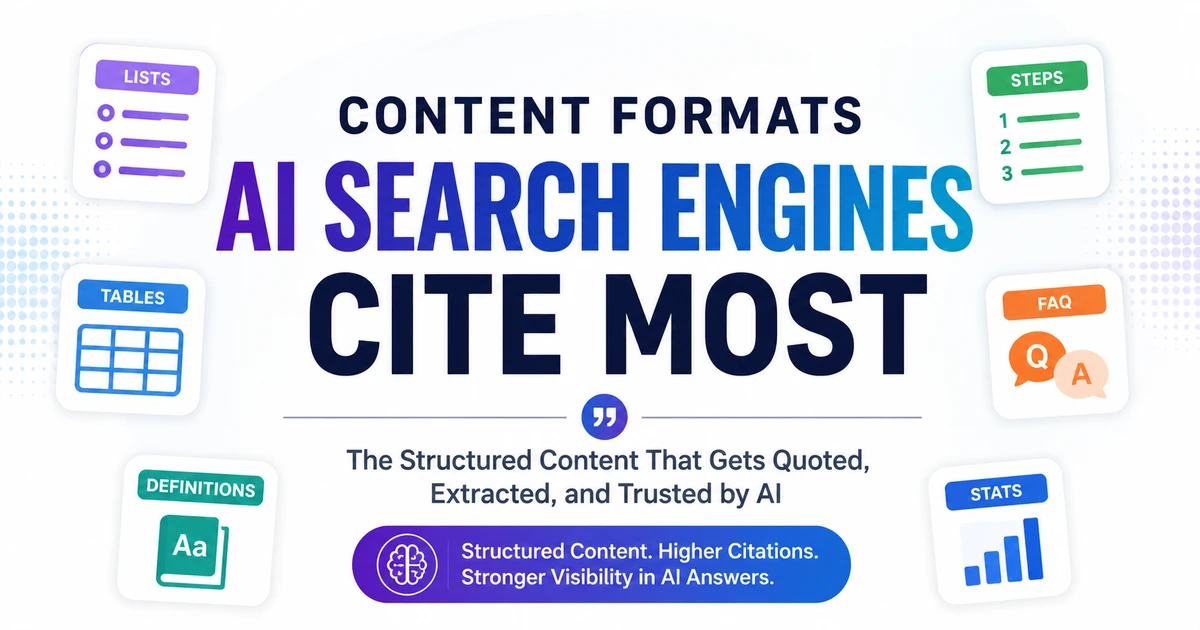
These types of search engines, answer engines, and AI overview tools have revolutionized the way people find information on the internet. Rather than digging through ten blue links, one is now presented with compiled summaries directly lifted from the internet. But in terms of digital publishing and marketing, it begs the following question: how can one make sure that the latest large language models cite and link to one’s website? The solution is found in Generative Engine Optimization (GEO), which is the process of creating one’s material in such a way that it can be easily parsed and cited by intelligent systems. Although more and more companies seek dedicated ai seo services, having an understanding of what kind of writing appeals to the intelligent system makes it possible for anyone to increase citations of their work.
Here is how to create content that AI search engines will actually cite.
1. Create “Answer First” Content Architecture
The AI search engine works with very strict retrieval deadlines. Therefore, clarity and efficiency trump entertainment. If one buries all the important information under three paragraphs of introductory preamble, one increases the chances of being skipped by retrieval algorithms.
- Start with Direct Definitions: Lead each major heading with a definitive statement consisting of 40 to 60 words that directly answers the central question.
- Provide Canonical Descriptions: Whenever you use industry-specific terminology for the first time, give a canonical definition of the same within a one-paragraph standalone statement.
- Keep Paragraphs Short: Stick to paragraphs of two or three sentences only. Focused paragraphs are much easier for AI models to understand and extract.
2. Format Key Data in Extractable Blocks
When building synthesized responses, AI models seek structured forms that need little to no interpretation. The denser the text, the more the model needs to understand what you mean, resulting in possible misattribution or hallucinations.
- HTML tables for comparisons: Whenever you are comparing anything from features to metrics across various dimensions, always use an HTML table.
- Structure lists for processes and features: Always use bulleted or numbered lists to communicate steps of a process and feature lists.
- Question-based headings: Use your subheadings to ask the question users have (e.g., “What Is Content Extraction?”).
3. Support Claims with Citable Facts and Sources
Large language models consider the depth of knowledge and credibility of content when assessing the material. Phrases like “experts say” or “studies show” hold little value for citation algorithms.
For the algorithm to cite your content directly, always include verifiable facts and numbers in every section of the content. Add specific metrics, percentages, research data, and citations of original sources. Citing claims by experts or citing named research papers tells the model that your content is credible.
4. Build Strong Entity Clarity and Schema
AI engines travel the internet using knowledge graphs, which are digital maps connecting people, places, institutions, and concepts. When the engine can’t be sure of who you are and what expertise you have, it resorts to citing other, more famous brands.
Keep your brand information uniform across the Internet, use detailed author pages with valid credentials, and apply structured schema markup (Article, FAQPage, HowTo schema). Feeding the crawlers clean machine-readable data allows algorithms to easily validate your identity and cite your publication.
5. Create Q&A Sections
Creating a dedicated FAQs section at the end of each article is one of the best ways to secure an AI citation. Formulate questions as if answering user prompts and provide concise answers right below. These Q&A blocks resemble user prompts and are often directly copied into answer panels by AI engines.
Conclusion
Acquiring citations from AI search engines is not about gaming keywords but decreasing the friction of machine extraction. By placing clear answers upfront, structuring data into extractable tables and lists, backing every claim with factual proof, and building clear entity authority, you make your website an indispensable source of truth. Whether you execute these optimizations internally or collaborate with dedicated ai seo services, aligning your writing with how generative models consume information ensures your brand remains visible, authoritative, and frequently cited in the AI-driven search landscape.
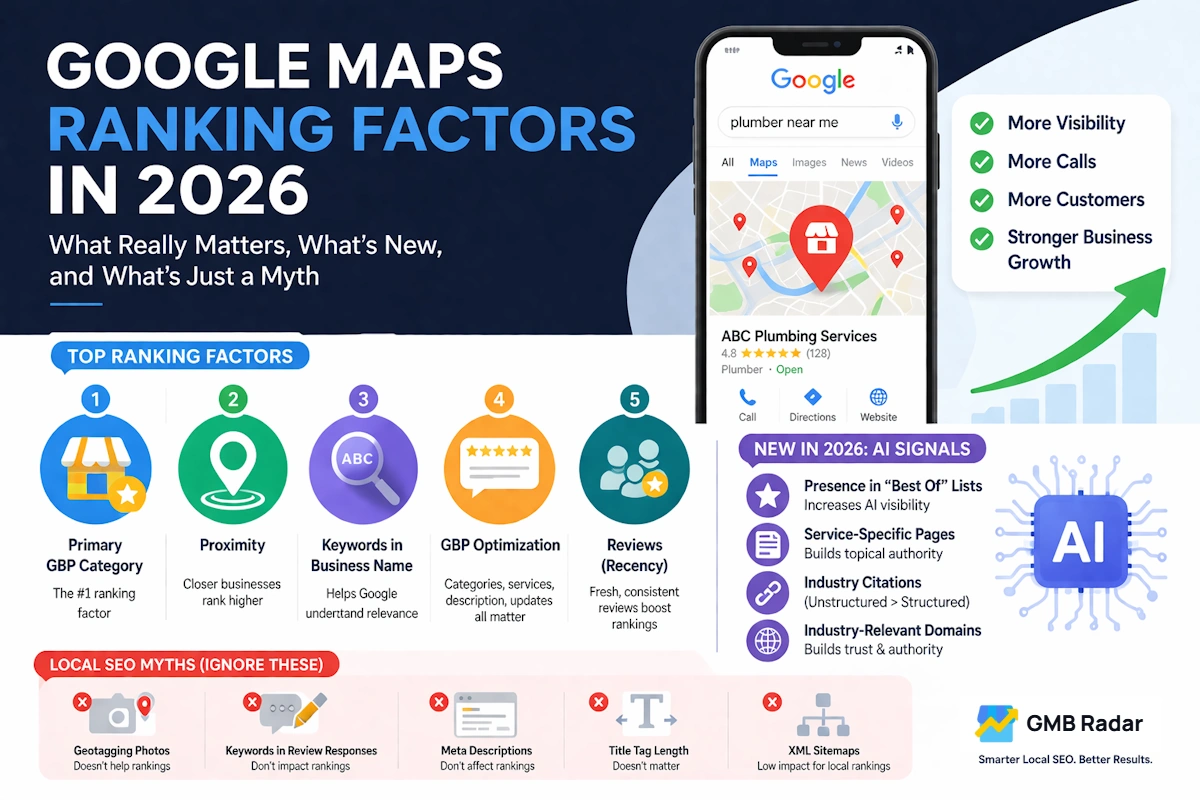
When you search for a nearby coffee shop or mechanic, your phone usually shows three featured local businesses right below the search bar. Getting your business into that prime real estate isn’t random luck or magic. Smart local businesses use targeted map pack seo strategies to earn those top spots and claim the lion’s share of nearby customers. If you want to boost your online visibility, you need to know what drives those rankings. Here are the seven main factors that determine who makes the cut.
1. Google Business Profile Optimization
Your profile is the bedrock of your local setup. If you do not claim your listing, pick the right main category, and fill out every blank box, you are leaving money on the table.
Here is what active profiles actually do on a regular basis:
- Post fresh photos: Show off your store, your team, and your latest work so people know you are legit.
- Keep hours accurate: Change your listed times for holidays or seasonal shifts so nobody shows up to a locked door.
- Spell out your menu or services: List what you actually offer instead of making shoppers guess.
Avoid basic mistakes that trip up your listing:
- Keyword stuffing: Stick to your real business name instead of tacking on extra buzzwords to cheat the system.
- Blank profile fields: Fill in everything, including your website link, phone number, and accessibility details.
- Mismatched info: Make sure your address and phone match what is listed on your actual website.
Leaving blanks or listing wrong details throws off customers and search tools alike. A complete, clean profile sets a solid baseline that puts you ahead of lazy competitors in town.
2. Proximity to the Searcher
You cannot move your building closer to a customer, but you can be smart about how you define your service area. Distance is one of the biggest factors in local search, and Google almost always favors whichever shop is physically closest to the person holding the phone.
Here is how to get the most out of your physical footprint:
- Set clear service boundaries: Outline the exact zip codes and towns you drive to so you catch nearby leads.
- Drop precise map pins: Make sure your marker sits right over your actual front door, not in the middle of an intersection down the street.
- Target local neighborhood hubs: Mention well-known nearby landmarks or districts in your updates, so searchers recognize your area.
- Be realistic about your reach: Know that a customer standing two miles closer to a competitor will usually see them first.
You cannot fake your physical location, but setting clear boundaries helps you dominate the exact blocks where you actually operate.
3. Review Volume and Star Rating
Getting a constant stream of real reviews is one of the quickest ways to build trust and show you are open for business. When locals leave high ratings and talk about their experience, it proves to both searchers and search engines that you do solid work.
Here is how to manage your reviews the right way:
- Ask regularly: Focus on getting a steady flow of feedback over time instead of asking fifty people all on the same day.
- Reply to every single comment: Say a quick thanks to positive reviewers so they know you appreciate their support.
- Handle complaints calmly: Respond to unhappy customers professionally to show potential clients you take bad experiences seriously and fix mistakes.
- Watch for service keywords: Notice how happy customers naturally mention specific jobs or workers in their comments.
Collecting reviews isn’t a one-and-done project. Staying active in your review section shows your community that customer service actually matters to your business.
4. On-Page Local Signals
Your main website has to talk to your map profile so search engines get the full picture. If your site lists one address and your map profile lists another, you end up confusing the systems that send local buyers your way.
Here is how to set up clear location signals on your site:
- Put your info in the footer: Keep your business name, address, and phone number visible at the very bottom of every single page.
- Embed an active Google map: Place a live map right on your contact page so visitors and search bots can pinpoint your shop instantly.
- Build separate location pages: Create individual pages for each city or town you cover if you run multiple offices or send trucks out to surrounding areas.
- Add local schema code: Have your site developer drop local markup code into the back end to make your location clear to search crawlers.
When your website and map listing line up perfectly, you make it easy for local buyers to find you and trust that you are the real deal.
5. Consistent NAP Citations
Having different business details scattered around the web confuses both real people and search systems. Your business name, street address, and main phone number need to match letter-for-letter on Yelp, social media pages, local business directories, and your own site.
Here is how to clean up your business listings:
- Check for old addresses: Hunt down outdated locations from past moves and update them to your current front door.
- Fix phone number variations: Make sure you list the exact same main office line everywhere instead of mixing cell phones and landlines.
- Spell your name the same way: Drop random additions like “Inc.” or “LLC” on some sites if you do not use them across the board.
- Fix typos on directory sites: Run a quick search for your business on major sites like YellowPages to catch small mistakes before they cause issues.
Cleaning up these old listings takes a little time, but fixing mismatched info gives search platforms full confidence that your business is open, active, and located right where you say you are.
6. High-Quality Inbound Backlinks
Links from other reputable websites function as endorsements for your local authority. Acquiring links from the following will help you:
- local news outlets
- neighborhood blogs
- trade associations
- sponsored community events
Search engines view these regional links as proof that your company is genuine and well-integrated into the local community.
Quality beats sheer volume every time when building a healthy backlink footprint. A single link from a well-respected local newspaper carries far more value than dozens of low-quality links from unrelated sites. Focus on building real relationships with local partners to naturally earn those high-value links over time.
7. User Engagement Signals
How searchers interact with your local profile directly impacts your long-term position. The following tells alorigthms that your business is relevant:
- High click-through rates
- Frequent requests for driving directions
- Direct phone calls from listings
If people frequently click your profile and take action, your position tends to strengthen.
To maximize user actions, post clear calls to action and publish high-quality photos of your team, work, or storefront. Clear pictures and easy navigation encourage users to interact rather than scroll past to a competitor. Earning strong user engagement keeps your business positioned ahead of static, inactive listings.
Final Word
Winning a top spot in local search results requires consistent effort across multiple channels. By aligning your website content, managing customer feedback, and applying focused map pack seo tactics, you build lasting digital authority. Local search success does not happen overnight, but staying focused on these seven factors gives your business a clear edge. Keep your business information accurate, engage with your community, and watch your local visibility grow.
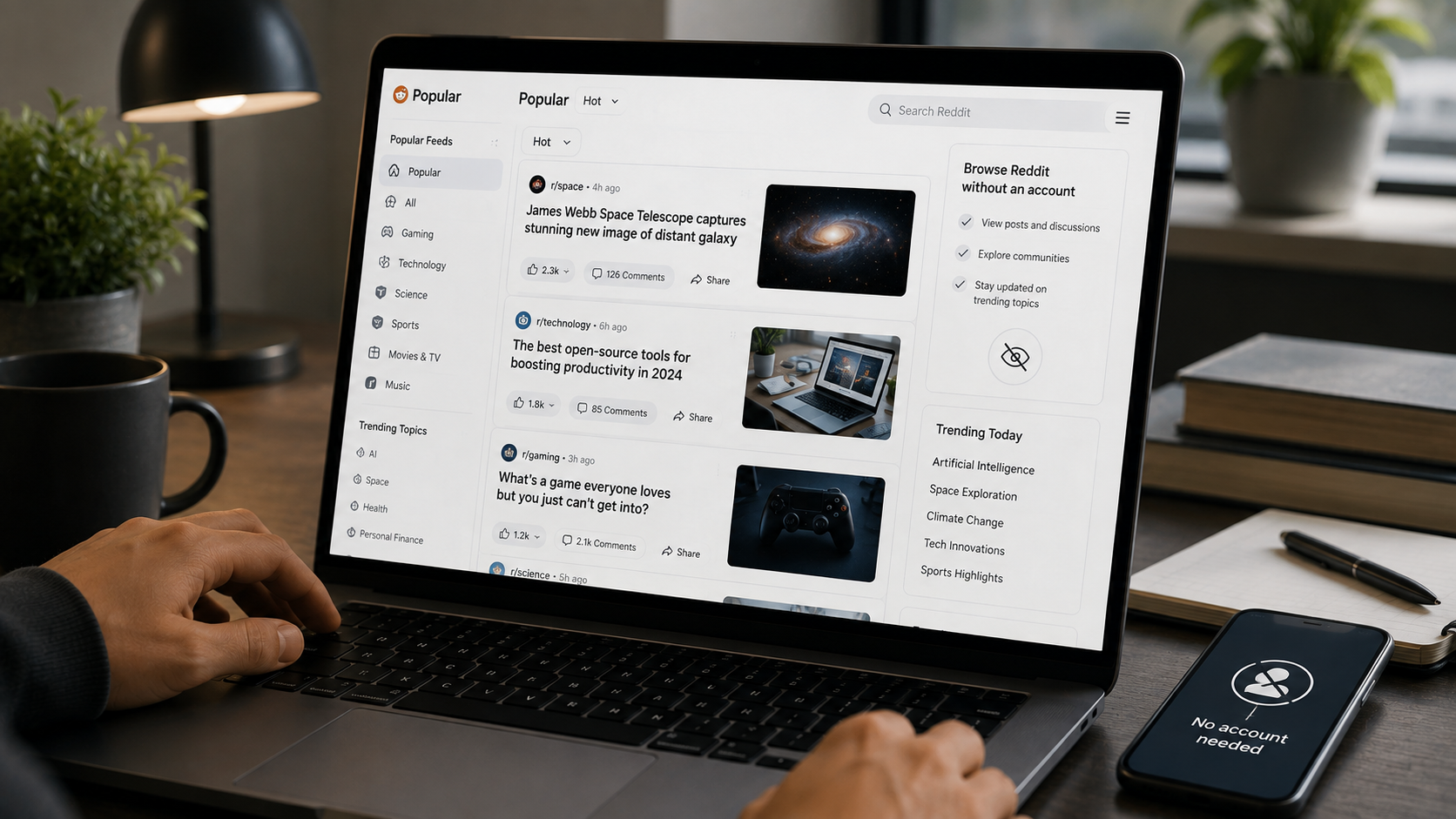
Not everyone who wants to read Reddit wants to be tracked, targeted with ads, or nudged into creating an account. That’s the gap Reddit viewer tools fill: ways to read posts, comments, and communities without signing in or linking your activity to a profile. Here’s how these tools actually work, what they can and can’t do, and what to watch out for.
Direct Answer: What Is a Reddit Viewer?
A Reddit viewer is a tool, method, or third-party app that lets you read Reddit posts, comments, and subreddits without logging into an account. Options range from Reddit’s own built-in anonymous browsing feature and browser incognito mode, to third-party websites and open-source apps that pull content through Reddit’s public API. Most Reddit viewer tools prevent your reading activity from being tied to your account, but none of them make you fully invisible, since Reddit and your internet provider can still see your IP address and basic connection details.
Reddit’s Own Anonymous Browsing Feature
Reddit built a native anonymous browsing mode directly into its official mobile app, available on both iOS and Android. To use it, open the app, tap your avatar, select the dropdown next to your username, and choose Anonymous Browsing. Once active, your reading history, searches, and visited communities aren’t saved to your account or used to influence your personalized feed.
It’s worth knowing this feature has had documented reliability issues. Some users report the option disappearing from their profile menu entirely, while others encounter crashes or black screens when trying to activate it, issues that have persisted across several recent app updates. There’s also currently no desktop equivalent of this feature, so it only works within the mobile app itself.
Using Incognito Mode as a Reddit Viewer
For desktop browsing, opening Reddit in your browser’s private or incognito window is the most straightforward built-in alternative. This works by blocking third-party tracking cookies and keeping your Reddit browsing history out of your regular browser history, without requiring you to log in at all.
It’s important to understand the actual limits here. Incognito mode prevents your browsing history from being saved locally and stops some tracking cookies, but it doesn’t hide your IP address from Reddit or your internet provider, and it doesn’t make you anonymous to the websites you visit. Think of it as reducing your digital footprint locally, not achieving true anonymity.
Third-Party Reddit Viewer Tools and Apps
Beyond Reddit’s own features, a range of third-party tools exist specifically to let people browse without an account:
Open-source mobile apps, such as Infinity for Reddit and Relay for Reddit on Android, offer full browsing functionality, including reading, and in some cases posting and voting, without the tracking built into Reddit’s official app.
Web-based Reddit viewers pull content through Reddit’s public API to display posts, comments, and media in a simplified, login-free interface. These tools generally focus on public subreddit content, since private communities remain inaccessible without proper authorization regardless of the viewer used.
Old Reddit (old.reddit.com), accessed without logging in, offers another straightforward option. It’s not designed specifically as a privacy tool, but browsing it without signing in accomplishes much the same thing as incognito mode, with a more traditional interface some users prefer.
What These Tools Actually Protect Against, and What They Don’t
This distinction matters more than most explanations of Reddit viewers make clear, so it’s worth breaking down directly.
What a Reddit viewer typically protects against: your reading activity being tied to your logged-in account, personalized ad targeting based on your Reddit behavior, and your browsing history being saved to an account profile that could be reviewed later.
What a Reddit viewer typically does not protect against: your IP address being visible to Reddit’s servers and your internet provider, device-level tracking that can sometimes correlate anonymous sessions with a previously logged-in account on the same device, and full anonymity in any legal or investigative sense.
For most casual use, sensitivity about targeted advertising, avoiding a permanent record of what you’ve browsed, or simply not wanting to log in, standard anonymous browsing options are perfectly adequate. For situations requiring stronger privacy guarantees, additional layers like a trusted VPN become more relevant, though that’s a separate consideration from Reddit viewing specifically.
Why Reddit Has Restricted Third-Party Access
Some context helps explain why this landscape has gotten more complicated in recent years. In 2023, Reddit significantly increased the price of its API access, a change that effectively shut down many popular third-party apps that had previously offered strong privacy and customization options. This pushed a lot of users toward Reddit’s official app or newer alternatives, and it’s part of why some third-party Reddit viewer options have shifted or changed over time.
Reddit has a clear business incentive here: logged-in, tracked users are significantly more valuable for advertising purposes than anonymous readers, which shapes both the design of the official app and the company’s approach to third-party access.
Good to Know
No option provides complete anonymity
Every method covered here reduces tracking in specific, meaningful ways, but none of them hide your IP address from Reddit’s own servers, an important distinction if your privacy concerns go beyond ad targeting and account history.
Official anonymous browsing has known bugs
If Reddit’s built-in feature isn’t working for you, this reflects a widely reported issue with the app itself rather than something wrong on your end specifically.
Public content stays public regardless of the viewer
Third-party Reddit viewer tools generally only access publicly available subreddit content; private or restricted communities remain inaccessible without proper account authorization no matter which viewing method you use.
Key Facts
- Reddit’s official app includes a native anonymous browsing feature, available on iOS and Android but not desktop.
- Browser incognito mode works as a simple, no-setup way to browse Reddit without linking activity to an account.
- Third-party apps like Infinity for Reddit and Relay for Reddit offer full functionality without official app tracking.
- No Reddit viewer method hides your IP address from Reddit’s servers or your internet provider.
- Reddit’s 2023 API pricing changes significantly reduced the number of available third-party apps.
- Private subreddits remain inaccessible through any viewer without proper account authorization.
Frequently Asked Questions
Q1: What is a Reddit viewer?
Ans: It’s any tool or method that lets you read Reddit content without logging into an account, ranging from Reddit’s own built-in anonymous browsing feature to third-party apps and web tools.
Q2: Is Reddit’s anonymous browsing feature reliable?
Ans: It has documented issues, including the option sometimes disappearing from the menu or causing crashes, reported across recent versions of the official app.
Q3: Does using a Reddit viewer make me completely anonymous?
Ans: No. These tools generally prevent your activity from being tied to your account, but Reddit and your internet provider can still see your IP address and basic connection details.
Q4: Can I browse Reddit without an account on desktop?
Ans: Yes. Using your browser’s incognito or private mode, or visiting old.reddit.com without logging in, both work as straightforward desktop options.
Q5: Why did so many third-party Reddit apps shut down?
Ans: Reddit significantly raised its API access prices in 2023, which made it financially unsustainable for many popular third-party apps to continue operating.
Q6: Are third-party Reddit viewer tools safe to use?
Ans: Reputable options that pull from Reddit’s public API and don’t request your Reddit credentials are generally safe for reading public content, though it’s worth avoiding any tool that asks you to log in with your actual Reddit password.
Key Takeaways
- A Reddit viewer is any method for reading Reddit content without a logged-in account, including official and third-party options.
- Reddit’s built-in anonymous browsing feature exists but has known reliability issues on mobile.
- Incognito mode and old.reddit.com offer simple desktop alternatives requiring no extra setup.
- No available method provides full anonymity, since IP address visibility remains regardless of the viewer used.
- Reddit’s 2023 API pricing changes reshaped the third-party app landscape significantly.
In Short
Reddit viewer tools solve a specific, common problem: reading Reddit content without contributing to a tracked, personalized account history. Between Reddit’s own imperfect anonymous browsing feature, simple incognito browsing, and a handful of surviving third-party apps, there are reasonable options for most casual privacy needs, though it’s worth going in with realistic expectations about what “anonymous” actually means in each case.
-

 Technology2 months ago
Best Wireless Earbuds Under 200 Dollars 2024: What to Know Before You Buy
-

 News4 months ago
Best Places to See Penguins in the Wild: A Complete Guide
-

 Technology4 months ago
What Is VIPstand? How It Works, Legal Risks, and What You Should Know
-

 News4 months ago
Lake Mead Water Levels: Status, History & Western Impact
-

 Technology4 months ago
Laaster: Meaning, Origins, and What It Says About Harmful Speech
-

 Celebrity4 months ago
Matt Danzeisen: Who He Is, His Career in Finance, and His Life With Peter Thiel
-

 News4 months ago
What Is Epoch Fun? A Complete Guide to the Epoch Times Games Section
-

 Food2 months ago
Best Arroz con Leche Boliviano Near Me: What to Look For