
Business
Pedrovazpaulo Business Consultant: What the Search Results Actually Show


If you’ve searched pedrovazpaulo business consultant, you’ve probably noticed something strange. Dozens of websites describe this consultant, but they don’t agree on much beyond the name. Some say he’s based in Portugal. Others place his work entirely in Southeast Asia. Founding dates shift from site to site. Case studies cite impressive numbers, but none of them name an actual client.
That inconsistency is worth pausing on before you take any of these pages at face value. This article walks through what a careful look at the available sources turns up, why so many similar pages exist, and then covers something more broadly useful: how to actually vet a business consultant before you hire one, using the pedrovazpaulo situation as a working example of what to watch for.
Direct Answer: What Is Pedrovazpaulo Business Consultant?
Pedrovazpaulo business consultant refers to a name and brand that appears across numerous marketing-style websites offering strategy, financial, and operational consulting services. A close comparison of these sources shows conflicting biographical details, unattributed testimonials, and no independent verification (business registration, professional profiles, or media coverage) confirming a single, consistent consultant or firm behind the name.
What Shows Up When You Search This Name
A search for this term returns a long list of pages, each formatted like a professional consulting website or an “about the consultant” profile article. On the surface, they look like standard business content: mission statements, service lists, client testimonials, and calls to book a consultation.
Look closer, though, and the details don’t line up.
- One site describes a consultancy focused on SMEs and startups expanding into Southeast Asia, with testimonials citing revenue growth of 40% in nine months and 35% in eight months.
- Another page places the same name in Portugal, describing decades of experience across finance, healthcare, retail, and technology.
- A third source says the firm launched in 2010, following a straightforward founding story, while others give no timeline at all.
- Multiple pages describe near-identical service categories (strategic planning, financial advisory, operational efficiency, leadership coaching) using very similar phrasing, even though they’re hosted on unrelated domains.
None of the testimonials name a real company. None of the case studies link to a source that could confirm the numbers. And no site links out to a verifiable professional profile, business registry entry, or press mention that ties these claims together into one consistent story.
Why This Matters for Search Intent
People searching this term are usually trying to do one of two things: find out who this consultant actually is before considering hiring them, or figure out if a service they were pointed toward is legitimate. Neither goal is served by taking any single page’s claims at face value, because the sources contradict each other on basic facts like location and founding date. That’s not typical of a real consulting practice with a genuine track record, where biographical details tend to stay consistent across a person’s own site, LinkedIn profile, press mentions, and client references.
Why So Many Similar Pages Exist
This pattern isn’t unique to this particular name. It reflects a broader content strategy sometimes used online: publishing many similarly structured articles about a brand or person across different websites, each optimized to rank for the same search phrase. A few things make this approach recognizable.
Generic superlatives instead of specifics. Phrases like “game changer,” “measurable results,” and “trusted ally” appear repeatedly, but rarely attached to a named client, dated project, or checkable outcome.
Reused structure across different domains. Several of these pages break down services into nearly identical categories, sometimes using the same phrasing, which suggests shared templates rather than independently reported profiles.
No link back to a single source of truth. A real consulting firm usually has one official website, one set of consistent claims, and a findable professional history. When a dozen articles describe someone slightly differently and none reference each other, there’s no anchor point to verify anything against.
Calls to action built into “informational” content. Several of the pages that describe this consultant’s background also include booking buttons or consultation forms, which is a signal the content exists primarily to generate leads rather than to inform.
None of this proves anything one way or another about whether real consulting services are being offered somewhere behind these pages. But it does mean a reader has no reliable way to confirm who’s actually providing the service, what results they’ve actually produced, or whether a fee paid today leads to real expertise.
How to Vet Any Business Consultant Before Hiring One
Since verifying this particular name from public sources isn’t currently possible, it’s worth stepping back to a more useful question: how do you check out any consultant, regardless of who they are, before you hand over money or sensitive business information?
Step 1: Look for a Single, Consistent Identity
A legitimate consultant’s name, location, credentials, and history should match across every platform where they appear — their own site, LinkedIn, any press coverage, and client reviews on independent platforms like Google or Clutch. If the story changes depending on which page you’re reading, treat that as a warning sign rather than a coincidence.
Step 2: Check for Verifiable Credentials
Ask directly about education, prior employers, and professional certifications, then check whether those details hold up. A real consultant with a genuine track record is usually happy to provide references you can actually contact, not just quoted testimonials with no company name attached.
Step 3: Ask for Named Case Studies
“Helped a client grow revenue by 40%” means very little without a company name, industry, and timeframe you can verify, ideally by speaking directly with that client. Consultants who can’t or won’t connect you with a past client are asking you to take their results on faith.
Step 4: Search for Independent Coverage
A quick search should turn up more than the consultant’s own marketing pages. Look for interviews, panel appearances, published articles under their own byline on established outlets, or mentions in industry news that they didn’t write themselves.
Step 5: Review the Contract Before Paying Anything
Legitimate consulting engagements come with clear, written terms: scope of work, deliverables, timeline, and payment structure. Be cautious of anyone pushing for payment before providing a written agreement, or whose only next step is “book a call” with no clear explanation of what that call commits you to.
Step 6: Start Small
Where possible, begin with a limited, well-defined project rather than a long-term retainer. This limits your exposure if the engagement doesn’t match what was promised, and gives you a real basis for judging whether to continue.
Common Mistakes People Make When Researching a Consultant
Mistake: Assuming polished website design equals legitimacy
A professional-looking site is inexpensive to produce and says nothing about whether the underlying claims are true.
Mistake: Trusting testimonials without checking them
Quotes attributed to “a client” or “a Southeast Asia-based SME” with no name or link can’t be verified and shouldn’t carry the same weight as a reference you can actually call.
Mistake: Treating repeated content as confirmation
Finding the same claims on multiple websites can feel like corroboration, but if those sites were built using the same template or content strategy, repetition isn’t independent verification — it’s just repetition.
Mistake: Skipping the search for negative or neutral information
It’s worth searching not just the consultant’s name, but the name plus words like “review,” “complaint,” or “scam,” to see what turns up outside of their own promotional material.
Real-World Example: Two Ways to Read the Same Search
Imagine two business owners search pedrovazpaulo business consultant the same week. The first reads one page, sees confident language and a testimonial, and books a consultation without looking further. The second notices that a second and third page describe a different location and founding story, searches for the name plus “review,” finds no independent coverage, and decides to ask for three verifiable client references before considering any engagement.
The second approach doesn’t guarantee a bad outcome is avoided or a good one is found — but it puts the business owner in a position to make an informed decision instead of an emotional one, which is the entire point of due diligence.
Key Facts
- Multiple websites describe pedrovazpaulo business consultant, but their biographical details conflict on location, founding date, and background.
- No independent source (business registry, press coverage, professional profile) currently confirms a single, consistent identity behind the name.
- Testimonials across these sites are unattributed, without named companies or verifiable outcomes.
- This pattern — many similarly structured pages ranking for one search term — is common in lead-generation content strategies and doesn’t by itself confirm or disprove that real services exist.
- The safest approach for anyone considering a consultant, regardless of name, is independent verification before payment or commitment.
Frequently Asked Questions
Q1: Is pedrovazpaulo business consultant a real person?
Ans: Public sources don’t currently offer consistent, verifiable evidence one way or the other. Multiple websites describe the name differently, and none link to independent confirmation like a business registration or professional profile.
Q2: Why do so many websites describe the same consultant differently?
Ans: This is typical of content built to rank for a specific search term across multiple domains, often for lead-generation purposes, rather than independently reported profiles of a single, consistent person or firm.
Q3: Is it safe to book a consultation with a business found this way?
Ans: Not necessarily unsafe, but it’s worth verifying credentials, requesting named references, and reviewing any contract carefully before paying anything, regardless of how professional the website looks.
Q4: What should I check before hiring any business consultant?
Ans: Confirm their identity is consistent across platforms, ask for verifiable case studies with named clients, search for independent coverage beyond their own site, and get a written agreement before paying.
Q5: Are business consulting scams common?
Ans: Illegitimate or exaggerated consulting offers do exist, often relying on vague success stories and pressure to book quickly. Careful verification reduces the risk regardless of which consultant you’re considering.
Q6: What are the alternatives to searching a specific consultant’s name?
Ans: Ask for referrals from people in your industry, use professional directories that verify credentials, or work with consultants recommended by a trusted accountant, lawyer, or industry association.
Key Takeaways
- Searches for pedrovazpaulo business consultant return numerous websites with conflicting biographical claims and no independent verification.
- Unattributed testimonials and reused content structures across domains are common markers of lead-generation content, not proof of legitimacy or fraud on their own.
- Vetting any consultant means checking for a consistent identity, verifiable credentials, named case studies, independent coverage, and a clear written contract.
- Starting with a small, defined project limits risk before committing to a longer engagement.
- Polished websites and confident language are not substitutes for verifiable evidence.
Conclusion
The available information about pedrovazpaulo business consultant doesn’t add up to a clear, verifiable picture — and that gap is worth taking seriously rather than glossing over. Whether you’re looking into this specific name or evaluating any consultant you’ve come across online, the same principles apply: check for consistency, ask for real references, and confirm details independently before making any commitment. A little verification up front costs far less than an engagement that doesn’t deliver what was promised.



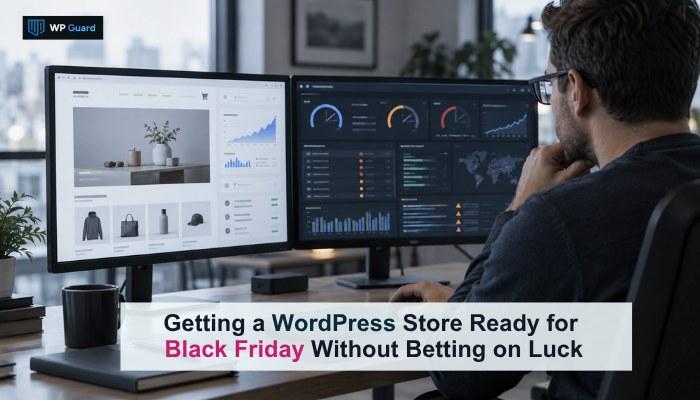
Black Friday brings in more shoppers than any other day of the year. But that same rush can crash a WordPress store that isn’t ready for it.
Every year, hidden security gaps show up the moment traffic spikes. Specifically, slow servers, outdated plugins, and weak backups can make a huge sale become a costly mess. To prevent that, WP Guard runs a routine check before major sales events so your website stays issue-free.
In this article, we will share a clear picture of why traffic spikes break weak setups, and the specific steps to lock things down when the rush hits.
Let’s start with the reason for website crashes during Black Friday.
Why Black Friday Traffic Spikes Break Weak Security Setups

On this day, thousands of page requests, checkout actions, and login attempts occur in a short period. So that sudden pressure can expose server bottlenecks, plugin conflicts, and security gaps that stayed hidden under normal traffic.
These traffic spikes expose two weak points first: server capacity and security gaps. Both need closer attention.
What Happens to Your Server When Traffic Multiplies Overnight
Mostly, shared hosting plans throttle resources once concurrent visitors exceed the server’s allocated capacity (yes, even good hosting plans buckle). We’ve watched a client’s checkout page crash 40 minutes into a sale because a single server couldn’t keep pace with shoppers browsing products together.
Specifically, checkout pages take the hardest hit on an ecommerce site. Cart updates, payment processing from multiple servers, and database activity place heavier demands on server resources. So this is where hosting providers should focus capacity planning ahead of a sale.
On top of that, mobile users feel these slowdowns more than anyone else since weaker connections make loading time longer. In this case, you can compress images and reduce unnecessary scripts to help pages load quickly while using fewer server resources.
The Security Gaps That Only Show Up Under Load
Rate limiting rules break down when real shoppers start looking like bot traffic to your security software. For instance, firewalls tuned for normal volume sometimes let malicious requests slip through during a surge in demand.
Login monitoring also gets buried when thousands of sessions are happening simultaneously. As a result, attackers can hide their brute-force attempts in plain sight.
What’s more, repeated outages can prevent crawlers from accessing your pages reliably. So even brief periods of downtime can eventually reduce your visibility in search engines.
Black Friday WordPress Security Starts Weeks Before the Sale

Most store owners think about site protection the week of Black Friday, and by then it’s already too late. Ideally, real prep should start a month out rather than five days.
Start your security prep with plugin and theme audits. It catches outdated code that attackers target during high-traffic periods. In fact, most breaches on WordPress sites trace back to a plugin nobody updated in months. Once the audit identifies outdated software, update WordPress core, themes, and plugins well before the holiday traffic arrives.
Hosting providers should also confirm scalable resources are active ahead of the rush (procrastination is not a security strategy). In this case, managed hosting with a 99.9% uptime guarantee can provide extra protection against outages when demand spikes.
We check this on every store we harden, and it’s usually the difference between a smooth day and a scramble. Beyond that, WP Guard’s pre-event routine covers a clearance scan, managed offsite backups, and update testing with rollback. So you push nothing live without support in place.
Quick Tip: Add a Content Delivery Network (CDN) to spread traffic across multiple servers, and your company enters the season with a plan instead of hope.
Automated Backups Are Not Optional for Ecommerce Businesses
Automated backups mean you never have to remember to run one yourself, even during the busiest sales week. And for ecommerce businesses, that’s the difference between losing an hour of orders and losing nothing at all.
Here’s the part most owners miss: a backup from last month won’t save a single purchase made during a live sale. Instead, you need frequent backups to keep recent orders, customer data, and website changes available if you need to restore the site.
The gap between a solid backup routine and a shaky one starts with the following two things:
1. How The Backup Actually Works
Automated systems create copies of your files and database, which means the process keeps running even when your team is buried in support tickets.
However, automated updates should be on a predefined interval, like a per-hour basis or every 30 minutes during a high-traffic sale. Each store we’ve hardened that had a successful Black Friday sale maintained backups on a fixed schedule.
Beyond scheduling, where you store those backups also counts. And a good example of such storage is Offsite storage. It keeps your backup data separate if your main server goes down or an attacker compromises it.
During Black Friday, frequent backups also capture recent order data as it changes throughout the day.
2. Why Manual Backups Fail When You Need Them Most
Manual backups fail because they depend on someone remembering to run them, and Black Friday week leaves zero time for that. So you should set automated backups to run at fixed intervals so data remains recoverable throughout the sale.
That said, a single missed backup can cost hours of orders and customer data. Plus, recovery gets harder to manage the longer an issue goes unnoticed without a safety net in place.
Can a Slow or Hacked Site Cause Negative Impact on Sales
Yes, even a few seconds of lag or one compromised page can cost you a significant amount of sales.
Walmart found this out the hard way the day before Thanksgiving 2018. That day, a site outage affecting an estimated 3.6 million shoppers cost the retailer roughly $9 million in lost sales. Unfortunately, most stores don’t have Walmart’s scale to absorb a hit like that.
A quick breakdown of what each type of failure actually costs you.
| Scenario | Impact on Your Store |
| Slow page load | Lower conversions, higher cart abandonment |
| Full site downtime | Lost sales to competitors during peak demand |
| Malware redirect | Broken customer trust, brand damage past the sale |
Generally, page load delays reduce conversions as shoppers simply leave for a faster competitor’s site. Downtime during peak hours sends that same traffic straight to whoever’s store is still working (one bad redirect undoes months of trust).
Frequent downtime can also hurt your SEO efforts over time as Google tracks uptime as part of its website ranking metrics. Repeated outages during high-traffic weeks can cost you visibility on top of the immediate revenue loss.
A malware redirect during checkout does the same damage differently. That’s because customers who land on a suspicious page rarely make a complete purchase in the future.
Your Black Friday Game Plan Starts Now
Black Friday rewards stores that plan and punishes the ones that wait. A slow checkout or a hacked page doesn’t just cost you one sale. You lose the customer’s trust for every sale after that.
However, the fix isn’t complicated. Update your plugins, test your backups, and confirm your host can handle the surge before it hits. Small steps now save you from a scramble later.
So don’t leave your major sales day up to luck. WP Guard handles the hardening, monitoring, and recovery so your store stays open when you need it the most.
Contact us and get your site ready ahead of the rush.


The industrial sector is undergoing a profound transformation in how it generates, manages, and recovers heat. As energy costs climb and environmental regulations tighten, manufacturers and process plant operators are increasingly turning to advanced heat pump technologies to reduce their carbon footprint without compromising operational output. The convergence of process engineering expertise and modern thermal management systems is reshaping how industries think about energy — not as a cost to be minimised, but as a resource to be optimised.
Why Industrial Heat Pumps Are Gaining Momentum
Heat pumps have long been associated with residential heating, but their application in industrial environments is rapidly expanding. In large-scale manufacturing, chemical processing, food production, and pharmaceutical operations, heat is both a critical input and a significant byproduct. Industrial heat pumps allow facilities to capture waste heat from one part of a process and redirect it usefully elsewhere — dramatically improving overall energy efficiency.
Unlike conventional boilers or direct-fired heaters, heat pumps do not generate heat through combustion. Instead, they move thermal energy from a lower-temperature source to a higher-temperature output, using a refrigerant cycle. This fundamental difference means that for every unit of electrical energy consumed, a heat pump can deliver multiple units of thermal energy — a ratio known as the Coefficient of Performance (COP). In industrial settings, achieving a COP of 3 or higher is not uncommon, making heat pumps one of the most energy-efficient heating technologies available today.
The Science Behind the Efficiency
Understanding how a heat pump works at a mechanical level is essential for process engineers evaluating integration options. The system operates through four core stages: evaporation, compression, condensation, and expansion. A refrigerant absorbs heat at the evaporator, is compressed to raise its temperature, releases that heat at the condenser, and then expands back to a low-pressure state to begin the cycle again. According to detailed technical guidance on how heat pumps work from the International Energy Agency, this thermodynamic cycle can be adapted across a wide range of temperature requirements, making it suitable for diverse industrial applications from low-grade process heating to high-temperature steam generation.
Integrating Heat Pumps into Complex Process Environments
The challenge for most industrial operators is not understanding the technology in isolation — it is integrating it effectively into existing infrastructure. Process plants are intricate ecosystems of pipework, heat exchangers, reactors, and control systems. Introducing a heat pump into this environment requires careful thermal modelling, load profiling, and compatibility assessment with existing utilities.
Successful integration typically begins with a detailed energy audit. Engineers must map where heat is being generated, where it is being lost, and where it could be usefully recovered. This data forms the foundation of a heat pump specification — determining the required temperature lift, flow rates, refrigerant selection, and control logic. In many cases, the most significant gains come not from replacing existing systems outright, but from supplementing them with heat recovery loops that feed directly into the heat pump cycle.
Selecting the Right Equipment for Industrial Scale
Industrial heat pumps differ substantially from their domestic counterparts in terms of capacity, materials of construction, and operational demands. High-temperature industrial units must withstand continuous operation, aggressive process fluids, and demanding pressure conditions. Selecting equipment that meets these requirements — while also aligning with site-specific utility constraints — is a task that demands both engineering rigour and supplier expertise.
For facilities exploring dedicated heating solutions at scale, Blume Heat systems represent a compelling option, offering robust performance characteristics suited to demanding industrial and commercial environments. Evaluating such systems alongside broader process requirements ensures that procurement decisions are grounded in operational reality rather than headline efficiency figures alone.
The Role of Process Plant Specialists in Thermal Projects
One of the most underappreciated aspects of industrial heat pump deployment is the value of working with specialists who understand both the thermal technology and the broader process plant context. Heat pumps do not operate in isolation — they interact with cooling towers, condensate systems, heat exchangers, and process streams in ways that can either amplify or undermine their efficiency. A supplier or consultant who understands only the heat pump itself may miss critical integration opportunities or risks.
International Process Plants brings decades of expertise in sourcing, refurbishing, and supplying used and surplus process equipment to industrial clients worldwide. Their deep knowledge of process plant infrastructure makes them a valuable partner for facilities looking to incorporate heat recovery and heat pump technologies into existing or newly configured operations. Whether a project involves repurposing existing heat exchangers, sourcing compatible ancillary equipment, or advising on plant layout for thermal efficiency, this kind of process-level expertise is invaluable.
Economic and Environmental Drivers
The business case for industrial heat pumps has strengthened considerably in recent years. Rising natural gas prices have eroded the cost advantage of gas-fired heating, while the falling cost of renewable electricity has made electrically driven heat pumps increasingly competitive on a total cost of ownership basis. In regions where carbon pricing mechanisms are in place, the financial incentive to decarbonise process heat is even more pronounced.
Beyond direct cost savings, industrial operators are facing growing pressure from customers, investors, and regulators to demonstrate credible decarbonisation pathways. Process heat — which accounts for a substantial share of industrial energy consumption globally — is one of the hardest sectors to decarbonise, and heat pumps represent one of the most practical near-term solutions available. For many facilities, a phased transition that begins with heat recovery and heat pump integration is a more achievable first step than a wholesale shift to hydrogen or other emerging technologies.
Planning for Long-Term Operational Resilience
Investing in heat pump infrastructure is not simply an energy efficiency measure — it is a strategic decision that affects long-term operational resilience. Facilities that reduce their dependence on fossil fuel-derived heat are better insulated against fuel price volatility and regulatory risk. They are also better positioned to meet future emissions targets without disruptive retrofits or costly compliance penalties.
Effective planning requires a cross-functional approach, bringing together process engineers, energy managers, procurement specialists, and equipment suppliers from the earliest stages of a project. The most successful industrial heat pump installations are those where thermal integration has been considered holistically — not as an add-on, but as a core element of the plant’s energy strategy.
Conclusion: A Convergence of Technology and Expertise
The industrial heat pump market is maturing rapidly, and the technology is no longer the limiting factor in most deployment scenarios. What separates successful projects from stalled ones is the quality of integration — the ability to align thermal technology with process realities, equipment availability, and operational objectives. As the sector continues to evolve, the partnership between specialist equipment providers, thermal technology suppliers, and process engineering experts will be central to unlocking the full potential of heat pump solutions at industrial scale. For operators ready to take that step, the combination of proven technology and deep process knowledge offers a clear and compelling path forward.

Brutal. That’s the only word for today’s crowded marketplaces. Competitors claw for the same eyeballs, and what separates chosen from ignored rarely comes down to price. Visual communication is usually what tips it. Strong visual marketing weaves together design, imagery, and strategic presentation into brand experiences that genuinely stick — the kind that nudge browsers toward buying and turn one-time buyers into regulars. And it goes way beyond slapping a logo onto a color palette. This is a real differentiator. One that carries your message into territory where plain text simply can’t go.
1. Creating Immediate Brand Recognition
Your visual identity lands before a single word registers. Logos, color palettes, typography, imagery — when those elements are built deliberately and applied with discipline, something clicks. Recognition forms fast. Same color scheme and design aesthetic across your website, social channels, business cards, and ads? People spot you instantly. No lineup confusion. That kind of consistency does quiet work — people tie a unified visual presence to reliability without ever consciously deciding to. Trust just accumulates. And the stronger that visual identity gets, the more likely someone recalls your name the exact moment they need what you sell.
2. Increasing Engagement on Digital Platforms
Social media is a visual cage match. High-quality images, sharp infographics, compelling video — these reliably pull more likes, comments, and shares than anything text-only can manage. Visual marketing solutions help you build content that stops the scroll cold and sparks real interaction, which feeds platform algorithms in your favor. A striking image paired with the right caption? That’s a conversation waiting to happen. Polished visuals carry another message too: this business sweats the details. Customers clock that signal before they’ve exchanged a single word with you. More engagement means broader organic reach — and broader reach means a tighter, more invested community forming around your brand.
3. Simplifying Complex Information
Dense technical content kills momentum. Walls of text explaining intricate services or data-heavy concepts tend to overwhelm rather than persuade. Infographics, process diagrams, flowcharts, animated tutorials — these break complicated material into formats people can actually absorb. A manufacturing company showing its quality-control process through diagrams reaches audiences a spec sheet never could. A software company using animated walkthroughs removes friction before the sales call even happens. This matters most in B2B, where decision-makers need to grasp value propositions quickly. Visual formats speed that education along. And since audiences retain visual information far better than text, your key messages linger long after the first interaction fades.
4. Building Emotional Connections with Customers
Specs tell customers what your product does. Visuals tell them how it’ll make them feel. That’s a fundamentally different conversation. Color psychology, composition, carefully chosen imagery — these trigger specific emotions. Aspiration. Confidence. Warmth. Exclusivity. A fitness brand featuring real people hitting real goals inspires something a product description never could. A luxury brand leaning into minimalist design signals refinement without uttering a word. These choices reach past functional benefits and speak directly to what customers actually want to feel. When that emotional connection lands, loyalty tends to follow. Customers stop being transactional; they become advocates who return, refer others, and genuinely root for your success.
5. Gaining Competitive Advantage in Your Industry
Businesses investing in professional visual marketing routinely outperform those still leaning on text-heavy approaches. Polished visuals signal currency, professionalism, and worthiness of attention. In fashion, real estate, hospitality, and food service, visual presentation directly drives purchasing decisions — the stakes are obvious. But even in B2B sectors where visuals seem secondary, they still separate leaders from also-rans. At industry events, for instance, companies that rely on professional trade show booth display rentals show up with a brand presence that matches what serious buyers expect — while competitors with generic setups quietly fade into the background. Prioritizing visual marketing plants your flag as a category leader and hands customers one more concrete reason to choose you over everyone else.
Conclusion
Visual marketing solutions aren’t optional extras anymore. Core infrastructure — that’s what they are. Brand recognition, customer engagement, information clarity, emotional resonance, competitive positioning. Social media graphics, professional photography, web design, video content — each one shapes how customers perceive your business before a single purchase is made. Companies that treat visual marketing as essential attract better customers, hold their loyalty longer, and cut through noise more effectively. Attention spans keep shrinking. Competition keeps intensifying. Communicating clearly and memorably through visuals isn’t just a nice edge to have — it’s increasingly the whole game.
-

 Technology3 months ago
Best Wireless Earbuds Under 200 Dollars 2024: What to Know Before You Buy
-

 News4 months ago
Best Places to See Penguins in the Wild: A Complete Guide
-

 News4 months ago
Lake Mead Water Levels: Status, History & Western Impact
-

 Technology5 months ago
What Is VIPstand? How It Works, Legal Risks, and What You Should Know
-

 Technology5 months ago
Laaster: Meaning, Origins, and What It Says About Harmful Speech
-

 Celebrity4 months ago
Matt Danzeisen: Who He Is, His Career in Finance, and His Life With Peter Thiel
-

 News5 months ago
What Is Epoch Fun? A Complete Guide to the Epoch Times Games Section
-

 News4 months ago
EV Charging News: What’s Actually Changing in 2026
Pingback: Pedrovazpaulo Coaching: What to Check First