
Sports
2026 FIFA World Cup: The Complete Guide

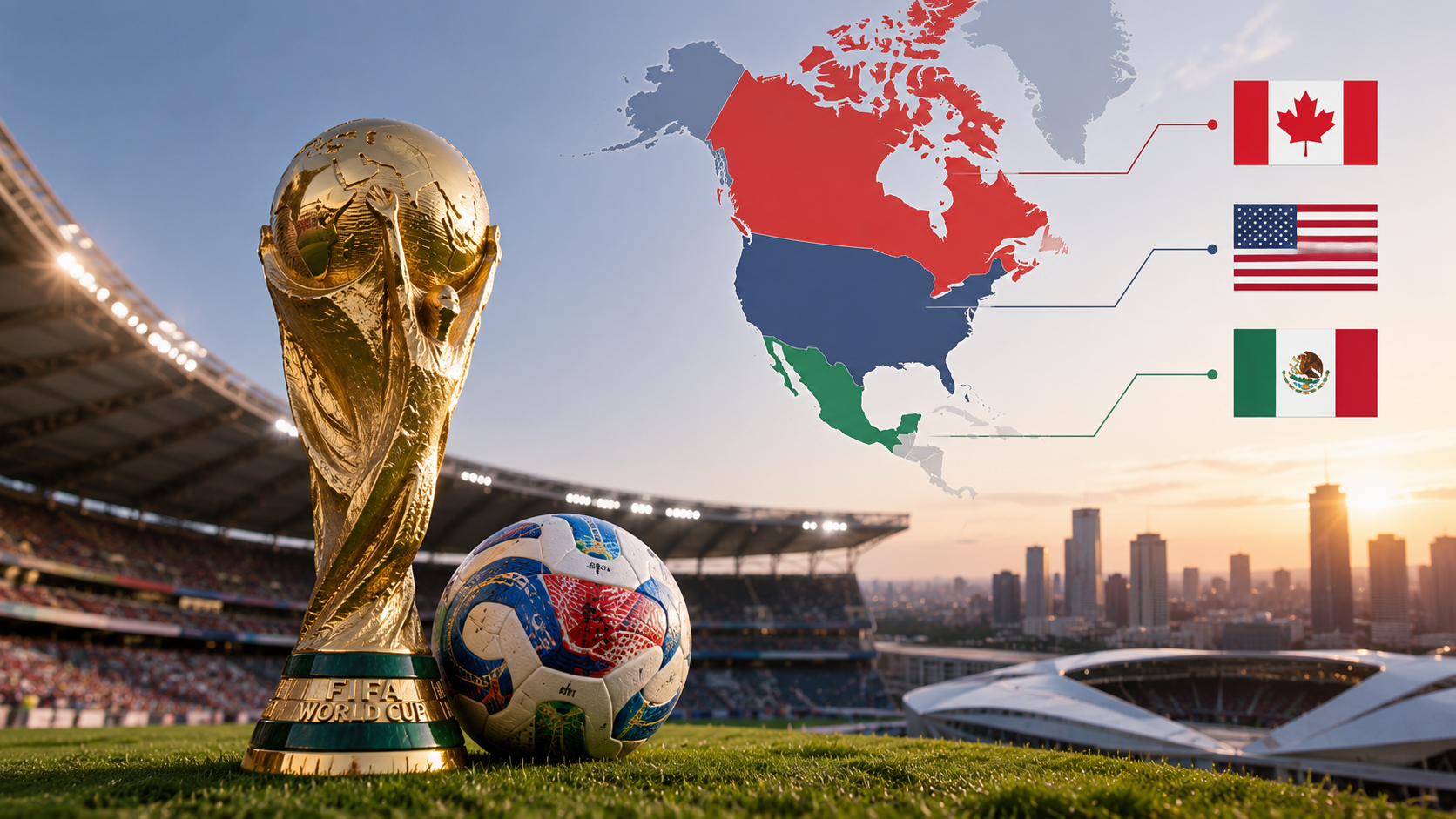
Soccer’s biggest event is already underway, and it looks nothing like any World Cup before it. For the first time, three countries are sharing hosting duties, the field has grown to 48 teams, and matches are being played in stadiums built for American football and Canadian football rather than soccer alone.
If you’ve been trying to keep track of how the new format works, which cities are hosting games, or how to make sense of the group stage, you’re not alone. The tournament changed so many long-standing rules at once that even lifelong soccer fans have questions. This guide breaks down what’s actually happening, why it matters, and what to expect as the tournament moves toward its final in July.
Direct Answer:
The 2026 FIFA World Cup is the 23rd edition of soccer’s men’s world championship, running from June 11 to July 19, 2026. It is jointly hosted by the United States, Canada, and Mexico across 16 stadiums in 16 cities. For the first time, 48 national teams are competing, up from 32 in previous tournaments, making it the largest World Cup in history. The final takes place at MetLife Stadium in East Rutherford, New Jersey.
Where Is the 2026 World Cup Being Held?
This is the first men’s World Cup shared by three nations, and only the second co-hosted tournament since 2002. Mexico becomes the first country to host or co-host the men’s tournament three times, having previously done so in 1970 and 1986. The United States last hosted in 1994, and this marks Canada’s first time hosting the men’s competition at all.
Sixteen cities are staging matches:
- United States (11 cities): Atlanta, Boston (Foxborough), Dallas (Arlington), Houston, Kansas City, Los Angeles (Inglewood), Miami (Miami Gardens), New York/New Jersey (East Rutherford), Philadelphia, San Francisco Bay Area (Santa Clara), Seattle
- Mexico (3 cities): Mexico City, Guadalajara (Zapopan), Monterrey (Guadalupe)
- Canada (2 cities): Toronto, Vancouver
The United States is hosting the bulk of the tournament, including every match from the quarterfinals onward, for a total of 78 games. Canada and Mexico each host 13 matches. Most of the venues are large NFL or CFL stadiums repurposed for soccer, since only a handful of dedicated soccer stadiums in North America meet FIFA’s 40,000-seat minimum. Because of this, eight of the sixteen stadiums have permanent artificial turf that is being replaced with natural or hybrid grass for the tournament.
Why Three Host Countries?
FIFA’s rules had banned co-hosting after the 2002 World Cup, held jointly by South Korea and Japan. That ban was lifted specifically for the 2026 bid process, partly because a tournament of this new, larger size needed more stadiums, hotels, and transportation infrastructure than most single countries could realistically provide. The joint United bid from Canada, Mexico, and the United States beat a rival bid from Morocco in a 2018 vote, winning 134 of 200 valid ballots.
Why Did the World Cup Expand to 48 Teams?
The idea of a larger World Cup was first floated around 2013 and gained momentum after FIFA president Gianni Infantino proposed it in 2016. Supporters argued that expansion would let more countries and confederations experience the tournament, since previous 32-team formats left several regions with very few automatic qualifying spots.
Critics disagreed. Some argued the existing calendar was already too packed with matches, that quality would suffer as more mediocre teams appeared, and that the change was driven more by politics than by sporting merit. FIFA moved ahead anyway, and the FIFA Council formally approved the 48-team, 12-group format in March 2023.
The result is a tournament that:
- Features 48 teams instead of 32
- Runs 104 total matches instead of 64
- Lasts 39 days, compared to 32 days in 2014 and 2018
- Still has every team play exactly three group-stage matches
How the New Format Works
Understanding the group stage and knockout structure is probably the single biggest source of confusion around this World Cup, so here’s how it breaks down.
Group Stage
The 48 qualified teams are split into 12 groups of four (Groups A through L). Each team plays the other three teams in its group once, earning three points for a win, one for a draw, and none for a loss.
After all group matches finish, the top two teams from each of the 12 groups advance automatically. That accounts for 24 of the 32 knockout spots. The remaining eight spots go to the best third-placed teams across all 12 groups, ranked by points, goal difference, and goals scored. This third-place ranking system is new to this tournament and adds a layer of strategy, since teams can’t just focus on winning their own group — they also need to watch how other groups are shaking out.
Knockout Stage
Once 32 teams are set, the tournament moves into a single-elimination bracket:
- Round of 32 — June 28 to July 3
- Round of 16 — July 4 to 7
- Quarterfinals — July 9 to 11
- Semifinals — July 14 to 15
- Third-place match — July 18
- Final — July 19 at MetLife Stadium
If a knockout match is tied after 90 minutes, teams play 30 minutes of extra time. If the score is still level, the match goes to a penalty shootout.
FIFA also built two separate bracket “pathways” into the draw so that the top four ranked teams — Spain, Argentina, France, and England — can’t meet each other before the semifinals, and the top two can’t meet before the final, assuming they keep winning their groups.
Who Qualified for the 2026 World Cup?
As co-hosts, Canada, Mexico, and the United States qualified automatically. Beyond that, six confederation slots and an intercontinental playoff determined the rest of the field.
Some notable qualification storylines:
- First-time qualifiers: Cape Verde, Curaçao, Jordan, and Uzbekistan will all make their World Cup debuts.
- Returning after decades away: DR Congo and Haiti are back for the first time since 1974, Iraq since 1986, and Austria, Norway, and Scotland since 1998.
- A shocking absence: Four-time champion Italy missed out again after losing a European playoff final to Bosnia and Herzegovina on penalties, marking the third consecutive World Cup Italy has failed to reach.
- Defending champion: Argentina enters as the reigning titleholder after winning its third star in 2022.
The official draw took place on December 5, 2025, at the Kennedy Center in Washington, D.C., placing all 48 teams into their groups and setting the full match schedule.
Tickets and Attending in Person
Ticket pricing for this tournament looks different from past World Cups. Group-stage tickets started around $60, while final tickets started near $6,730 — both notably higher than 2022 prices. In a first for the World Cup, FIFA is using dynamic pricing, meaning prices can shift with demand, similar to how airline or concert tickets work.
Sales happened in phases: an early access period for cardholders of FIFA’s official banking partner, a general sale, and a final “last-minute” phase that opened roughly seven weeks before kickoff. By the time that last phase opened, more than five million tickets had already sold, out of an expected total north of six million for the whole tournament.
A few practical notes if you’re planning to attend:
- Ticket purchases are capped at four per match and 40 total per person.
- Cities hosting matches in the U.S. passed local laws exempting World Cup ticket sales from sales tax.
- Official resale only happens through FIFA’s platform — buying from unofficial resellers carries real risk of invalid tickets.
Travel and Visa Considerations
Because the tournament spans three countries, travel requirements vary by destination and by traveler nationality. The U.S. State Department has set up dedicated guidance for international visitors headed to World Cup matches in the United States, and recommends that even U.S. citizens check passport expiration dates well before booking any cross-border travel to Canada or Mexico.
One complication worth knowing about: a U.S. travel ban affecting citizens of several countries was reinstated in 2025 and later expanded. It includes an exemption for athletes, coaches, and support staff traveling for the World Cup, but that exemption does not automatically extend to ordinary fans from the affected countries, including supporters of teams like Haiti, Iran, and Ivory Coast. Fans from those nations can still apply for visas and may receive priority processing with proof of a ticket, but approval is not guaranteed. Separately, the U.S. government temporarily waived a $15,000 visa bond requirement for fans from five African countries with qualified teams, provided they hold a valid match ticket.
Anyone traveling internationally for the tournament should check current entry requirements directly with the relevant government before finalizing plans, since policies have continued to shift as the tournament approaches.
Common Mistakes and Misconceptions
Mistake: Assuming every host city gets an equal share of matches
The United States is hosting far more games than Canada or Mexico — 78 compared to 13 each — including the entire quarterfinal-onward bracket.
Mistake: Thinking third-place teams never advance
Under the old 32-team format, finishing third in your group meant elimination. In this format, the eight best third-placed teams across all 12 groups still reach the knockout rounds.
Mistake: Believing artificial turf is being used throughout the tournament
While several NFL stadiums normally use artificial turf, FIFA required those venues to install grass or hybrid grass surfaces specifically for World Cup matches.
Mistake: Assuming a ticket guarantees entry regardless of visa status. A match ticket does not override visa or immigration requirements. Fans still need valid travel documents to enter whichever host country their match is in.
Real-World Example: How the Format Changes Strategy
Consider a team that finishes third in its group with two wins and one loss. Under the old 32-team, 8-group format, that record would have ended their tournament. Under the 2026 format, that same record could easily be good enough to be one of the eight best third-place finishers, especially if the team’s group was unusually competitive. This changes how coaches approach a must-win final group match — sometimes a draw is genuinely good enough, and teams have to weigh the risk of an aggressive push for a win against the safety of a point that keeps their third-place ranking intact.
Key Facts About the 2026 FIFA World Cup
- Dates: June 11 to July 19, 2026
- Hosts: United States, Canada, and Mexico
- Teams: 48, split into 12 groups of four
- Total matches: 104, up from 64 in 2022
- Venues: 16 stadiums in 16 cities
- Final venue: MetLife Stadium, East Rutherford, New Jersey
- Defending champion: Argentina
- Total prize pool: $871 million, an increase of $431 million over 2022
- Official match ball: Adidas Trionda
- Mascots: Maple (moose, Canada), Zayu (jaguar, Mexico), and Clutch (bald eagle, United States)
Frequently Asked Questions
Q1: What is the 2026 FIFA World Cup?
Ans: It’s the 23rd FIFA World Cup, a men’s international soccer tournament co-hosted by the United States, Canada, and Mexico from June 11 to July 19, 2026, featuring an expanded field of 48 national teams.
Q2: How many teams are in the 2026 World Cup?
Ans: 48 teams, up from 32 in every tournament since 1998. They’re divided into 12 groups of four.
Q3: Where is the final being played?
Ans: The final is scheduled for July 19, 2026, at MetLife Stadium in East Rutherford, New Jersey.
Q4: How does the group stage work?
Ans: Each team plays three matches against the other teams in its group. The top two teams from each group advance automatically, along with the eight best third-placed teams overall.
Q5: Is Italy playing in the 2026 World Cup?
Ans: No. Italy lost a European playoff final on penalties to Bosnia and Herzegovina, missing out on qualification for a third consecutive World Cup.
Q6: Do I need a visa to attend a match?
Ans: It depends on your nationality and which host country you’re visiting. Requirements differ between the United States, Canada, and Mexico, and having a match ticket does not exempt you from standard visa rules.
Q7: What happens if a knockout match ends in a tie?
Ans: Teams play 30 minutes of extra time. If the score remains level, the match is decided by a penalty shootout.
Q8: Who is the defending champion?
Ans: Argentina, which won its third World Cup title in Qatar in 2022.
Key Takeaways
- The 2026 FIFA World Cup runs June 11 to July 19, 2026, across the United States, Canada, and Mexico.
- It’s the first 48-team World Cup, expanding from the 32-team format used since 1998.
- 104 total matches will be played, nearly double the 64 played in previous tournaments.
- The United States hosts the majority of matches, including everything from the quarterfinals through the final.
- A new 12-group format sends the top two teams from each group, plus the eight best third-place teams, into the knockout rounds.
- Ticket prices now use dynamic pricing for the first time in World Cup history.
- Travel and visa rules vary by host country and traveler nationality, so international fans should confirm requirements well ahead of their trip.
Conclusion
The 2026 FIFA World Cup represents the biggest structural shift the tournament has seen in decades — more teams, more matches, three host nations, and a completely reworked path to the knockout rounds. Whether you’re trying to follow the group standings, plan a trip to a host city, or just understand why this World Cup looks so different from the ones before it, the core idea is straightforward: a bigger, longer tournament designed to bring more countries and more fans into the world’s largest sporting event.
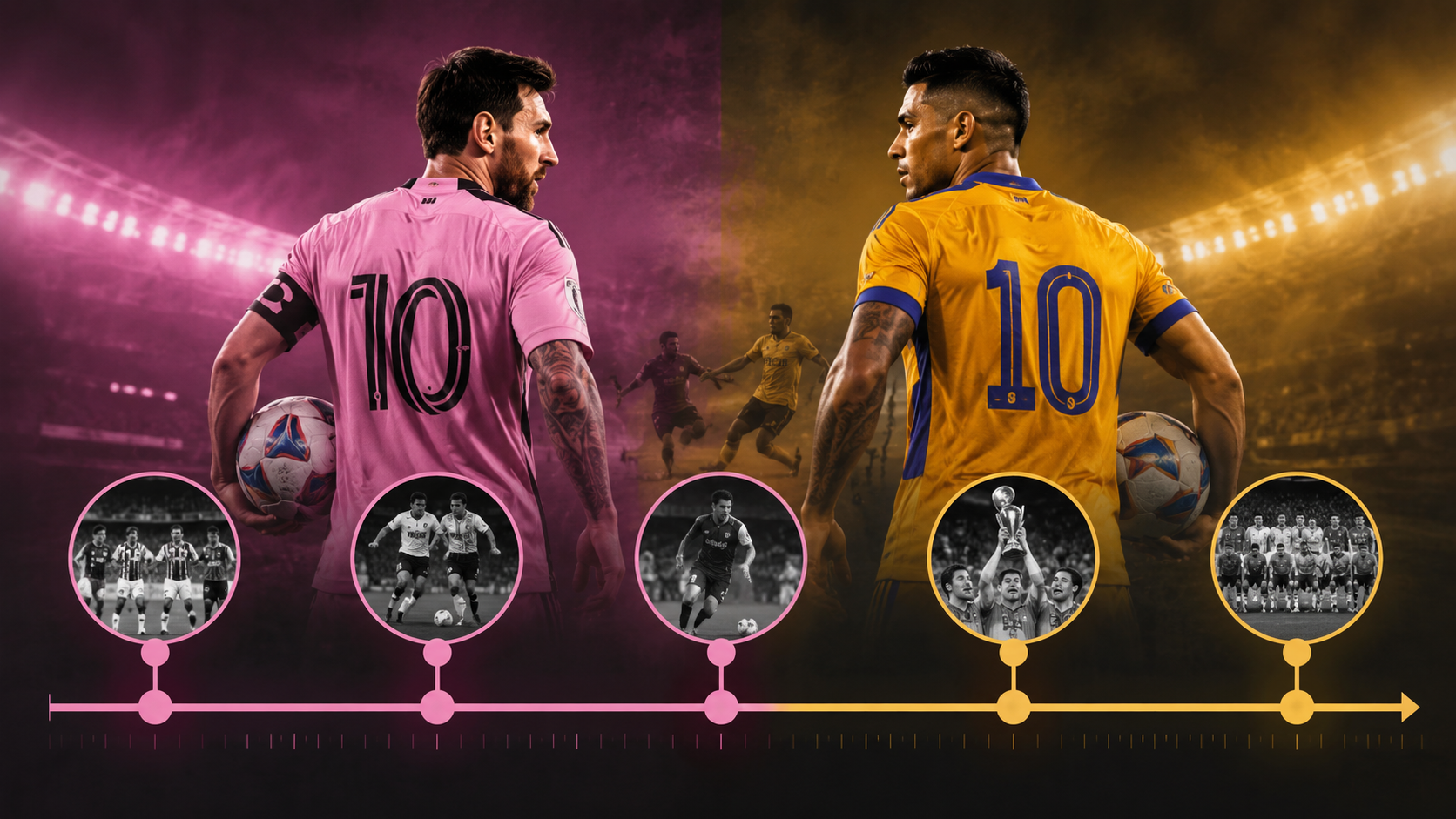
Two clubs, two different footballing worlds, and two matches that have already produced enough drama to make this one of the more closely watched fixtures in North American soccer. Inter Miami and Tigres UANL have only met twice, but both games ended 2-1, both were decided late, and both carried real stakes in the Leagues Cup. Here’s the full timeline of what’s happened so far.
Direct Answer: What Is the Inter Miami vs Tigres UANL Timeline?
The Inter Miami vs Tigres UANL timeline covers two competitive matches, both played in the Leagues Cup, the annual tournament pitting MLS clubs against Liga MX clubs. Tigres won the first meeting 2-1 in the 2024 group stage, while Inter Miami won the rematch 2-1 in the 2025 quarterfinal. The overall head-to-head record stands at one win apiece, with no draws, making it one of the most evenly balanced young rivalries in the sport.
Background: Why This Matchup Draws Attention
Inter Miami and Tigres UANL come from very different footballing traditions, and that contrast is part of what makes their meetings compelling. Inter Miami, an MLS club owned by an ownership group led by David Beckham, had limited international profile before Lionel Messi’s arrival in July 2023 fundamentally changed the club’s visibility overnight.
Tigres UANL, based in the Monterrey metropolitan area and playing home matches at Estadio Universitario in San Nicolás de los Garza, carries a very different kind of weight. With eight Liga MX championships and a 2020 CONCACAF Champions League title, Tigres entered this rivalry as an established continental heavyweight, not a club still building its reputation.
The Leagues Cup, which brings every MLS and Liga MX club into a shared mid-season tournament, has become the primary stage for this dynamic to play out, turning a fixture between two clubs with no traditional rivalry into a genuine measuring stick for MLS ambition against Liga MX’s tactical depth.
Match One: 2024 Leagues Cup Group Stage
The first official meeting between the two clubs took place on August 3, 2024, at NRG Stadium in Houston, during the Leagues Cup group stage.
Tigres controlled much of the early tempo, and that patience paid off in the 18th minute, when Juan Brunetta opened the scoring with a composed finish. Inter Miami responded in the 74th minute, with Leonardo Campana converting from the penalty spot to level the match at 1-1. The equalizer didn’t hold. In the 84th minute, Juan Pablo Vigón restored Tigres’ lead, and the match finished 2-1 in Tigres’ favor.
Notably, Lionel Messi did not feature in this match due to an ankle injury, and Luis Suárez remained on the bench throughout. The absence of Inter Miami’s biggest attacking names shaped how the match unfolded, with Tigres able to control large stretches of the game against a Miami side missing key attacking options.
Match Two: 2025 Leagues Cup Quarterfinal
The rematch came roughly a year later, in the 2025 Leagues Cup quarterfinal, played at Chase Stadium in Fort Lauderdale, Inter Miami’s home ground.
This match swung several times. Inter Miami took an early lead in the 23rd minute, when Luis Suárez converted a penalty to make it 1-0. Tigres answered in the 67th minute, with Ángel Correa beating goalkeeper Óscar Ustari to level the score at 1-1, continuing a strong individual tournament for Correa, who had scored four goals across the earlier phase of the 2025 Leagues Cup.
The decisive moment came in the 89th minute. Tigres pushed for a late equalizer, and a header from Edgar López in stoppage time struck both posts without going in, allowing Miami to hold on for the win.
As in the first meeting, Lionel Messi didn’t play, this time due to a muscle injury rather than the ankle issue from 2024. The victory sent Inter Miami through to the Leagues Cup 2025 semifinals and ended Tigres’ run in that year’s tournament.
Head-to-Head Summary
Based on both official meetings to date, the record between the two clubs is closely balanced:
- Total meetings: 2
- Inter Miami wins: 1 (2025 Leagues Cup quarterfinal, 2-1)
- Tigres UANL wins: 1 (2024 Leagues Cup group stage, 2-1)
- Draws: 0
- Competition: Both matches played in the Leagues Cup
Key Players in the Rivalry So Far
A few individual performances have defined both matches played to date.
Luis Suárez (Inter Miami)
Suárez has been the decisive figure in the head-to-head so far, scoring both of Inter Miami’s goals in the 2025 quarterfinal, both converted from the penalty spot under pressure in a knockout-stage match.
Ángel Correa (Tigres UANL)
Correa has established himself as one of Tigres’ most dangerous attacking threats in these meetings, scoring the equalizer in the 2025 match as part of a broader strong run of form in that tournament.
Juan Pablo Vigón and Juan Brunetta (Tigres UANL)
Both players were directly involved in Tigres’ 2024 win, with Brunetta opening the scoring and Vigón netting the eventual match-winner.
Leonardo Campana (Inter Miami)
Campana scored Miami’s lone goal in the 2024 meeting, converting from the penalty spot to briefly level the match before Tigres retook the lead.
One recurring storyline worth noting: Lionel Messi has missed both matches between these two clubs, first due to an ankle injury in 2024, then due to a muscle issue in 2025, meaning a Messi appearance against Tigres remains something fans of both clubs haven’t yet seen.
What’s Next for This Matchup
As of the most recent Leagues Cup cycle, no future match between Inter Miami and Tigres UANL has been formally scheduled. Because the Leagues Cup runs annually and both clubs have consistently qualified for the tournament, another meeting between the two is a realistic possibility in a future edition, though the specific timing depends on tournament seeding and results in earlier rounds.
Good to Know
Both matches have been decided by narrow, late margins. Neither game has been a comfortable result for either side, both finished 2-1, and both featured a decisive goal in the final 15 minutes or stoppage time.
Penalties have played an outsized role. Three of the four total goals scored across both matches have come from the penalty spot, a detail that’s shaped how each match’s turning points unfolded.
The rivalry predates a long shared history. Unlike longstanding regional rivalries, this matchup has only existed since 2024, meaning the “timeline” is still in its early chapters, with plenty of room for the head-to-head record to develop further.
Key Facts
- Inter Miami and Tigres UANL have met twice, both times in the Leagues Cup.
- The 2024 group stage match, played August 3, 2024, in Houston, ended 2-1 to Tigres.
- The 2025 quarterfinal, played at Chase Stadium in Fort Lauderdale, ended 2-1 to Inter Miami.
- The head-to-head record stands at one win each, with no draws.
- Lionel Messi has missed both matches due to injury.
- Luis Suárez has scored both of Inter Miami’s goals in the head-to-head so far, both penalties.
Frequently Asked Questions
Q1: Who has won more matches between Inter Miami and Tigres UANL?
Ans: The record is even, with one win for each club across two total meetings, both decided by a 2-1 scoreline.
Q2: Has Lionel Messi ever played against Tigres UANL?
Ans: No. Messi missed both meetings due to injury, an ankle issue in 2024 and a muscle injury in 2025.
Q3: What competition have Inter Miami and Tigres UANL played each other in?
Ans: Both matches have taken place in the Leagues Cup, the annual tournament featuring clubs from MLS and Liga MX.
Q4: Who scored the winning goal in each match?
Ans: Juan Pablo Vigón scored the decisive goal for Tigres in the 2024 meeting, while Luis Suárez scored the winning penalty for Inter Miami in the 2025 quarterfinal.
Q5: Is there a traditional rivalry between these two clubs?
Ans: No long-standing rivalry existed before 2024. The current dynamic has developed specifically through their Leagues Cup meetings since then.
Q6: Will Inter Miami and Tigres UANL play again?
Ans: No future match is currently scheduled, but since both clubs regularly qualify for the Leagues Cup, another meeting is considered likely in a future edition of the tournament.
Key Takeaways
- Inter Miami and Tigres UANL have played twice, both in the Leagues Cup, with each side winning once by a 2-1 scoreline.
- Tigres won the first meeting in 2024; Inter Miami won the rematch in the 2025 quarterfinal.
- Luis Suárez has been the decisive figure for Inter Miami, scoring both of the club’s goals in the head-to-head via penalties.
- Lionel Messi has missed both matches to date due to injury.
In Short
Two matches, two 2-1 results, and one win apiece, the Inter Miami vs Tigres UANL series has managed to pack plenty of drama into a short history. With Messi yet to feature in either match and both clubs likely to keep crossing paths in future Leagues Cup editions, this remains a rivalry very much in its opening chapters.
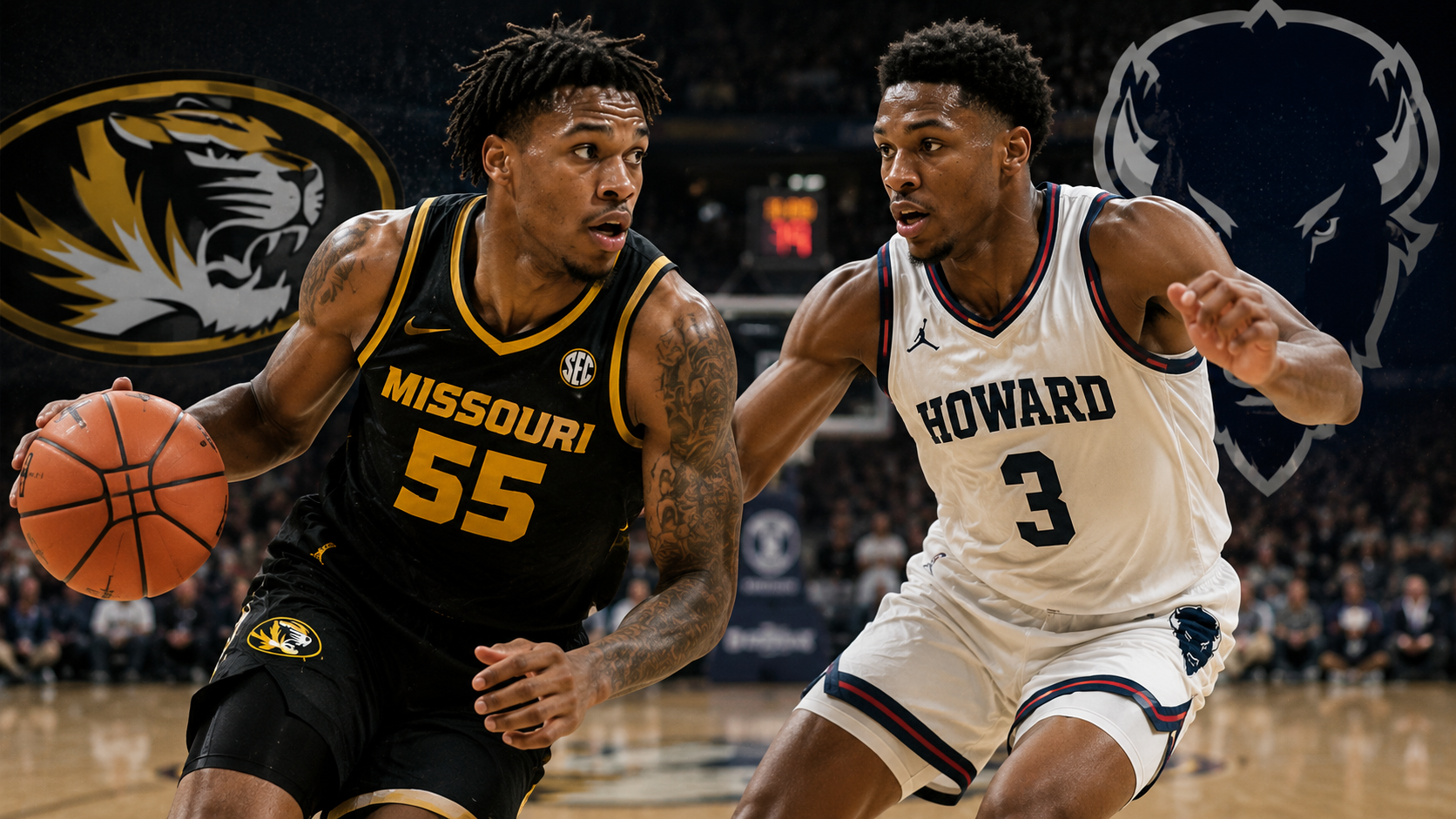
When people search “Missouri vs Howard,” they’re usually looking for the men’s college basketball matchup between the Missouri Tigers and the Howard Bison, played on November 3, 2025, at Burr Gymnasium in Washington, D.C. It was the season opener for both programs, and it turned into a historically strong road win for Missouri.
This article walks through what happened in the game, why the result mattered, and how each team performed individually.
Direct Answer
Missouri defeated Howard 88-67 on November 3, 2025, at Burr Gymnasium in Washington, D.C., to open the 2025-26 men’s college basketball season for both teams. Shawn Phillips Jr. led Missouri with a double-double of 16 points and 11 rebounds, while Howard’s Bryce Harris scored a game-high 27 points. The win marked Missouri’s largest road victory in a season opener in 84 years.
Background: A Notable Road Trip for Missouri
Missouri came into the game fresh off a 22-12 season under head coach Dennis Gates, a campaign that included a No. 6 seed in the NCAA Tournament, the program’s best seeding since 2012. Rather than opening at home, as most programs do, Missouri chose to open on the road at Howard, marking the second straight year the Tigers started their season away from Columbia.
The trip carried some extra weight. Missouri had not won a season-opening road game since 2003, and the program hadn’t posted this large of a road win to open a season in 84 years, dating back to a 52-29 victory over Saint Louis in the 1941-42 season. It also marked the first time in the two programs’ history that Missouri played a true road game against Howard; 20 of the previous 21 meetings between the schools had been played in Columbia, with one additional neutral-site game at an NCAA Tournament.
Missouri also had to manage some early-season injury concerns. Forwards Trent Pierce, Annor Boateng, and Trent Burns were all ruled out with lower-body injuries, meaning the Tigers opened the year without three players who had been expected to contribute.
How the Game Unfolded
Missouri Takes Control Early
Missouri won the opening tip and got on the board quickly, with Sebastian Mack finding Shawn Phillips Jr. inside for an early basket. Howard answered on its first possession, but Missouri responded with a burst of scoring, including a dunk from Mark Mitchell and a three-pointer from Jevon Porter, to push the lead to 11-5 early in the first half.
From there, Missouri kept building. A 16-5 scoring run stretched the Tigers’ lead further, and by the halfway point of the first half, Missouri had extended its advantage into double digits and kept adding to it through good ball movement and efficient shooting.
Howard Mounts a Second-Half Push
Missouri carried its lead into the break and came out of halftime looking to extend it, stretching the margin to 20 points early in the second half at 46-26. Howard wasn’t finished, though. The Bison put together a 20-9 run, shooting an efficient 7 of 9 from the field, including all six of their three-point attempts during that stretch, to cut Missouri’s lead down to nine points at 55-46.
That was as close as Howard would get. Missouri answered immediately with a 14-3 run of its own, shooting 6 of 9 from the field and 2 of 3 from three-point range, to push the lead back out to 21 points at 72-51. From that point forward, Missouri controlled the pace and cruised to the finish, closing out an 88-67 win.
Key Individual Performances
Shawn Phillips Jr., playing his first game in a Missouri uniform after transferring in, led the Tigers with a double-double: 16 points and 11 rebounds. He was remarkably efficient, making 8 of 9 field-goal attempts.
Jayden Stone added 13 points for Missouri, connecting on 3 of 4 attempts from three-point range, while Jacob Crews chipped in 10 points off the bench. T.O. Barrett paced the Tigers with four assists, and Anthony Robinson II led the team defensively with three steals.
As a team, Missouri shot an efficient 55.7 percent from the field, including 52.6 percent (10 of 19) from three-point range. The Tigers also dominated the boards, out-rebounding Howard 47-28, and controlled the interior with a 46-16 advantage in points in the paint.
For Howard, Bryce Harris put together the best individual performance of the night, scoring a game-high 27 points on 4-of-9 shooting from three-point range, while adding four rebounds and four assists. Alex Cotton also had a strong offensive night, scoring 20 points on 6-of-12 three-point shooting. Despite those individual performances, Howard shot just 35.5 percent from the field as a team, which made it difficult to sustain any long stretch of offensive success against Missouri’s defense and rebounding advantage.
Why the Game Turned Out the Way It Did
A few factors explain the final margin:
Missouri’s three-point shooting was extremely efficient. Making 10 of 19 attempts from beyond the arc gave Howard’s defense little room to key in on any single area of the floor.
Rebounding and interior scoring created a wide gap. Missouri’s 47-28 rebounding advantage, paired with a 46-16 edge in points in the paint, meant Howard had to work far harder for each possession while Missouri generated easier looks close to the basket.
Missouri answered every Howard run. When Howard cut the deficit to nine points in the second half, Missouri immediately responded with its own scoring run rather than letting the game stay close, which shut down any real chance of a comeback.
Depth mattered for Missouri. With four different players in double figures and contributions spread across the roster, Howard couldn’t focus its defensive game plan on stopping just one or two scorers.
Common Misconceptions About This Matchup
Misconception: This was a typical, low-stakes season opener. While season openers are often unremarkable, this particular result set records. It was Missouri’s largest road win in a season opener in 84 years and the program’s first road win in a season opener since 2003.
Misconception: Howard didn’t compete in the game. Howard actually mounted a real second-half push, cutting a 20-point deficit down to nine points with an efficient shooting run. The game only pulled away again after Missouri answered that run directly.
Misconception: This was a “normal” road game for Missouri against Howard. Historically, the two programs had met almost exclusively in Columbia. This was the first true road game between the schools, making the size of Missouri’s win even more notable given the unfamiliar environment.
Key Facts
- Final score: Missouri 88, Howard 67
- Date: November 3, 2025
- Location: Burr Gymnasium, Washington, D.C.
- Occasion: Season opener for both teams
- Missouri’s record after the game: 1-0
- Howard’s record after the game: 0-1
- Leading scorer: Bryce Harris, Howard, 27 points
- Missouri’s double-double: Shawn Phillips Jr., 16 points and 11 rebounds
- Missouri shooting: 55.7% from the field, 52.6% from three-point range
- Rebounding margin: Missouri 47, Howard 28
- Points in the paint: Missouri 46, Howard 16
- Historical note: Missouri’s largest road win in a season opener in 84 years
Frequently Asked Questions
Q1: What was the final score of Missouri vs Howard?
Ans: Missouri won 88-67 in their November 3, 2025 season opener at Burr Gymnasium in Washington, D.C.
Q2: Who led all scorers in the game?
Ans: Howard’s Bryce Harris led all scorers with 27 points, while Missouri’s Shawn Phillips Jr. recorded a team-high double-double with 16 points and 11 rebounds.
Q3: Where was the game played?
Ans: The game was played at Burr Gymnasium in Washington, D.C., Howard’s home arena, marking Missouri’s first true road game in the series.
Q4: Why was this considered a historic win for Missouri?
Ans: It was Missouri’s largest road win in a season opener in 84 years, dating back to a 1941-42 victory over Saint Louis, and the program’s first road win in a season opener since 2003.
Q5: Did Howard have any chance in the game?
Ans: Yes. Howard cut a 20-point deficit down to nine points in the second half with an efficient shooting run before Missouri answered with a run of its own to close out the win.
Q6: Was Missouri at full strength for this game?
Ans: No. Forwards Trent Pierce, Annor Boateng, and Trent Burns were all ruled out with lower-body injuries heading into the season opener.
Q7: What came next for each team?
Ans: Missouri returned home to Columbia for its home opener, while Howard continued its home slate at Burr Gymnasium against UDC.
Key Takeaways
- Missouri defeated Howard 88-67 on November 3, 2025, in the season opener for both teams.
- The game was played at Burr Gymnasium in Washington, D.C., marking Missouri’s first true road game in the series history.
- Shawn Phillips Jr. recorded a double-double for Missouri with 16 points and 11 rebounds in his Tigers debut.
- Howard’s Bryce Harris led all scorers with 27 points, but the Bison shot just 35.5% from the field as a team.
- Missouri shot 55.7% from the field and out-rebounded Howard 47-28.
- The win marked Missouri’s largest road victory in a season opener in 84 years.
Conclusion
The 2025-26 season opener between Missouri vs Howard delivered a historically strong result for the Tigers, who overcame a late Howard push to secure an 88-67 road win. Efficient shooting, rebounding dominance, and a balanced scoring effort defined Missouri’s performance, while Howard’s Bryce Harris and Alex Cotton provided bright spots in an otherwise difficult night for the Bison. For Missouri, the result set an early tone for a season that began on the road with one of the program’s most impressive opening-night performances in decades.
Introduction
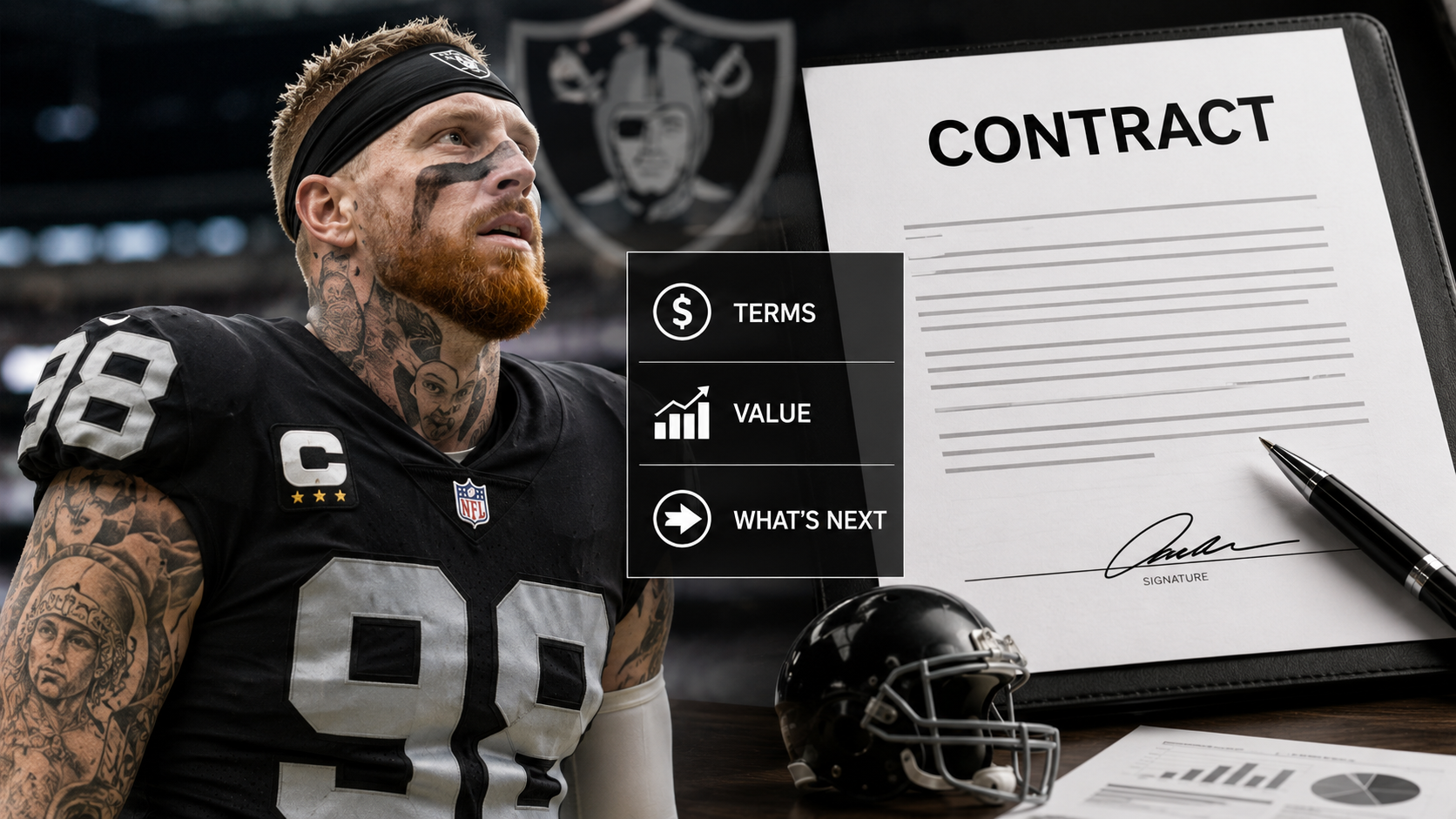
Maxx Crosby has spent his entire career with the Las Vegas Raiders, and his contract has become one of the more closely watched deals in the NFL, partly because of its size and partly because of how much drama has surrounded it since it was signed. Readers searching for details on the Maxx Crosby contract usually want to know the numbers, how it compares to other pass rushers, and whether recent injury and trade rumors put his future with the Raiders in question.
This article breaks down the terms of his current deal, the history behind it, and where things stand heading into the 2026 season.
Direct Answer: What Is Maxx Crosby Contract?
Maxx Crosby signed a three-year, $106.5 million extension with the Las Vegas Raiders in March 2025, including $91.5 million guaranteed and an average annual salary of $35.5 million. The deal made him the highest-paid non-quarterback in the league at signing. His base salaries for 2025 and 2026 were fully guaranteed at $32.5 million and $30 million, while his 2027 salary becomes guaranteed only if he’s on the roster early in the 2026 league year.
Background: How Crosby Got Here
The Raiders drafted Crosby in the fourth round of the 2019 NFL Draft out of Eastern Michigan, a relatively low-profile pick who developed into one of the league’s most productive edge rushers. His first extension came in March 2022, a four-year deal worth just under $99 million. That contract still had two years remaining when the Raiders decided to renegotiate again in 2025, largely because Crosby’s production had outpaced his existing salary.
Before the 2025 extension, Crosby had two years left on his 2022 deal, with base salaries of $22.2 million in 2025 and $18.8 million in 2026, but none of that remaining money was guaranteed. The new deal changed that significantly.
Contract Terms Explained
Total Value and Guarantees
The March 2025 extension is a three-year deal worth $106.5 million, with $91.5 million fully guaranteed. That guarantee level was notable at the time because it gave Crosby long-term security rather than year-to-year risk, which is unusual for a player already several years into his career.
Average Annual Salary
Crosby’s contract carries an average annual value of $35.5 million, which briefly made him the highest-paid non-quarterback in NFL history. That distinction didn’t last long, since other top pass rushers around the league, including Myles Garrett, signed even larger deals within days of Crosby’s extension.
Year-by-Year Breakdown
In 2026, Crosby is set to earn a base salary of $30 million, fully guaranteed, with a salary cap hit of roughly $35.8 million. That cap number represents close to 12 percent of the Raiders’ total salary cap for the season. His 2027 salary of $29 million is currently guaranteed only for injury, but it becomes fully guaranteed if he remains on the Raiders’ roster on the third day of the 2026 league year.
Why This Contract Matters
Crosby’s deal matters for a few reasons beyond the raw dollar figures. First, it reflects how the market for elite pass rushers has shifted, with teams increasingly willing to offer near-full guarantees to keep top defensive talent rather than let them approach free agency. Second, it ties directly into the Raiders’ broader roster planning, since a cap hit this large limits flexibility elsewhere on the roster.
There’s also a performance angle. Some analysts have pointed out that Crosby’s sack totals dipped in the two seasons before signing the extension compared to his 2022 and 2023 peak, which has led to debate over whether the deal will age well. Others argue that sacks alone don’t capture his value, noting his consistently high tackles-for-loss numbers as a better measure of his overall impact.
Recent Developments: Injury and Trade Speculation
Crosby’s contract situation became more complicated during the 2025 season. He played through a left knee injury starting in October, and the Raiders placed him on injured reserve in late December to end his season early, a decision Crosby reportedly disagreed with at the time. He underwent surgery for a torn meniscus in early January 2026.
In March 2026, the Raiders and Baltimore Ravens reportedly agreed to a trade sending Crosby to Baltimore, but the Ravens pulled out of the deal after Crosby did not pass their physical, with reports citing durability concerns tied to his knee. Following the collapsed trade, Crosby returned to the Raiders organization, and both sides have since described the situation as resolved, with Crosby stating he wants to remain in Las Vegas. By mid-2026, Crosby reported that his recovery was ahead of schedule, with an expected return to full participation in time for training camp.
Common Mistakes and Misconceptions
Assuming the entire contract is guaranteed. Only $91.5 million of the $106.5 million total is guaranteed. The 2027 salary is currently guaranteed for injury only, and full guarantee depends on roster status early in the 2026 league year.
Confusing his 2022 extension with his 2025 extension. Crosby has signed two separate extensions with the Raiders. The 2022 deal was worth roughly $99 million over four years; the 2025 deal replaced the remaining years of that contract with new, larger terms.
Assuming the failed Ravens trade voided his contract. The trade falling through didn’t change the terms of Crosby’s existing deal with the Raiders. He remains under contract with Las Vegas under the same 2025 extension terms.
Believing cap hit and salary are the same number. Crosby’s 2026 base salary is $30 million, but his cap hit is higher, around $35.8 million, because cap accounting spreads signing bonus money and other contract elements across multiple seasons.
Real-World Example: How the Deal Affects Roster Building
When the Raiders signed offensive lineman Tyler Linderbaum and other free agents during the 2026 offseason, Crosby’s $35.8 million cap hit was already factored into how much room the team had left to spend. Because his number represents such a large share of the total cap, decisions about extending or trading other players often get discussed in relation to Crosby’s contract, since it’s the single largest commitment on the roster.
Key Facts About the Maxx Crosby Contract
- Three-year extension signed March 5, 2025, worth $106.5 million total.
- $91.5 million of the deal is fully guaranteed.
- Average annual salary of $35.5 million, briefly the highest among non-quarterbacks in NFL history.
- 2025 and 2026 base salaries were fully guaranteed at $32.5 million and $30 million.
- 2027 salary of $29 million is currently guaranteed for injury only.
- Crosby’s 2026 cap hit is approximately $35.8 million, close to 12 percent of the Raiders’ total cap space.
- A March 2026 trade to the Baltimore Ravens fell through after Crosby did not pass a physical related to his knee.
Frequently Asked Questions
Q1: How much is Maxx Crosby contract worth?
Ans: His current deal with the Raiders is a three-year extension worth $106.5 million, including $91.5 million guaranteed.
Q2: Is Maxx Crosby the highest-paid defensive player in the league?
Ans: He was briefly the highest-paid non-quarterback by average annual value when he signed in March 2025, but several other pass rushers have since signed larger deals, moving Crosby down the rankings.
Q3: Why did the Ravens trade for Maxx Crosby fall through?
Ans: Reports indicate the Ravens backed out after Crosby did not pass their physical, with concerns tied to durability issues connected to his knee injury and subsequent surgery.
Q4: Is Maxx Crosby still with the Raiders?
Ans: Yes. Following the collapsed trade, Crosby returned to the Raiders organization and has stated he intends to remain with the team.
Q5: What happens to his contract if he gets traded in the future?
Ans: If traded, Crosby’s existing contract terms would generally transfer to the new team, though trade agreements can sometimes include restructured terms depending on what both teams negotiate.
Q6: Is his 2027 salary guaranteed?
Ans: Only for injury at this time. It becomes fully guaranteed if Crosby is on the Raiders’ roster on the third day of the 2026 league year.
Key Takeaways
- Crosby’s current deal is a three-year, $106.5 million extension signed in March 2025, with $91.5 million guaranteed.
- The contract made him briefly the highest-paid non-quarterback in NFL history.
- His 2026 cap hit of about $35.8 million represents a significant share of the Raiders’ total cap space.
- A trade to the Ravens in March 2026 fell through due to physical concerns related to his knee.
- Crosby has since returned to the Raiders and expects to be ready for the 2026 season.
Conclusion
Maxx Crosby’s contract reflects both his standing as one of the league’s top pass rushers and the financial risk teams take on when committing significant guaranteed money to a player in his late twenties. Between the size of the deal, the injury history, and the trade speculation that followed, his situation offers a clear look at how modern NFL contracts are structured and how quickly circumstances around them can shift.
-

 Technology2 months ago
Best Wireless Earbuds Under 200 Dollars 2024: What to Know Before You Buy
-

 News4 months ago
Best Places to See Penguins in the Wild: A Complete Guide
-

 News4 months ago
Lake Mead Water Levels: Status, History & Western Impact
-

 Technology4 months ago
What Is VIPstand? How It Works, Legal Risks, and What You Should Know
-

 Technology4 months ago
Laaster: Meaning, Origins, and What It Says About Harmful Speech
-

 Celebrity4 months ago
Matt Danzeisen: Who He Is, His Career in Finance, and His Life With Peter Thiel
-

 News4 months ago
What Is Epoch Fun? A Complete Guide to the Epoch Times Games Section
-
 Food2 months ago
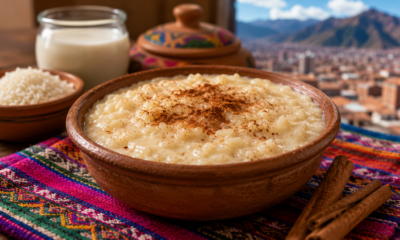
Best Arroz con Leche Boliviano Near Me: What to Look For