
Auto
GT Radial Strengthens SportActive 2 and FE2 Lines with New Evo Compound Upgrade

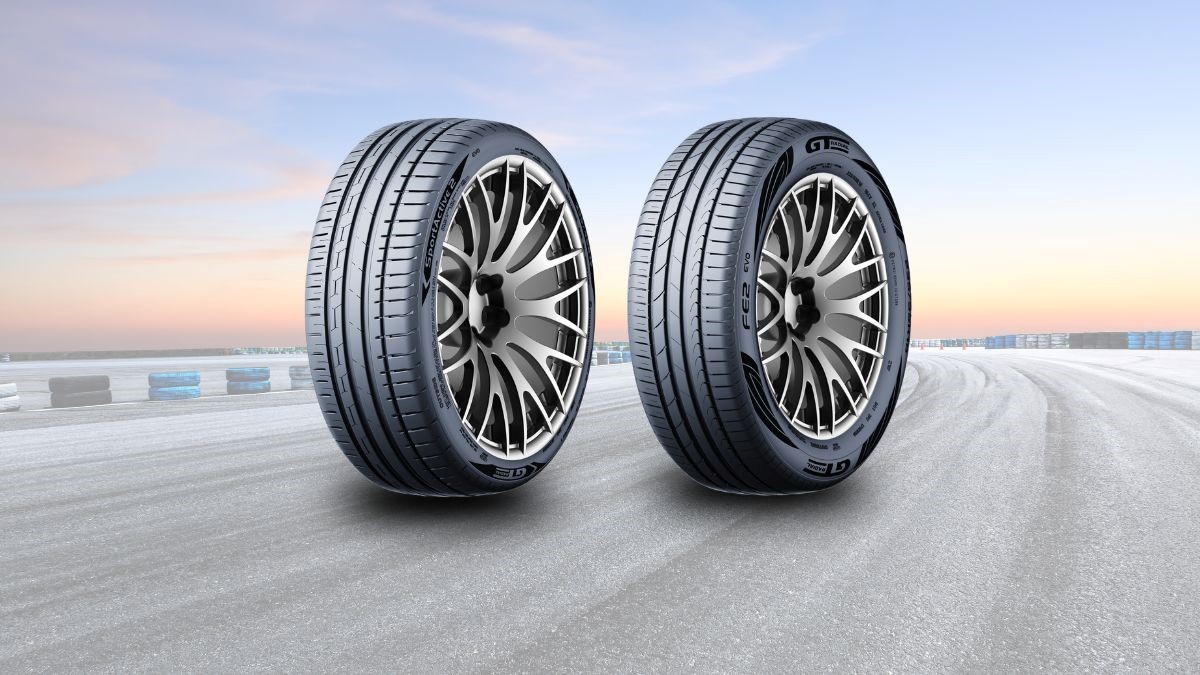
GT Radial has introduced the next-generation SportActive 2 evo and FE2 evo in Europe, bringing a new compound upgrade to two of the brand’s key passenger tire lines. The launch focuses on the performance areas drivers feel most directly in daily use: wet grip, dry control, braking response, mileage potential, comfort and road noise.
The update is not just a name change. According to GT Radial, the evo compound has helped deliver measurable gains in wet and dry braking and handling, while the SportActive 2 evo has also received a “good” rating in the AutoBild 2026 Summer Tyre Test. For a mid-market brand competing in a segment where drivers increasingly compare price, safety, noise and efficiency together, that combination matters.
The result is a clearer two-product story. SportActive 2 evo is positioned for drivers who want a sportier, more responsive tire for premium and performance vehicles. FE2 evo targets everyday motorists looking for a relaxed, quiet and efficient ride without giving away confidence in wet conditions. Both fit into GT Radial’s broader price-performance strategy: make tire technology more accessible without reducing the importance of safety and control.
A Sharper Step for Sporty Driving
The GT Radial SportActive 2 evo arrives first in an initial range of 19 sizes, covering rim diameters from 17 to 20 inches, section widths from 225 to 255, and series sizes from 35 to 55. This places the tire firmly in the modern performance and premium vehicle space, where steering response, braking stability and wet control are central buying factors.
GT Radial says the SportActive 2 evo retains the established strengths of the SportActive 2 while improving wet and dry braking and handling by 2% to 9%. That is the important point: the evo version builds on an existing pattern platform rather than replacing the product’s purpose. The original SportActive 2 already emphasizes enhanced grip, precise braking, responsive handling, wet-weather capability and high-speed stability. The evo compound is designed to push that performance balance further.
Several technical details support that direction. The SportActive 2 platform uses four wide grooves for water drainage, micro sipes on the contact area for additional grip effect, and optimized pattern block geometry and pitch for lower noise and improved comfort. For the evo version, GT Radial highlights a special sidewall contour to support precise steering and a computer-optimized groove design that helps evacuate water more quickly. These are the kinds of details that matter when a tire is expected to feel controlled in dry driving but also predictable when the road surface changes.
Independent Testing Adds Credibility.
The SportActive 2 evo’s AutoBild result gives the upgrade stronger third-party credibility. In the 2026 Summer Tyre Test, the tire was rated “good” and placed eighth. GT Radial reports that AutoBild recognized the tire for its value, low cost per kilometer, safe performance in wet and dry conditions and consistent competitiveness.
The wet-performance note is especially relevant. GT Radial says the SportActive 2 evo was one of only three tires to receive top marks in the cornering aquaplaning test, alongside two leading premium manufacturer patterns. That is useful because aquaplaning resistance is not just a laboratory talking point; it affects how confidently a tire maintains contact and control when water sits between the tread and the road.
Noise performance is also becoming more important. Fabio Pecci-Boriani, Deputy General Manager for Product Planning PCR and LTR at Giti Tire’s European R&D Centre, noted that the SportActive 2 has now received a “good” AutoBild rating for the second time in three years, and that the new evo model was also the quietest tire in the test. That quietness point carries extra weight as electric vehicles become more common, because reduced engine noise makes tire noise more noticeable in the cabin.
FE2 evo Expands the Everyday Comfort Story
Alongside the SportActive 2 evo, GT Radial has launched the FE2 evo. This tire comes to market in 42 sizes, with rim diameters from 15 to 18 inches, section widths from 165 to 235, and series sizes from 50 to 70. Where SportActive 2 evo speaks to sportier driving, FE2 evo is positioned as an all-rounder for everyday drivers who want a relaxed and enjoyable journey.
The standard FE2 product line already has a clear comfort and efficiency identity. GT Radial describes FE2 as a tire designed for a smooth, quiet and fuel-efficient ride, with an advanced tread pattern for wet grip, mileage and low noise. The tire’s features include an innovative tread compound for short braking distances, wide grooves for water drainage, an advanced tire profile for optimal pressure distribution, and design elements aimed at comfort, handling and even wear.
The evo upgrade builds on that foundation. GT Radial says the new compound improves wet and dry braking and handling, while delivering a 4% increase in mileage potential. The company also points to specially designed polymers that increase wear resistance and an optimized pitch sequence that reduces noise generation. In plain language, the FE2 evo update is about making the everyday tire more complete: safer-feeling in poor weather, quieter in normal driving and more durable over time.
Why EV Ready Matters in this Launch
Several key sizes across the new evo SUV tires feature GT Radial’s EV Ready logo on the sidewall. This does not mean every size is automatically the right fit for every electric vehicle. It means selected sizes have been identified by the brand as meeting the different performance requirements of both electric vehicles and internal combustion engine vehicles.
That distinction is important. EV tire demand is not only about one attribute. Electric vehicles can place different demands on tires because of instant torque delivery, the importance of rolling resistance for driving range, cabin noise sensitivity and, in many cases, higher vehicle weight. GT Radial’s broader dual EV-ready strategy reflects this reality by marking selected tires more clearly for dealers and drivers at the point of sale.
GT Radial made the same point when it expanded its dual EV-ready offering into winter tires earlier in 2026. In that announcement, the brand noted that selected tires were optimized for lower rolling resistance to help range while also transmitting EV power effectively, without removing the performance expected by traditional internal combustion engine drivers. The SportActive 2 evo and FE2 evo fit into that same practical direction: one tire line can serve both powertrains when the size and specification are appropriate.
European R&D Behind the Product Update
Both new evo tires were designed and engineered at Giti Tire’s European Research & Development Centre in Hannover, Germany. That matters because this article is not only about two updated products; it is also about GT Radial’s development system for the European market.
GT Radial and Giti Tire describe a global R&D network supported by more than 600 experienced engineers across multiple centers. The company’s wider testing and development process includes wet handling, dry handling, high-speed stability, snow performance and other proving-ground evaluations. For a product like SportActive 2 evo or FE2 evo, this type of testing context helps explain why the upgrade touches several performance categories at once rather than chasing a single number.
This is also where the GT Radial positioning becomes clearer. The brand is not trying to present the evo upgrade as a narrow performance claim. The story is about balance. A summer performance tire still has to brake, steer, drain water and stay quiet. An everyday comfort tire still has to handle emergency wet-road conditions and maintain even wear. An EV-ready size still has to work for real drivers, not just look efficient on paper.
What drivers and Dealers Should Take From the Evo Upgrade
For drivers, the simplest takeaway is this: SportActive 2 evo is the more performance-focused option, while FE2 evo is the more comfort-focused all-rounder. Both now benefit from updated compound work, selected EV-ready sizing, and a clearer value story for drivers who want stronger real-world performance without moving automatically into the highest-cost premium tier.
For dealers, the update gives a more complete conversation at the counter. Instead of selling only by size and price, dealers can explain where each tire fits: SportActive 2 evo for sharper steering and dynamic driving, FE2 evo for quiet comfort, mileage and everyday road confidence. The EV Ready marking also gives sales teams a clearer way to guide customers who are unsure whether a tire is appropriate for an electric or internal combustion vehicle.
The launch also gives GT Radial a stronger message in a crowded summer tire market. Independent test recognition, upgraded compound technology, broader EV-ready identification and European R&D all work together. None of those points alone makes a tire successful. Together, they support the kind of balanced product story that modern tire buyers increasingly expect.
A Practical Evolution, Not Just a Product Refresh
The SportActive 2 evo and FE2 evo upgrades show GT Radial moving in the right direction: not by overcomplicating the product story, but by improving the areas that matter most to drivers. Better wet and dry behavior, stronger mileage potential, lower noise and clearer EV-ready identification are practical improvements. They connect directly to the way people choose tires today.
For a performance driver, that may mean more confident steering and braking in changing weather. For an everyday commuter, it may mean a quieter, more comfortable ride with improved durability. For an EV driver, it may mean choosing from selected sizes that have been identified for both electric and traditional vehicles. For GT Radial, the evo upgrade reinforces a simple but important claim: value-led tires still need serious engineering behind them.
Drivers should always confirm the correct size, load index, speed rating and regional availability before purchase. But as a product-news development, the new SportActive 2 evo and FE2 evo give GT Radial a stronger and more complete summer tire offer for Europe, backed by compound development, independent testing recognition and a clearer fit for the changing vehicle market.
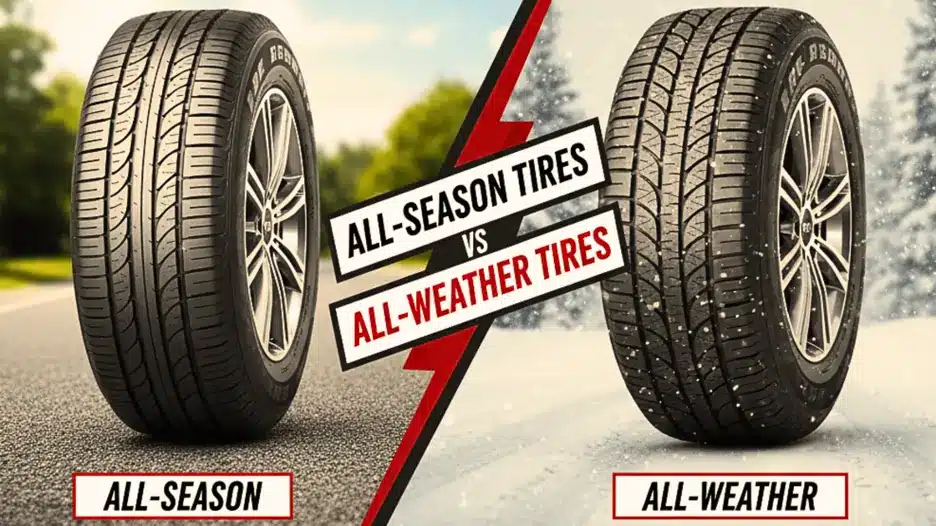
All-season vs. all-weather tires sounds like a branding debate, but the practical difference is simple: one is built mainly for mild year-round use, while the other is designed to meet a defined severe-snow traction threshold. The easiest consumer clue is the three-peak mountain snowflake symbol, often shortened to 3PMSF. If that mark is missing, do not assume the tire is ready for serious winter conditions just because the name says “all-season.”
That does not automatically make all-weather tires the better choice for every driver. The right tire depends on where you live, how often roads stay cold or snowy, how far you commute, and whether you are willing to trade some tread life and quietness for better cold-weather capability. Here is the clean, non-marketing version of the difference.
What “All-Season” Really Means
All-season tires are designed as balanced daily-use tires. They are usually built to handle dry roads, wet roads, warm temperatures, and occasional light winter conditions while still giving drivers a quiet ride and useful tread life. For many drivers in mild climates, that balance is exactly the point.
The problem is the name. “All-season” does not mean equal performance in all weather. It does not mean the tire has passed a severe-snow traction test. Many all-season tires carry an M+S marking, but that mark mainly describes tread geometry; it is not the same as a tested winter-performance symbol.
As temperatures move toward freezing, many all-season compounds begin to harden compared with winter-focused or all-weather compounds. When rubber gets less flexible, the tire can lose some of its ability to conform to the road surface. That is why an all-season tire that feels confident in fall rain can feel less responsive on cold, packed snow, even when there is still tread depth left.
What Actually Makes a Tire “All-Weather”
All-weather tires are best understood as year-round tires that add a real snow-traction layer to the all-season idea. In North American tire language, the clearest sign is the 3PMSF symbol on the sidewall. That mark indicates the tire has met a defined snow-traction performance requirement, commonly tied to ASTM F1805 testing on medium-packed snow.
That is useful, but it has limits. The 3PMSF test is primarily about acceleration traction in a specific packed-snow test environment. It does not guarantee short braking distances, cornering grip, or ice performance. Two tires can both carry the snowflake symbol and still perform differently once the road gets slushy, icy, uneven, or steep.
That nuance matters. The 3PMSF symbol is not a magic winter badge. It is a minimum severe-snow-use signal. It tells you the tire has cleared a specific snow-traction bar, not that it will match a dedicated winter tire in harsh winter driving.
All-Season vs. All-Weather Tires, Side by Side
Which One Should You Buy?
Choose all-season tires if your winters are mostly mild. If you see more rain than snow, temperatures rarely stay below freezing, and snow is usually a light dusting rather than a regular road condition, a quality all-season tire is usually the better value. It will often ride quieter, last longer, and cost less over its useful life.
Choose all-weather tires if winter shows up often enough to matter. If your area gets recurring snow, cold mornings, freeze-thaw roads, or occasional storms, but you do not want to swap into dedicated winter tires every year, an all-weather tire is the more honest year-round compromise. You give up some refinement and tread life, but you gain a real snow-traction margin.
Choose dedicated winter tires if winter is a season, not an event. If you regularly drive in sustained freezing temperatures, heavy snow, mountain roads, or icy conditions, neither all-season nor all-weather tires should be treated as the best tool. Dedicated winter tires use specialized compounds and tread designs for cold-weather grip, braking, and control.
The Badge Matters, But It Is Not the Whole Decision
The 3PMSF mark is the first thing to check, not the last. After that, look at the tire’s independent test results, user reviews from climates similar to yours, warranty coverage, rolling-resistance information, and noise ratings where available. Also match the tire to the vehicle. A light commuter car, a heavy SUV, and an electric vehicle can ask very different things from the same tire category.
For EV drivers, the decision can be even more specific. Electric vehicles are often heavier than comparable gasoline vehicles, deliver instant torque, and make road noise more noticeable because there is less engine noise masking it. That means rolling resistance, load capacity, tread wear, and cabin quietness can matter as much as seasonal labeling.
What Neither Tire Replaces
Neither all-season nor all-weather tires remove the need for good winter driving habits. Slow down earlier, leave more following distance, avoid abrupt steering inputs, and keep tire pressure correct. Cold weather can change tire pressure, and underinflation can hurt traction, handling, tread life, and fuel efficiency.
Tire age also matters. Tread depth is not the only safety signal. Rubber changes over time because of heat, sunlight, storage conditions, and use. NHTSA notes that some vehicle and tire manufacturers recommend replacing off-road tires once they reach six to 10 years old, regardless of remaining treadwear. Always check the DOT date code and inspect for cracking, bulges, vibration, or pressure loss.
Frequently Asked Questions
Are all-weather tires worth the extra cost over all-season tires?
Yes, if you regularly drive in cold weather or occasional snow and want one set of tires year-round. If your winters are mild and mostly dry, a good all-season tire is usually the better value because it often lasts longer and rides quieter.
Can all-weather tires replace dedicated winter tires?
Not in harsh winter climates. All-weather tires provide a useful year-round compromise, but dedicated winter tires are still the stronger choice for sustained freezing temperatures, regular snow, ice, and mountain driving.
How can I tell if a tire is truly all-weather?
Look for the three-peak mountain snowflake symbol on the sidewall. An M+S mark alone is not the same thing. The snowflake indicates the tire has met a severe-snow-use traction threshold; M+S does not provide the same tested snow-traction assurance.
Do all-weather tires wear faster than all-season tires?
Often, yes. All-weather tires usually need compound and tread features that improve cold-weather traction, and those choices can reduce tread life compared with many touring all-season tires. The exact difference depends on the model, vehicle, road surface, alignment, pressure, and rotation habits.
Do all-weather tires add noise or reduce efficiency?
They can, but the difference is not always dramatic. Deeper siping and winter-capable compounds can add some road noise or rolling resistance compared with a comfort-focused all-season tire. Modern tire design has reduced that penalty, but it is still a trade-off worth checking in reviews and label data.
Is AWD enough if I keep all-season tires?
No. All-wheel drive can help a vehicle accelerate, but tires still determine braking and cornering grip. AWD does not shorten stopping distance if the tires cannot grip the road. In winter conditions, tire choice matters more than drivetrain confidence.
The Bottom Line
The simplest rule is this: buy for the winter you actually drive through, not the worst storm you can imagine or the mildest week of the year. All-season tires are usually the right choice for mild climates and drivers who prioritize comfort, tread life, and value. All-weather tires make more sense when cold and snow are common enough that a standard all-season tire feels like a compromise.
Start with the sidewall. If you need real snow capability, look for the 3PMSF symbol. Then go deeper: check independent test results, local climate, tread-life expectations, vehicle weight, and your own driving pattern. The name on the category helps, but the badge, the test data, and your road conditions should make the final decision.
-

 Technology2 months ago
Best Wireless Earbuds Under 200 Dollars 2024: What to Know Before You Buy
-

 News4 months ago
Best Places to See Penguins in the Wild: A Complete Guide
-
 News4 months ago
Lake Mead Water Levels: Status, History & Western Impact
-

 Technology4 months ago
What Is VIPstand? How It Works, Legal Risks, and What You Should Know
-

 Technology4 months ago
Laaster: Meaning, Origins, and What It Says About Harmful Speech
-

 Celebrity4 months ago
Matt Danzeisen: Who He Is, His Career in Finance, and His Life With Peter Thiel
-

 News4 months ago
What Is Epoch Fun? A Complete Guide to the Epoch Times Games Section
-

 Food2 months ago
Best Arroz con Leche Boliviano Near Me: What to Look For