
Food
Takuan: The Japanese Pickled Radish Explained

That Yellow Pickle Next to Your Sushi
If you have ever eaten at a Japanese restaurant, you have probably seen it: those bright yellow slices sitting next to rice or tucked into a bento box. Sometimes people eat them without knowing exactly what they are. Other times, the color alone makes people curious or cautious.
Takuan is one of the most recognized and widely consumed pickles in Japanese cuisine. It has been made for centuries, carries genuine cultural history, and offers a distinctly satisfying combination of crunch, tang, and mild sweetness. Once you understand what it is and how it is made, it becomes much easier to appreciate — and to use in your own cooking.
What Is Takuan?
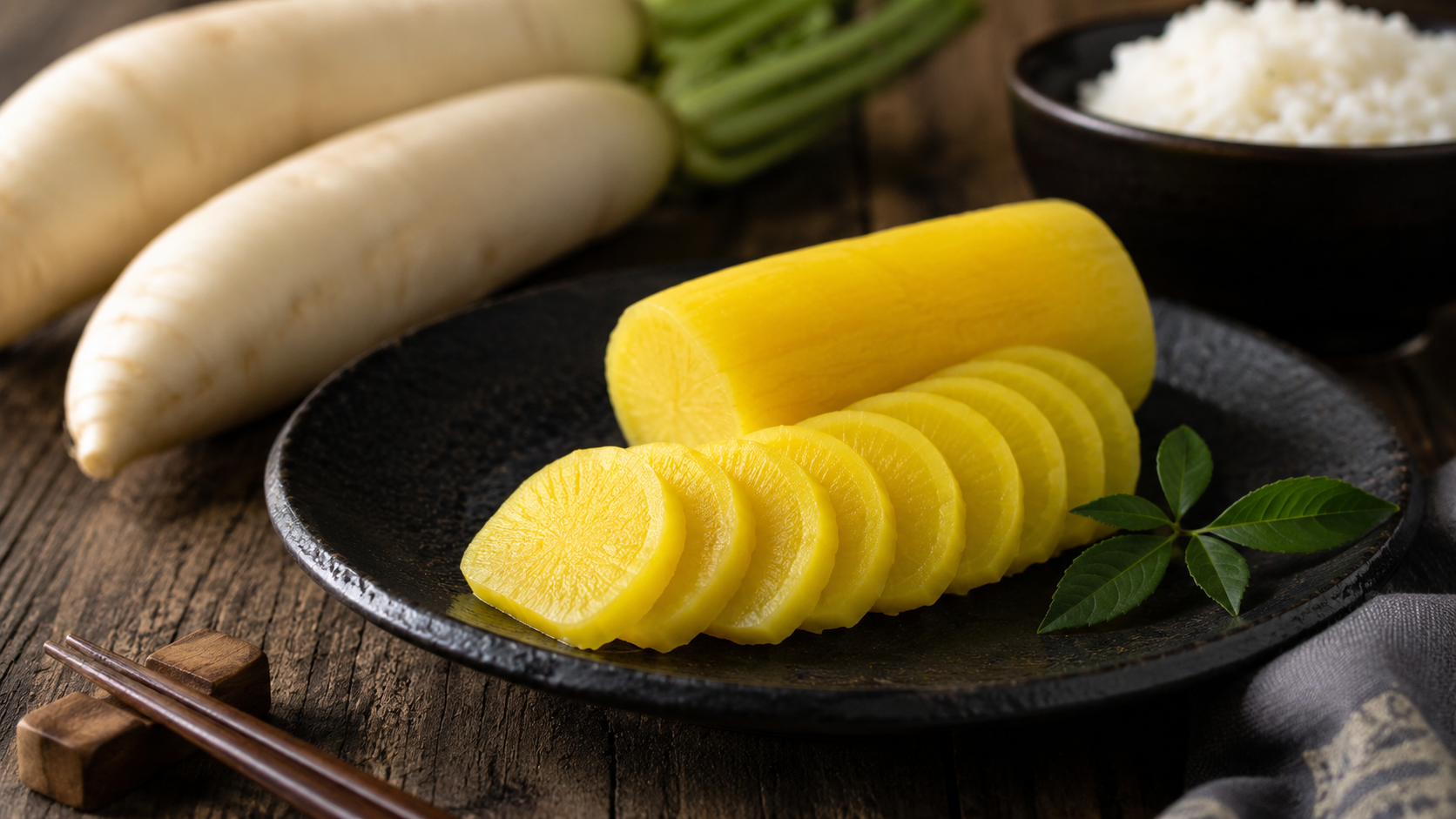
Takuan (沢庵) is a Japanese pickle made from daikon radish. It is typically bright yellow in color, with a firm, crunchy texture and a flavor that balances sour, salty, and slightly sweet notes. The yellow color comes either from natural fermentation with dried persimmon leaves and rice bran, or in commercial versions, from added turmeric or food coloring.
The full name in Japanese is takuan-zuke (沢庵漬け), with zuke meaning “pickle” or “pickled.” It belongs to the broader category of Japanese pickles called tsukemono, which literally translates as “pickled things” and encompasses a wide range of preserved vegetables integral to Japanese food culture.
Takuan is eaten throughout Japan as a side dish (okazu), a condiment with rice, and as an ingredient in rolled sushi (makizushi), rice balls (onigiri), and various other dishes.
The History Behind Takuan
The origin of takuan is credited — at least by tradition — to Takuan Soho, a Zen Buddhist monk who lived from 1573 to 1645. According to popular accounts, he is said to have developed or popularized the pickling method that bears his name, and the pickle was later named after him as a tribute.
Whether Takuan Soho truly invented the recipe is debated by food historians. The more likely explanation is that daikon pickling had already existed in some form, and the method became strongly associated with Zen temple cooking (shojin ryori) during the period when Takuan Soho was influential. Because Zen monks relied heavily on preserved vegetables to sustain themselves through winter months, pickled radish became a practical staple of temple life.
Over the centuries, takuan spread from temple kitchens into everyday Japanese households. By the Edo period (1603–1868), it had become a fixture of ordinary Japanese meals. Today it remains one of the most commercially produced pickles in Japan and one of the most internationally recognized Japanese condiments.
What Daikon Radish Is
To understand takuan, it helps to understand the base ingredient: daikon (大根), which translates literally as “big root.” Daikon is a large, white, mild-flavored radish widely used throughout East and Southeast Asian cooking. A mature daikon root can reach 30 to 60 centimeters in length and several centimeters in diameter.
Raw daikon has a crisp texture and a mildly peppery bite that is much milder than small Western radishes. When fermented or pickled, its flavor changes significantly — the sharpness mellows, and sour and savory notes develop. The texture, depending on the method, can range from very firm and crunchy to softer and more pliable.
Daikon is the foundation of several other Japanese pickles as well, including bettarazuke (a sweeter, fresh pickle) and kiriboshi daikon (dried daikon strips). Among all daikon pickles, however, takuan is the most iconic.
How Traditional Takuan Is Made
Traditional takuan preparation is a slow, multi-step process that takes weeks to months. The result differs significantly from the faster, commercially produced versions most people encounter outside Japan.
Step 1: Drying the Daikon
Whole daikon roots are harvested in late autumn and then hung outdoors to dry — typically for one to three weeks, depending on the climate. This drying phase removes much of the moisture from the radish, which concentrates its flavor and makes the flesh pliable enough to pack tightly without breaking. Properly dried daikon bends slightly rather than snapping.
Step 2: Preparing the Pickling Bed
The pickling medium used in traditional takuan is nuka — Japanese rice bran — combined with salt. Other ingredients are often added to develop flavor and color, including dried persimmon leaves, yuzu citrus peel, dried kelp (kombu), and sometimes chili pepper. The rice bran provides the environment for fermentation and contributes to the distinctive earthy, complex flavor that separates traditional takuan from its commercial counterparts.
Step 3: Packing and Weighing
The dried daikon roots are packed into a wooden barrel or ceramic crock, layered with the rice bran mixture. Heavy stones or weights are placed on top. The pressure draws out remaining moisture from the radish and presses the pickle into contact with the fermentation medium.
Step 4: Fermentation
The packed radishes ferment at room temperature, traditionally through the winter months, for anywhere from a few weeks to several months. Longer fermentation produces a more pungent, complex flavor. The color deepens as fermentation progresses — naturally fermented takuan develops a golden to amber-yellow hue from the rice bran and persimmon leaves rather than from added coloring.
Step 5: Slicing and Serving
Once ready, the daikon is removed from the brine, rinsed, and sliced into rounds or half-moons for serving. The brine itself is sometimes reused for additional batches.
Commercial Takuan vs. Traditional Takuan
Most takuan sold outside Japan — and much of what is sold in Japan today — is produced industrially using a faster process. The key differences are worth knowing.
Color: Traditional takuan gets its yellow color naturally from the fermentation process and ingredients like dried persimmon skin. Commercial takuan almost always uses turmeric or synthetic food coloring to achieve a bright, consistent yellow. The color of commercial takuan is typically more vivid and uniform than the traditional version.
Flavor: Traditional takuan has a more complex, layered flavor with pronounced fermented notes. Commercial versions tend to be milder, sweeter, and more uniformly tangy — more approachable for those unfamiliar with fermented foods, but lacking the depth of the traditional product.
Fermentation: Traditional takuan undergoes genuine lacto-fermentation, producing beneficial bacteria as a byproduct. Commercial versions are often pickled in brine with sugar and vinegar rather than fermented, which means they lack the probiotic qualities of the traditional method.
Smell: Traditional takuan has a strong, distinctive smell from the fermentation — sharp, slightly sulfurous, and very recognizable. Commercial versions have a much milder aroma. The strong smell of traditional takuan surprises many first-time buyers.
How Takuan Tastes
Describing the flavor of takuan to someone who has never tried it takes some care, because it sits in a category of its own. The flavor profile combines:
- Sourness from the fermentation or pickling acid
- Saltiness from the brine
- Mild sweetness, especially in commercial versions
- Umami depth, particularly in traditionally fermented versions
- A faint earthiness from the rice bran in traditional preparations
The texture is arguably as important as the flavor. Takuan has a satisfying, firm crunch — noticeably crisper than most Western pickles. That crunch is part of why it works so well alongside soft, warm rice. The contrast in texture makes the combination more interesting than either element alone.
Some people find the smell of traditional takuan off-putting at first. The flavor, however, is generally milder than the aroma suggests. If you have tried it once and found the smell overwhelming, traditional takuan specifically may have been the culprit — commercial versions are much more subtle.
How Takuan Is Used in Japanese Cuisine
Takuan appears in Japanese cooking in more contexts than many people outside Japan realize. Its uses go well beyond being a side condiment.
As a side dish with rice. The most common use is simply serving a few slices alongside steamed rice. The combination of soft, mild rice and sharp, crunchy pickle is a classic pairing in Japanese meals. Even a simple bowl of rice becomes more satisfying with a few pieces of takuan.
In makizushi (rolled sushi). Shinko maki — a sushi roll made with takuan as the only filling — is one of the most basic and traditional types of rolled sushi. The yellow strips are visible in cross-section, making shinko maki easy to identify. The crunch of the pickle contrasts well with the vinegared rice.
In onigiri (rice balls). Finely chopped takuan is sometimes used as a filling in rice balls, adding flavor, texture, and a pop of color. Onigiri stuffed with takuan and other vegetables are common in convenience stores across Japan.
In bento boxes. Takuan is a standard component of the traditional Japanese bento lunch box, where it serves both as a condiment and as a palate cleanser between other components.
In stir-fries and cooked dishes. Sliced or julienned takuan can be quickly sautéed with other vegetables or added to fried rice. Cooking takes away some of its crunch but the flavor holds up well and adds a pleasant tanginess to the dish.
As a palate cleanser. In multi-course Japanese meals, takuan plays a similar role to pickled ginger at a sushi bar — it clears and refreshes the palate between dishes.
Nutritional Considerations
Takuan is low in calories and provides small amounts of several nutrients from the daikon itself, including vitamin C, folate, and potassium. Traditionally fermented takuan, like other fermented foods, contains live bacteria that may contribute to gut microbiome diversity, similar to kimchi, yogurt, or sauerkraut.
The main nutritional consideration is sodium. Pickled foods — takuan included — tend to be high in salt from the brining or fermentation process. Commercial takuan in particular can be quite salty, and people managing sodium intake should consume it in modest portions. A few slices as a condiment, rather than a main dish, reflects how it is traditionally eaten.
Sugar content varies between products. Some commercial versions add significant sugar to produce a sweeter flavor profile, so checking the nutrition label on packaged takuan is worthwhile.
Common Questions and Misconceptions
Is takuan the same as yellow pickled radish at Korean restaurants?
No, though the two are closely related. Korean danmuji (단무지) is a yellow pickled daikon radish that closely resembles and is directly influenced by Japanese takuan. It is a standard component of gimbap (Korean rice rolls) and is served alongside noodle dishes like jajangmyeon. The flavor is typically sweeter and milder than traditional Japanese takuan, but the two are similar enough that they are sometimes used interchangeably in recipes.
Does the color mean it is artificial?
Not necessarily. Traditional takuan gets its yellow color naturally from the fermentation process — specifically from rice bran and dried persimmon leaves. However, most commercial takuan uses turmeric or food coloring for a brighter, more consistent yellow. A very vivid, neon-yellow color is usually a sign of added coloring. A deeper amber or golden tone is more typical of naturally fermented versions.
Is takuan the same as regular Japanese pickles?
Takuan is one type within the broader category of Japanese pickles (tsukemono). Other well-known tsukemono include umeboshi (pickled plum), gari (pickled ginger), and cucumber pickles. Takuan is specifically pickled daikon radish and has its own distinct flavor, color, and method.
Is takuan fermented or just pickled?
Traditional takuan is genuinely fermented through lacto-fermentation. Commercial versions are typically made with vinegar brine and sugar rather than through fermentation, making them technically pickled but not fermented. The nutritional and flavor differences between the two are significant.
Key Facts
- Takuan is a Japanese pickled daikon radish, also known as takuan-zuke.
- It belongs to the tsukemono family of Japanese preserved vegetables.
- The pickle is traditionally credited to Zen monk Takuan Soho (1573–1645), though its true origin is debated.
- Traditional takuan is made with rice bran (nuka), salt, and dried persimmon leaves over a fermentation period of weeks to months.
- The yellow color in traditional versions comes from natural fermentation; commercial versions typically use turmeric or food coloring.
- Commercial and traditional takuan differ significantly in flavor, fermentation, aroma, and nutritional profile.
- Takuan is used as a side dish, in sushi rolls (shinko maki), in bento boxes, in onigiri, and as a palate cleanser.
- Korean danmuji is closely related to takuan and developed from Japanese influence.
- Traditional takuan has a pungent smell that is much stronger than its flavor.
- Takuan is high in sodium, as with most pickled foods.
FAQ
Q1: What is takuan?
Ans: Takuan is a Japanese pickle made from dried daikon radish, traditionally fermented in rice bran, salt, and dried persimmon leaves. It is bright yellow, firm and crunchy, and has a tangy, mildly sweet flavor. It is one of the most widely eaten pickles in Japan.
Q2: Why is takuan yellow?
Ans: The yellow color in traditionally made takuan comes from the fermentation process, particularly from dried persimmon leaves and rice bran. Commercial takuan typically uses turmeric or artificial food coloring to produce a bright, uniform yellow without the fermentation process.
Q3: How does takuan taste?
Ans: Takuan tastes sour, salty, and mildly sweet, with a firm, crunchy texture. Traditional versions have more complex, earthy, fermented flavors. Commercial versions are generally milder and sweeter. The crunch is a defining characteristic.
Q4: Is takuan healthy?
Ans: Takuan is low in calories and contains some vitamins and minerals from daikon radish. Traditionally fermented versions may contain beneficial bacteria. The main dietary consideration is its high sodium content. It is best eaten in moderate portions as a condiment rather than in large quantities.
Q5: How is takuan different from regular pickles?
Ans: Takuan is made from daikon radish through a traditional rice bran fermentation process rather than vinegar brining. Its flavor profile, texture, color, and cultural role differ significantly from Western-style cucumber pickles. Traditionally fermented takuan undergoes lacto-fermentation, which most Western pickles do not.
Q6: Can you make takuan at home?
Ans: Yes. A simplified home version can be made by salting sliced daikon, adding rice vinegar, sugar, and turmeric, and allowing it to cure in the refrigerator for at least 24 hours. This produces a quick, mild version without the depth of traditional fermentation. True traditional takuan requires rice bran, time, and temperature-controlled curing, which is more involved but achievable with the right equipment.
Q7: Is takuan vegan?
Ans: Yes. Traditional takuan is made entirely from plant-based ingredients — daikon, rice bran, salt, and dried plant leaves. It is suitable for vegan and vegetarian diets. Some commercial versions may contain additives worth checking, but the core product contains no animal ingredients.
Key Takeaways
- Takuan is a pickled daikon radish central to Japanese cuisine, recognized by its yellow color and satisfying crunch.
- It is named after Zen monk Takuan Soho and has centuries of history in Japanese temple and everyday cooking.
- Traditional takuan is made through lacto-fermentation in rice bran, which produces complex flavor and natural color; commercial versions use vinegar brine and food coloring.
- The two types differ significantly in flavor, aroma, fermentation, and nutritional properties.
- Takuan is used as a side dish with rice, as a sushi roll filling, in bento boxes, in onigiri, and as a palate cleanser.
- Korean danmuji is a closely related pickle influenced by Japanese takuan.
- It is high in sodium, so moderate portions are appropriate.
- The strong smell of traditional takuan is normal and much more intense than the flavor itself.
Conclusion
Takuan is one of those foods that rewards a little background knowledge. Once you understand what it is — a fermented daikon radish with centuries of Japanese culinary history — its flavor, color, and role in Japanese meals make much more sense. It is not just a decoration on a bento box or a mystery item next to your sushi.
Whether you encounter it at a Japanese restaurant, find it packaged at an Asian grocery, or decide to make a quick version at home, takuan offers something genuinely distinct: a bright, crunchy, tangy counterpoint to the soft and mild foods it traditionally accompanies. That contrast is the whole point, and it is a combination that has worked in Japanese kitchens for hundreds of years.
If you’ve typed “best piononos de Santa Fe near me” into a search bar, you’ve probably already tasted one, or seen a photo of one, and now you need to know more: what exactly this little pastry is, where it actually comes from, and how to tell a good one from an average one. It’s a small dessert with a surprisingly specific history, and knowing that history actually helps you judge quality when you’re standing in front of a bakery case trying to decide what to order.
This guide covers what piononos de Santa Fe are, where the name comes from, what separates an authentic one from an imitation, and how to go about finding a good one wherever you happen to be.
Direct Answer
Piononos de Santa Fe are small Spanish pastries made of thin sponge cake rolled into a cylinder, soaked in syrup, and topped with toasted cream. They originated in the town of Santa Fe near Granada, Spain, created in 1897 by pastry chef Ceferino Isla González as a tribute to Pope Pius IX. To find good ones nearby, look for Spanish or Andalusian bakeries and check recent customer reviews for freshness and authenticity.
What Is a Pionono de Santa Fe?
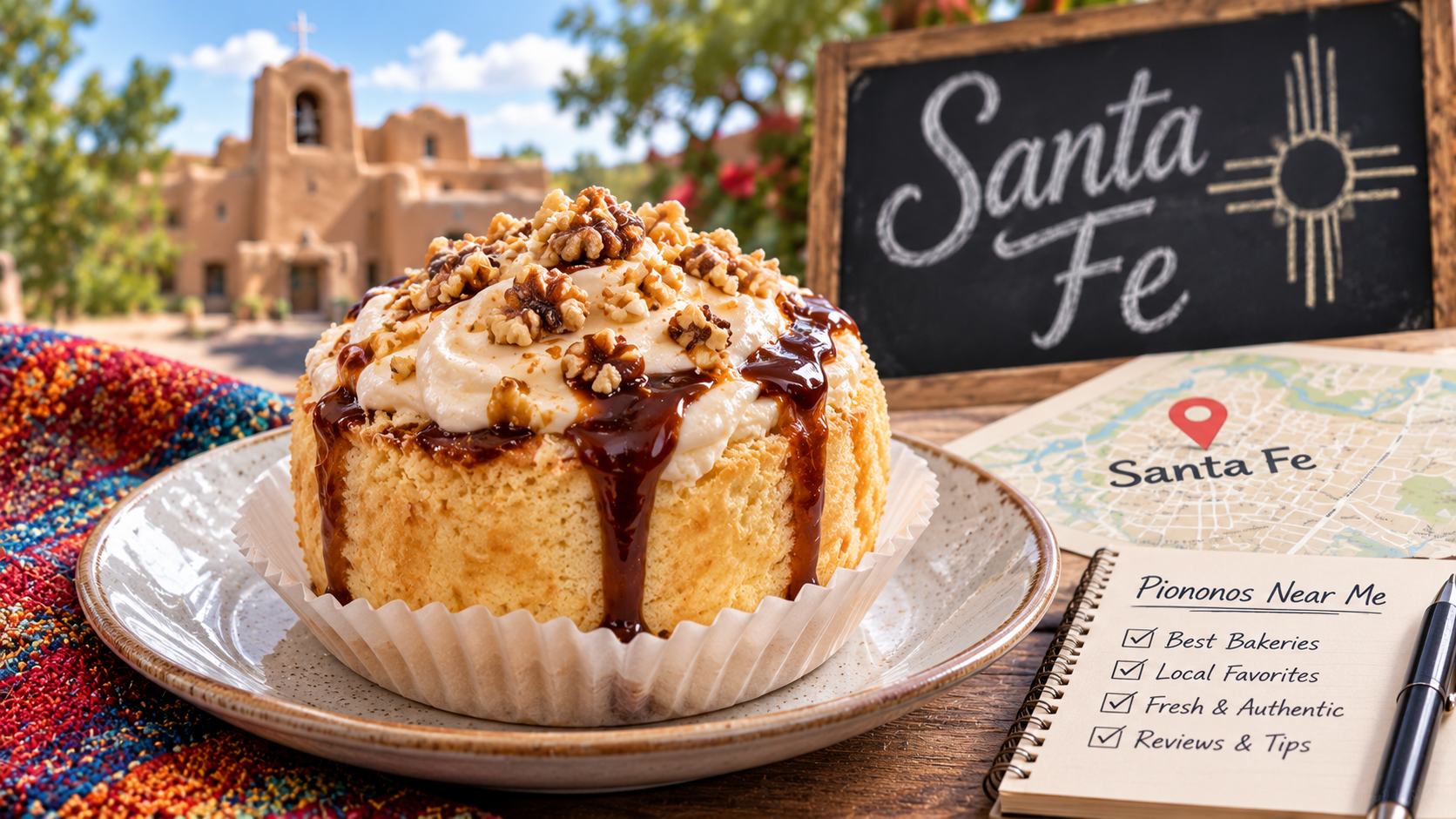
A pionono is a bite-sized pastry with two main parts. The base is a very thin sheet of sponge cake, made from eggs, sugar, and flour, which is soaked in syrup to keep it soft and moist. That sheet is rolled into a small cylinder, then topped with a layer of toasted pastry cream that’s lightly caramelized on top, giving it a golden, slightly crisp finish.
The result is a dessert that’s usually eaten in one or two bites, with a texture that shifts from soft and syrupy in the cake to rich and creamy on top, finished with a hint of caramelized sweetness.
Where the Name Comes From
The word “pionono” comes from “Pio Nono,” the Italian nickname for Pope Pius IX. According to the pastry’s origin story, confectioner Ceferino Isla González created the dessert in 1897 in the town of Santa Fe, near Granada in southern Spain, as a tribute to the Pope’s 50th anniversary of ordination. The shape of the pastry, rounded and topped with cream, was designed to resemble the Pope’s rounded cap, known as a solideo.
Isla founded a bakery called Casa Ysla (sometimes written Casa Isla) to sell the pastry, and that bakery, along with its version of the pionono, became closely tied to the town of Santa Fe’s identity.
Why “Santa Fe” Matters in the Name
This is one of the more common points of confusion. Piononos de Santa Fe specifically refers to the version tied to Santa Fe, a small town next to Granada in Andalusia, Spain, not the city of Santa Fe, New Mexico, or Santa Fe, Argentina. Because “Santa Fe” is a common place name across the Spanish-speaking world, it’s easy to end up reading about a completely different bakery scene by mistake.
Rolled sponge cakes with similar names do exist in other countries, including Argentina, Peru, and the Philippines (where it’s often spelled “pianono”), but these regional versions can differ significantly in filling, size, and preparation from the original Santa Fe, Granada pastry. If you’re specifically looking for the pastry with the toasted cream topping and the Pope Pius IX backstory, you’re looking for the Granada-style version.
What Makes an Authentic Pionono de Santa Fe
A few characteristics separate a well-made pionono from a rushed or mass-produced one:
- A thin, evenly rolled sponge. The cake layer should be delicate, not thick or doughy, and rolled tightly enough to hold its shape.
- Balanced syrup. The sponge should be moist, not soggy. Too little syrup leaves it dry; too much makes it fall apart.
- A properly toasted cream top. The cream crown should be lightly caramelized, with a slight golden color and a bit of texture, not just a plain dollop of cream.
- Freshness. Because the sponge and cream don’t keep well, piononos are best eaten the same day they’re made. A pastry case with piononos that look dry or have separated cream is a sign they’ve been sitting too long.
Common Mistakes and Misconceptions
Misconception: Any rolled sponge cake with cream is a “pionono de Santa Fe.” Many bakeries outside Spain use the name “pionono” loosely for rolled cakes with various fillings, like dulce de leche or fruit preserves. These can be delicious in their own right, but they’re a different regional tradition from the specific Santa Fe, Granada version with its toasted cream topping.
Misconception: Piononos are the same as a Swiss roll. While both involve a rolled sponge cake, piononos are typically much smaller, meant to be eaten in one or two bites, and are finished with a distinct toasted cream top rather than being sliced from a larger roll.
Misconception: All piononos are interchangeable in quality. Because the pastry has few ingredients and a delicate texture, small differences in technique, especially the balance of syrup and how well the cream is toasted, make a noticeable difference in the final result. Not every bakery selling piononos executes them the same way.
Misconception: “Near me” searches always return the most authentic option. Search rankings often favor bakeries with more online reviews or stronger local SEO, not necessarily the most traditional or highest-quality version. It’s worth reading actual reviews rather than trusting placement alone.
How to Find a Good Pionono de Santa Fe Near You
- Search for Spanish or Andalusian bakeries in your area rather than a general dessert or pastry shop, since piononos are a specifically regional specialty.
- Check recent reviews on a map or review platform, paying attention to comments about freshness, texture, and whether the cream topping was properly toasted.
- Ask if they’re made fresh daily. Because the pastry doesn’t hold up well over time, this question alone can filter out bakeries that don’t prioritize the dessert.
- Look at the presentation. A well-made pionono should look neatly rolled with a visible, lightly caramelized cream top, not flat or dried out.
- If you’re traveling to Granada, Spain, the town of Santa Fe itself and central Granada are the most direct places to find bakeries with a long-standing history of making the pastry, including establishments tracing their recipe back to the pionono’s original creator.
Key Facts
- Piononos de Santa Fe originated in Santa Fe, a town near Granada, Spain.
- The pastry was created in 1897 by confectioner Ceferino Isla González.
- The name honors Pope Pius IX, whose Italian nickname was “Pio Nono.”
- A traditional pionono consists of thin syrup-soaked sponge cake rolled into a cylinder and topped with toasted cream.
- The pastry is usually eaten in one or two bites.
- Similar-sounding rolled cakes exist in other countries, but they differ from the original Granada-style pionono in filling and preparation.
Frequently Asked Questions
Q1: What is a pionono de Santa Fe?
Ans: It’s a small Spanish pastry made of thin, syrup-soaked sponge cake rolled into a cylinder and topped with lightly caramelized cream, originally created in the town of Santa Fe near Granada, Spain.
Q2: How do I find the best piononos near me?
Ans: Look specifically for Spanish or Andalusian bakeries, check recent customer reviews for mentions of freshness and proper preparation, and ask whether the pastries are made fresh daily.
Q3: Is a pionono the same everywhere?
Ans: No. The original version comes from Santa Fe, Granada, but other countries have their own rolled sponge cake desserts that sometimes use a similar name with different fillings and preparation methods.
Q4: Why is it called a “pionono”?
Ans: The name references Pope Pius IX, nicknamed “Pio Nono” in Italian, as the pastry’s shape was designed to resemble his rounded ceremonial cap.
Q5: Is a pionono difficult to make at home?
Ans: It requires a fairly delicate technique, since the sponge sheet needs to stay thin and intact while rolling, and the cream topping needs to be toasted evenly. It’s considered a moderate-difficulty pastry for home bakers.
Q6: What should I know before ordering piononos?
Ans: Because they’re best fresh, it’s worth confirming a bakery makes them daily rather than buying from a case that may have held the pastries for an extended period.
Q7: Are there alternatives if I can’t find an authentic one?
Ans: Regional rolled sponge cake desserts, such as those found in Latin American and Filipino baking traditions, can offer a similar textural experience, though the flavor profile and topping will typically differ from the original Granada-style pionono.
Key Takeaways
- Piononos de Santa Fe are a small rolled sponge cake pastry with a toasted cream topping, originally from Santa Fe, near Granada, Spain.
- The dessert dates back to 1897 and was created as a tribute to Pope Pius IX.
- Quality depends on a thin, well-soaked sponge and a properly toasted cream top, best enjoyed fresh.
- The name is sometimes used loosely for different rolled cake desserts in other countries, so it’s worth confirming which style a bakery is actually making.
- Finding a good one nearby usually comes down to seeking out Spanish-style bakeries and checking recent reviews rather than relying on search ranking alone.
Conclusion
Piononos de Santa Fe are a small pastry with an outsized history, tracing back to a single bakery in a small Spanish town over a century ago. Whether you’re trying to track down an authentic version or just want to know what makes one good, paying attention to freshness, the balance of syrup and cream, and where a bakery’s recipe actually comes from will help you find a pionono worth the trip.
Every winter, millions of families across the United States open an email with a subject line about setting up an account, and it’s almost always about Digital Cookie. If you’re a Girl Scout parent, a troop volunteer, or just someone who got a link from a neighbor’s kid asking you to buy Thin Mints online, you’ve probably wondered what this platform actually is and how it fits into the cookie-selling tradition you already know.
Digital Cookie is the official online extension of the Girl Scout Cookie Program. It doesn’t replace the classic image of a kid at a folding table outside a grocery store. Instead, it gives Girl Scouts a second way to reach customers, one that works through a personalized website and a mobile app instead of a paper order form and a clipboard.
This article walks through exactly how Digital Cookie works, who uses it, how orders and payments move through the system, and what to watch out for whether you’re a Girl Scout, a caregiver, a troop volunteer, or a customer placing an order.
Direct Answer
Digital Cookie is the Girl Scouts of the USA’s official online sales platform, used by Girl Scouts to sell cookies through a personalized website and mobile app. It lets girls take orders, accept online and in-person payments, offer shipping or local delivery, and track sales, while teaching entrepreneurial skills like goal setting and money management alongside traditional in-person cookie booths.
What Is Digital Cookie?
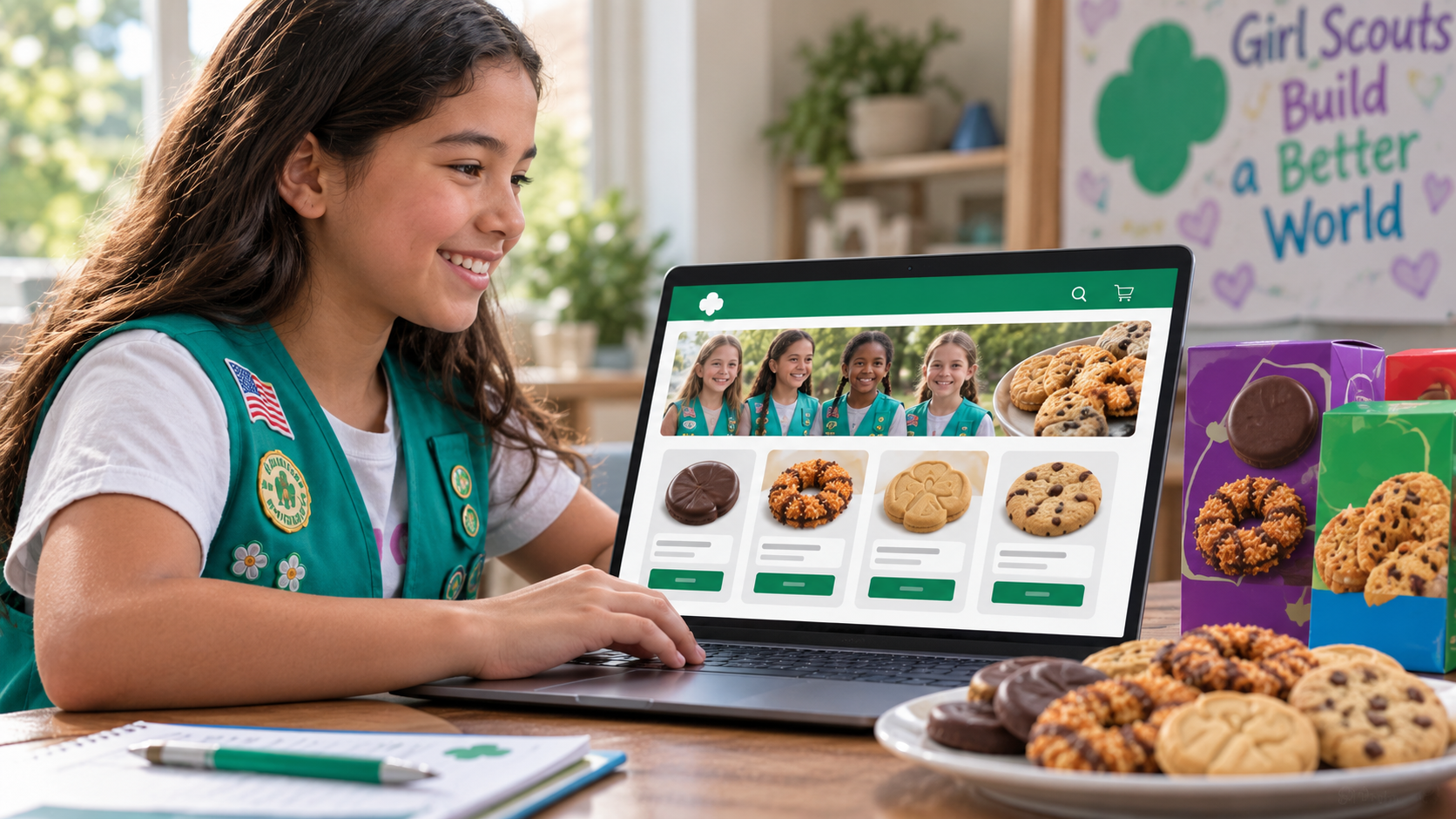
Digital Cookie is an online selling system built by Girl Scouts of the USA (GSUSA) specifically for the annual Cookie Program. Each participating Girl Scout gets access to a personalized online storefront where customers can place orders for cookies, choose delivery options, and pay electronically.
Digital Cookie exists alongside, not instead of, the traditional paper order card and in-person cookie booth. Girl Scouts and their families typically use both approaches together, since research from Girl Scouts councils has found that girls who combine Digital Cookie with in-person sales often sell more cookies and reach their goals faster cite.
Who Digital Cookie Is For
The platform serves several different users, each with a different login and set of permissions:
- Girl Scouts set up their personal site, add a photo or video pitch, set a sales goal, and track their own progress.
- Caregivers (parents or guardians) help manage the Girl Scout’s account, especially for younger scouts, and oversee order approvals and shipping choices.
- Troop volunteers, often called Troop Cookie Managers or Troop Cookie Chairs, manage the troop’s overall site, coordinate booth scheduling, and access sales reports for the whole troop.
- Customers don’t need an account at all. They can visit a Girl Scout’s personal link or use the national Cookie Finder tool to search by zip code and place an order.
How Digital Cookie Works
Understanding the mechanics of Digital Cookie makes it much easier to use, whether you’re setting up a site for the first time or just trying to place an order for a friend’s daughter.
Setting Up an Account
Each cookie season, troop volunteers receive an early access email, typically in late December, to set up the troop’s site first. Girl Scouts and their caregivers then receive their own registration email a bit later, usually in early January. Once registered, a Girl Scout can build out her personal page: adding her sales goal, a short video or photo introducing herself, and information about what her troop plans to do with the proceeds.
The Personalized Storefront
Once the site is live, the Girl Scout gets a unique shareable link. Customers who visit that link see her photo or video, her sales goal, and the full lineup of cookies available that season, along with prices. From there, a customer selects the cookies they want and chooses how they’d like to receive them.
Delivery and Fulfillment Options
Digital Cookie generally supports a few different ways to get cookies into a customer’s hands, though exact options can vary slightly by local council:
- Direct shipping, where cookies are mailed straight to the customer’s address from a fulfillment center.
- In-person delivery, where the Girl Scout personally delivers cookies she already has on hand, often to a neighbor or family friend.
- Troop or booth pickup, where the customer picks up their order at a scheduled cookie booth.
- Donation, where a customer buys cookies that get donated to a local organization, such as a food bank or a troop supporting military members, instead of being delivered to the customer.
Payments
Digital Cookie is built to handle several payment methods. Customers ordering online typically pay by credit or debit card at checkout. For in-person sales, such as at a cookie booth or a doorstep sale, Girl Scouts and troop volunteers can use the Digital Cookie mobile app to accept card payments, along with digital wallets like Venmo or PayPal in many councils, using a phone or tablet instead of collecting cash only.
Why Digital Cookie Matters
The Girl Scout Cookie Program has always been described as a hands-on business lesson disguised as a cookie sale, and Digital Cookie extends that lesson into the online world.
Business Skill Development
The program is built around five core skills that Girl Scouts practice through cookie selling: goal setting, decision making, money management, people skills, and business ethics. Digital Cookie applies these same lessons to an online environment, where a girl has to think about how she presents herself to potential customers, decide how to spend her marketing effort, and manage incoming orders responsibly.
Expanded Reach
Not every customer lives near a cookie booth or a friend’s front door. Digital Cookie allows a Girl Scout’s family members, like a grandparent in another state or a former coworker of a parent, to order cookies online and have them shipped directly, something that wasn’t possible with paper order forms alone.
Safety Considerations
Digital Cookie was designed with youth safety in mind. Girl Scouts are taught to share their personal cookie link only with people they know, rather than posting it publicly to strangers, and the platform includes guidance for caregivers on supervising their child’s account and any videos or photos posted to it.
Step-by-Step: How a Typical Digital Cookie Sale Works
- Registration. The Girl Scout and a caregiver receive an email invitation and set up the Girl Scout’s personal Digital Cookie account.
- Site setup. The Girl Scout adds a sales goal, a personal message or short video, and confirms troop details.
- Sharing the link. The Girl Scout and caregiver share the personalized site link with family, friends, and neighbors, often through email or text.
- Customer orders. A customer visits the link, selects cookies, chooses a delivery method, and pays online.
- Order approval. For in-person delivery orders, the Girl Scout or caregiver reviews and approves the order once cookies are available to hand off.
- Fulfillment. Depending on the option chosen, cookies are shipped directly, delivered by the Girl Scout, picked up at a booth, or donated.
- Tracking and reporting. Sales automatically appear in the Girl Scout’s dashboard and the troop’s overall sales reports, so goals and totals stay updated in real time.
Common Mistakes and Misconceptions
Misconception: Digital Cookie is a separate cookie-selling company. Digital Cookie is not a third-party business. It’s an official platform operated by Girl Scouts of the USA and local Girl Scout councils, built specifically to support the existing Cookie Program.
Misconception: Using Digital Cookie replaces the need for in-person cookie booths. Most troops use both. Digital Cookie adds an online option; it doesn’t eliminate the traditional booth or door-to-door sales that many people associate with the program.
Misconception: Anyone can create a cookie link and take orders. Only registered Girl Scouts with an active account through their local council can set up a Digital Cookie storefront. This protects both the integrity of the program and the safety of participants.
Misconception: All cookie proceeds go to the individual Girl Scout. Proceeds support the Girl Scout’s troop and its planned activities, along with council-level programs, rather than functioning as personal income for the individual seller.
Misconception: Digital orders ship immediately. Shipped orders typically take one to two weeks to arrive, since they go through a fulfillment process rather than same-day mailing. Local delivery and booth pickup timelines depend on when the Girl Scout or troop has inventory on hand.
Real-World Examples
The out-of-town grandparent
A grandmother living several states away wants to support her granddaughter’s cookie sales but can’t visit in person. She receives the Digital Cookie link by text, places an order for several boxes with direct shipping, and pays online. The cookies arrive at her home about a week later, and the sale counts toward her granddaughter’s troop goal just like an in-person sale would.
The neighborhood delivery
A Girl Scout shares her Digital Cookie link with neighbors on her street. One neighbor orders cookies for in-person delivery instead of shipping, since the Girl Scout already has a case of Thin Mints in her garage.
The troop supporting a cause
A troop sets up a “Cookie Share” or donation option on their Digital Cookie site, allowing customers to buy cookies that get donated to a local food pantry or sent to service members instead of being delivered to the buyer. A customer who doesn’t want cookies for themselves but still wants to support the troop chooses this option at checkout.
Key Facts
- It includes both a website (accessed through girlscouts.org) and a companion mobile app.
- Troop volunteers typically get early access to set up troop-level sites before individual Girl Scouts.
- Customers can order without creating an account of their own.
- Delivery options generally include direct shipping, in-person delivery, booth pickup, and donation.
- The mobile app allows Girl Scouts and volunteers to accept card and digital wallet payments at booths.
- The platform reinforces five core skills: goal setting, decision making, money management, people skills, and business ethics.
- A national Cookie Finder tool lets customers search for nearby Girl Scouts or troops by zip code.
- Exact registration dates, features, and payment options can vary slightly by local Girl Scout council.
Frequently Asked Questions
Q1: What is Digital Cookie?
Ans: Digital Cookie is the official online platform used by Girl Scouts of the USA to let Girl Scouts sell cookies through a personalized website and mobile app, in addition to traditional in-person sales.
Q2: How does Digital Cookie work?
Ans: A Girl Scout sets up a personal online storefront, shares the link with potential customers, and those customers order cookies, choose a delivery method, and pay online.
Q3: Why is Digital Cookie important?
Ans: It extends the reach of the Cookie Program beyond a Girl Scout’s immediate neighborhood, letting friends and family in other locations support her sales. It also teaches entrepreneurial and digital literacy skills as part of the broader Girl Scout program.
Q4: Is Digital Cookie safe for kids to use?
Ans: The platform includes safety features and guidance aimed at protecting young users, such as encouraging Girl Scouts to share their link only with people they know rather than posting it publicly. Caregivers are also expected to help manage and supervise the account.
Q5: Is Digital Cookie legal and legitimate?
Ans: Yes. It’s an official tool operated by Girl Scouts of the USA and local councils as part of the long-standing, licensed Girl Scout Cookie Program.
Q6: What are the alternatives to Digital Cookie?
Ans: The main alternative is the traditional method of taking paper order forms, running in-person cookie booths, and going door-to-door. Most Girl Scouts and troops use a mix of both approaches rather than choosing one exclusively.
Q7: What should families know before using Digital Cookie?
Ans: Registration typically opens in December or January, ahead of the cookie season, through an email invitation from the local council. Caregivers should plan to help set up the account, monitor incoming orders, and approve or decline orders that require in-person fulfillment.
Q8: Do customers need to download an app to order cookies?
Ans: No. Customers can place an order directly from a web browser using the Girl Scout’s personalized link.
Key Takeaways
- Digital Cookie is the Girl Scouts of the USA’s official online platform for selling cookies, used alongside traditional in-person sales.
- Girl Scouts get a personalized storefront where customers can order cookies, choose delivery methods, and pay online.
- Delivery options usually include direct shipping, in-person delivery, booth pickup, and donation.
- The platform teaches practical skills like goal setting, money management, and responsible online communication.
- Registration and access typically open in the weeks leading up to each year’s cookie season, with troop volunteers gaining access first.
- Local Girl Scout councils may customize certain features, so details can vary by region.
Conclusion
Digital Cookie has become a routine part of how Girl Scout Cookie season works, giving girls a practical way to reach customers who aren’t standing in front of a booth table. It doesn’t change what the Cookie Program is about at its core: helping kids learn real business skills while raising money for their troop’s activities. It simply adds a digital layer to a tradition that’s been part of American communities for generations, making it easier for a Girl Scout’s network, near or far, to take part in her cookie business each year.
Ask someone outside Spain to describe Spanish food, and you’ll usually get a short list: paella, tapas, maybe sangria. Ask someone from Spain the same question, and you’re likely to get a puzzled look, followed by a much longer answer that starts with “well, it depends where you are.” Spanish cuisine in Spain isn’t one unified style of cooking. It’s a patchwork of distinct regional food cultures, shaped by geography, history, and local ingredients that vary enormously from the Atlantic coast to the Mediterranean.
Direct Answer: What Is Spanish Cuisine in Spain?
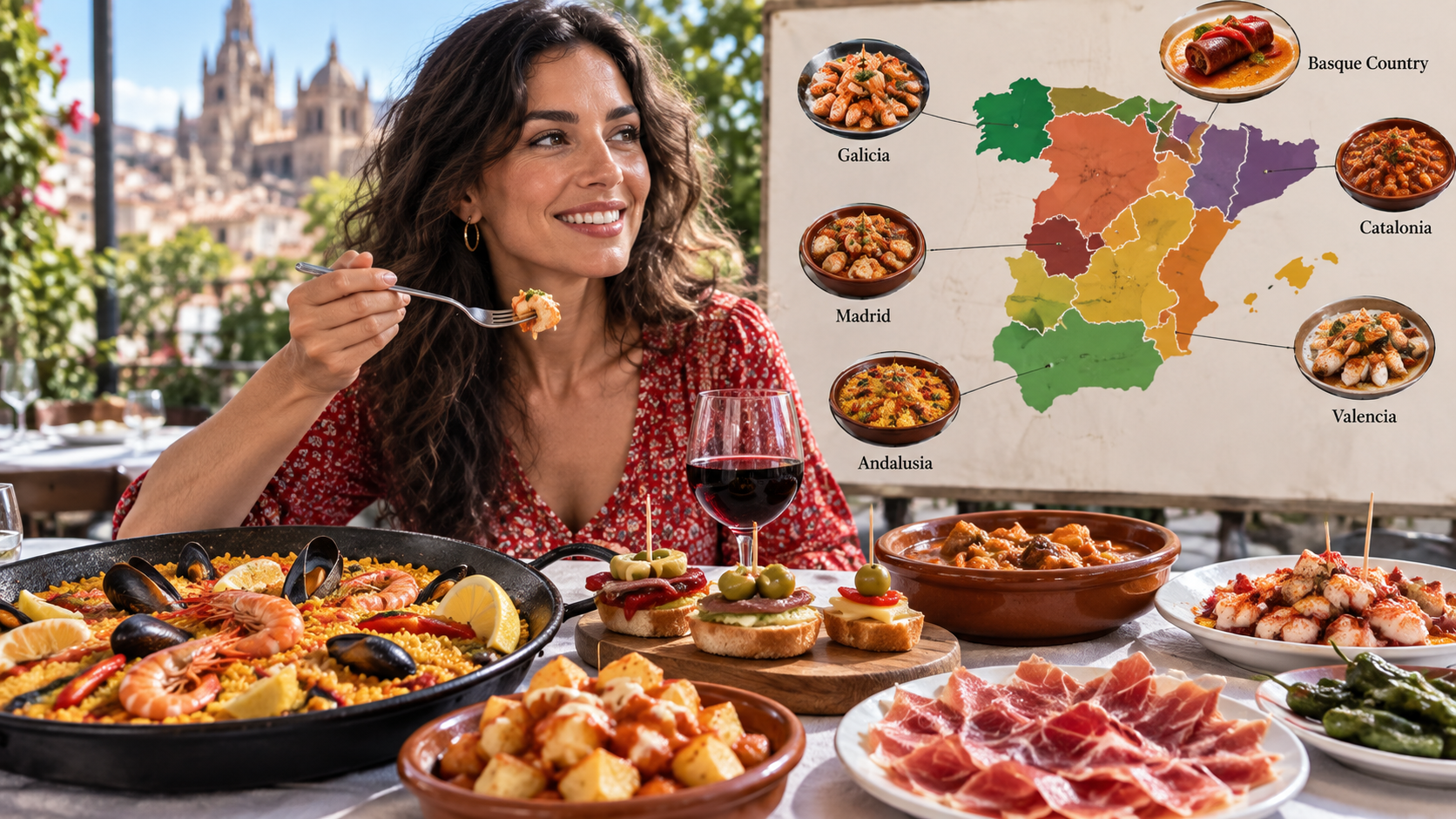
Spanish cuisine in Spain refers to the country’s food traditions as they’re actually practiced regionally, rather than the simplified, generalized version often marketed abroad. It includes distinct culinary identities across regions like Catalonia, the Basque Country, Andalusia, and Galicia, each shaped by local geography, climate, and history. Common threads include olive oil, fresh seafood, cured meats, legumes, and a strong culture of shared, unhurried meals, but specific dishes and techniques differ significantly by region.
Why Spanish Food Varies So Much by Region
Spain’s geography goes a long way toward explaining why its cuisine splintered into so many distinct regional traditions rather than developing as one national style. The country spans a long Atlantic coastline in the north and west, a Mediterranean coastline in the east and south, mountainous interior regions, and dry central plains, each offering entirely different ingredients as a starting point.
Historical factors matter just as much. Spain’s regions developed with a strong degree of cultural and linguistic distinctiveness, Galician, Basque, Catalan, and Andalusian identities all carry their own language or dialect, history, and culinary tradition. Centuries of Moorish influence in the south, Atlantic fishing traditions in the north, and Mediterranean trade routes in the east all left distinct culinary fingerprints that never fully merged into a single national cuisine the way some other countries’ food traditions did.
Regional Cuisines Across Spain
Basque Country: Pintxos and Fine Dining
The Basque Country, in northern Spain along the Atlantic coast, has one of the country’s most internationally respected food cultures. It’s known for pintxos, small snacks typically served on bread and often speared with a toothpick, found piled along bar counters in cities like San Sebastián and Bilbao. Beyond pintxos, the region has an outsized concentration of Michelin-starred restaurants relative to its size, and Basque cooking generally emphasizes exceptional local seafood, simple technique, and high-quality ingredients over elaborate presentation.
Catalonia: Mediterranean and Innovation
Catalonia, home to Barcelona, blends traditional Mediterranean cooking with a strong modern culinary innovation scene. Traditional dishes include pa amb tomàquet (bread rubbed with tomato and olive oil) and escalivada (roasted vegetables), while the region has also produced some of the most influential figures in modern experimental cuisine over the past few decades. Seafood, rice dishes, and a distinct use of nuts and dried fruit in savory cooking set Catalan food apart from other Mediterranean Spanish regions.
Andalusia: Gazpacho and Moorish Influence
Southern Spain’s Andalusia region carries the clearest culinary legacy of centuries of Moorish rule, visible in its use of almonds, spices, and specific preparation techniques. Gazpacho, a cold tomato-based soup, originated here as a practical response to the region’s intense summer heat. Andalusia is also strongly associated with fried fish (pescaíto frito), jamón ibérico production, and sherry wine, particularly around towns like Jerez de la Frontera.
Galicia: Atlantic Seafood
In Spain’s rainy, green northwest corner, Galician cuisine centers heavily on Atlantic seafood, particularly octopus, prepared in the well-known dish pulpo a la gallega (Galician-style octopus, typically boiled and served with paprika and olive oil). The region’s cooler, wetter climate also supports strong dairy and beef traditions less common in Spain’s drier southern regions.
Valencia: The True Home of Paella
Paella, often treated internationally as shorthand for all Spanish food, actually originates specifically from Valencia, on Spain’s eastern coast. Traditional Valencian paella is made with rabbit, chicken, and green beans, cooked in a wide, shallow pan over an open flame, a notably different dish from the seafood-heavy versions commonly served, and often altered, outside the region.
Common Threads Across Spanish Regional Cooking
Despite the regional variation, a few elements show up consistently across Spanish cuisine as a whole:
Olive oil as a foundation
Spain is the world’s largest olive oil producer, and olive oil serves as the primary cooking fat across nearly every regional tradition, rather than butter or other fats more common elsewhere in Europe.
Cured meats and cheese
Jamón (cured ham), particularly jamón ibérico, along with regional cheeses like Manchego, appear across the country as staples of everyday eating, not just special occasions.
Legumes and stews
Lentils, chickpeas, and beans form the base of many traditional Spanish stews, historically important as an affordable, filling protein source, and still central to home cooking today.
Late, social meal timing
Spanish meal schedules tend to run later than in many other countries, with lunch often eaten between 2 and 4 p.m. and dinner frequently after 9 p.m., reflecting a broader cultural emphasis on unhurried, social dining.
Tapas as a way of eating, not a dish category
Tapas culture, small shared plates meant for socializing rather than individual meals, is common across most of Spain, though the specific dishes served as tapas vary significantly by region.
Common Mistakes and Misconceptions
Mistake: Assuming paella is Spain’s national dish eaten everywhere the same way. Paella is specifically Valencian in origin, and its ingredients and preparation vary meaningfully outside that region, with many international versions bearing little resemblance to traditional Valencian paella.
Mistake: Treating “tapas” as one specific type of food. Tapas describes a style and format of eating, small, shared plates, not a fixed menu. What’s served as tapas differs significantly from a Basque pintxos bar to an Andalusian tapas bar to a Madrid taberna.
Mistake: Assuming Spanish food is uniformly spicy. Contrary to a common assumption, especially among people who conflate Spanish and Mexican cuisine, most traditional Spanish cooking relies on flavor built through olive oil, garlic, paprika, and slow cooking rather than heavy chili heat.
Mistake: Overlooking regional seafood traditions in favor of inland dishes. Because dishes like paella and jamón receive more international attention, Spain’s extensive coastal seafood traditions, particularly in Galicia and the Basque Country, are often underrepresented in how outsiders imagine Spanish cuisine.
A Practical Look: What a Day of Eating Might Look Like
To make the regional variation concrete, consider how differently a day of eating might unfold in two different parts of Spain. In San Sebastián, a visitor might start with coffee and a simple pastry, spend an evening working through several pintxos bars sampling small, seafood-forward bites, and finish with a fine-dining tasting menu at one of the region’s Michelin-starred restaurants. In Seville, the same day might involve a cold glass of gazpacho at midday to combat the heat, fried fish and a glass of sherry in the early evening, and a late dinner built around shared plates of jamón, olives, and grilled vegetables. Both days represent authentic Spanish cuisine, but they’d look almost nothing alike.
Key Facts
- Spain doesn’t have one unified national cuisine; regional food traditions vary significantly by geography and history.
- The Basque Country holds one of the highest concentrations of Michelin-starred restaurants relative to its size in the world.
- Paella originated specifically in Valencia, not as a generalized national dish.
- Spain is the world’s largest producer of olive oil, which serves as the primary cooking fat nationwide.
- Andalusian cuisine carries visible influence from centuries of Moorish rule, particularly in its use of almonds and spices.
- Traditional Spanish meal times run notably later than in much of the rest of Europe.
Frequently Asked Questions
Q1: What is Spanish cuisine in Spain actually like?
Ans: It’s highly regional rather than uniform, with distinct culinary traditions in areas like the Basque Country, Catalonia, Andalusia, Galicia, and Valencia, unified loosely by shared use of olive oil, cured meats, and a culture of social, shared eating.
Q2: Is paella Spain’s national dish?
Ans: It’s often treated that way internationally, but it originated specifically in Valencia and isn’t representative of most other Spanish regions’ traditional cooking.
Q3: Is Spanish food spicy?
Ans: Generally not in the way many people expect. Most traditional Spanish cooking builds flavor through olive oil, garlic, and paprika rather than significant chili heat.
Q4: What region of Spain has the best food?
Ans: This depends on personal taste rather than an objective ranking, though the Basque Country is particularly well regarded internationally for both traditional pintxos culture and high-end fine dining.
Q5: What’s the difference between tapas and pintxos?
Ans: Tapas is a broader term for small, shared plates found across most of Spain, while pintxos specifically refers to the Basque tradition of small snacks typically served on bread, often secured with a toothpick.
Q6: Why does Spanish food vary so much by region?
Ans: Spain’s diverse geography, from Atlantic and Mediterranean coastlines to mountainous interior regions, combined with strong regional cultural identities and historical influences, produced distinct local food traditions rather than one unified national cuisine.
Key Takeaways
- Spanish cuisine in Spain is genuinely regional, not a single unified style of cooking.
- Major regional traditions include Basque pintxos and fine dining, Catalan Mediterranean cooking, Andalusian dishes shaped by Moorish influence, Galician Atlantic seafood, and Valencian paella.
- Olive oil, cured meats, legumes, and late, social meal timing are common threads across most regions.
- Common international assumptions about Spanish food, especially around paella and spice level, often don’t reflect how Spaniards actually eat.
- Understanding Spanish cuisine means understanding it region by region rather than as one national style.
In Short
Spanish cuisine in Spain rewards curiosity precisely because it resists simplification. What looks from the outside like a single national food identity is, up close, a collection of distinct regional traditions shaped by centuries of local geography, history, and culture. Whether it’s a pintxos bar in San Sebastián, a bowl of gazpacho in Seville, or a proper Valencian paella cooked over an open flame, the throughline isn’t one dish or ingredient, it’s a shared, deeply regional approach to eating well.
-

 Technology2 months ago
Best Wireless Earbuds Under 200 Dollars 2024: What to Know Before You Buy
-

 News4 months ago
Best Places to See Penguins in the Wild: A Complete Guide
-

 Technology4 months ago
What Is VIPstand? How It Works, Legal Risks, and What You Should Know
-

 News4 months ago
Lake Mead Water Levels: Status, History & Western Impact
-

 Technology4 months ago
Laaster: Meaning, Origins, and What It Says About Harmful Speech
-

 Celebrity4 months ago
Matt Danzeisen: Who He Is, His Career in Finance, and His Life With Peter Thiel
-
 News4 months ago
What Is Epoch Fun? A Complete Guide to the Epoch Times Games Section
-
 Food2 months ago
Best Arroz con Leche Boliviano Near Me: What to Look For